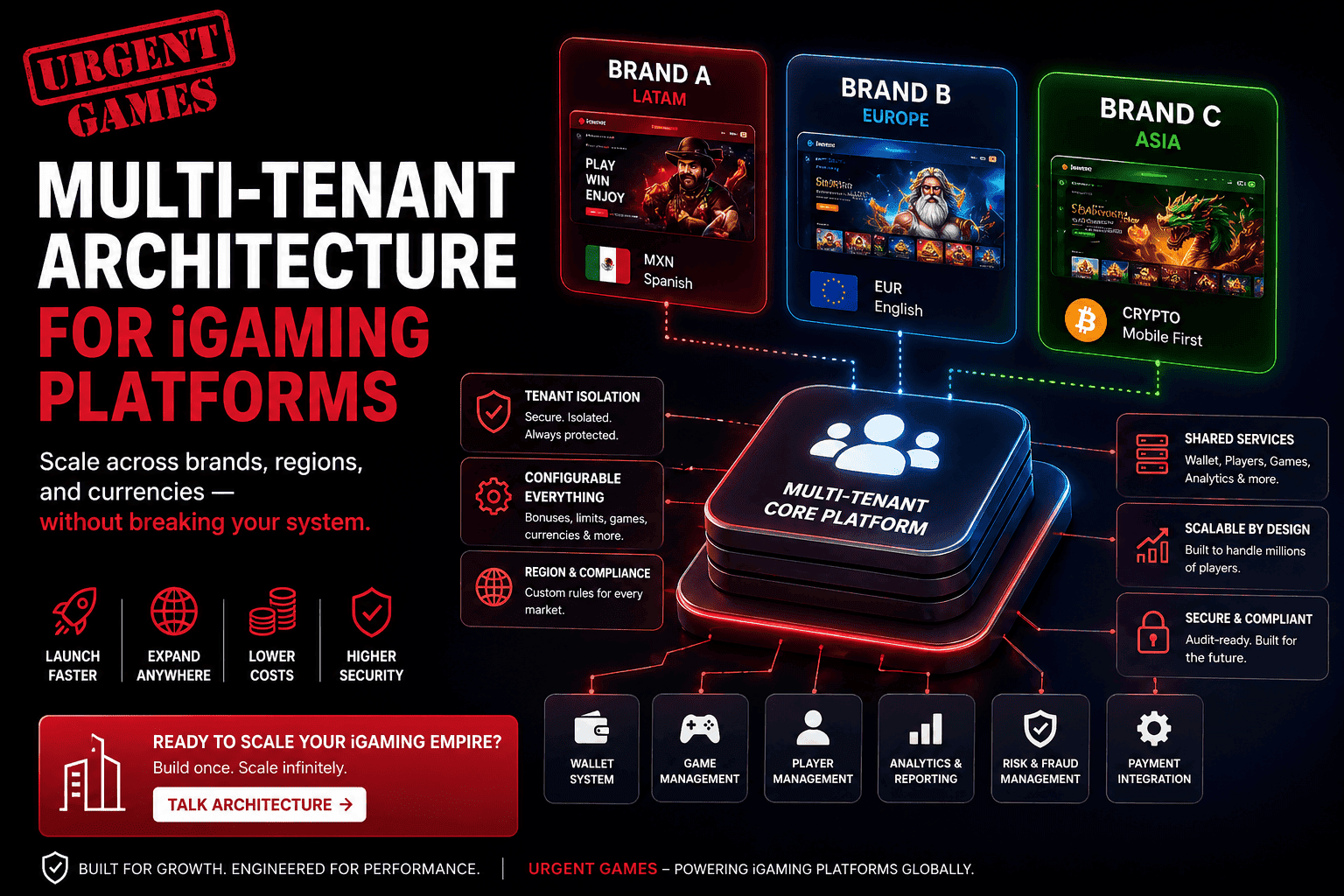
In 2026, a multi tenant casino architecture is essential for scaling iGaming platforms across brands, regions, and currencies without breaking your system.
Most operators don’t fail because of growth—they fail because their systems weren’t built for it.
Launching one brand is easy. Scaling across multiple markets is where architecture gets tested.
Multi-Tenant Architecture Overview
- One backend serving multiple brands
- Shared infrastructure with isolated data
- Tenant-specific configurations
- Centralized updates and security
What Is a Multi-Tenant Casino System?
A multi-tenant setup allows a single backend to support multiple independent brands.
Each tenant has:
- Its own frontend
- Unique configurations
- Regional compliance rules
- Separate player base
While sharing:
- Infrastructure
- APIs
- Core logic
🖼️ Image: Architecture Overview
Alt: multi tenant casino architecture diagram with shared backend and isolated tenants
Why Multi-Tenant Architecture Matters
The iGaming ecosystem includes:
- Real-time transactions
- Multiple providers
- Regional regulations
- High concurrency
This model enables:
- Faster launches
- Lower costs
- Consistent security
- Centralized updates
Outbound references:
The Wrong Way: Copy-Paste Scaling
Many operators still:
- Clone backends
- Duplicate databases
- Deploy per brand
Problems:
- Maintenance complexity
- Security gaps
- Higher costs
- Slow updates
Scaling this way multiplies risk—not growth.
The Right Approach: System Design Principles
The correct foundation is:
Shared system + isolated data + flexible configuration
1. Tenant Isolation
Isolation is critical.
Methods:
- Tenant ID in every request
- Scoped queries
- Row-level separation
Advanced:
- Separate DB per tenant
- Partitioned shared database
Rule: No data crossover—ever.
2. Configuration Layer
This enables flexibility across brands.
Each tenant can control:
- Currency
- Bonuses
- Game access
- Risk settings
Implementation:
- Dynamic config services
- Feature flags
👉 Internal link: /igaming-config-management
3. Wallet System Design
A common failure point.
Requirements:
- Tenant-aware balances
- Currency isolation
- Transaction tagging
Risk:
Shared wallet logic without tenant context.
👉 Internal link: /wallet-architecture-guide
🖼️ Image: Wallet Flow
Alt: multi tenant casino wallet system with tenant-specific balances and transactions
4. Provider Integration Layer
Each tenant interacts differently with providers.
Solution:
- Abstract integration layer
- Tenant-based routing
👉 Internal link: /game-provider-integration
5. Authentication & User Segmentation
Each tenant must isolate users.
Requirements:
- Tenant-scoped user IDs
- Independent login systems
- Strong access controls
6. Compliance & Regional Rules
Each market has different regulations.
Configure per tenant:
- KYC rules
- Betting limits
- Data storage
Outbound reference:
7. Infrastructure Strategy
Recommended stack:
- Microservices
- Containerization (Docker)
- Orchestration (Kubernetes)
- Horizontal scaling
Data Architecture Options
Shared Database
Pros:
- Lower cost
- Easier management
Cons:
- Higher risk
Separate Databases
Pros:
- Strong isolation
Cons:
- More complex
Hybrid (Recommended)
- Shared services
- Isolated critical data
🖼️ Image: Data Model
Alt: multi tenant casino database architecture shared vs isolated model
Performance Considerations
Challenges:
- Noisy neighbor problem
- Resource contention
Solutions:
- Rate limiting per tenant
- Caching layers
- Load balancing
Security Considerations
Must-have protections:
- Tenant validation per request
- API gateway enforcement
- Encryption
- Audit logs
Principle: Every action must map to a tenant.
Real-World Example
- Brand A → LATAM
- Brand B → Europe
- Brand C → Asia
One system handles all—with different configurations.
Without this approach: You run multiple platforms = higher cost and complexity.
When This Model Doesn’t Fit
Avoid if:
- Completely different business logic
- Strict regulatory isolation
- Limited engineering resources
The Future: Modular Systems
Next evolution:
- Multi-tenant core
- Plugin-based extensions
This allows flexibility without system fragmentation.
Final Thoughts
A well-designed multi-tenant system enables:
- Faster launches
- Better control
- Lower operational risk
- Long-term scalability
Build once. Scale effectively.
CTA
Want to design your architecture the right way?
👉 Talk to our experts