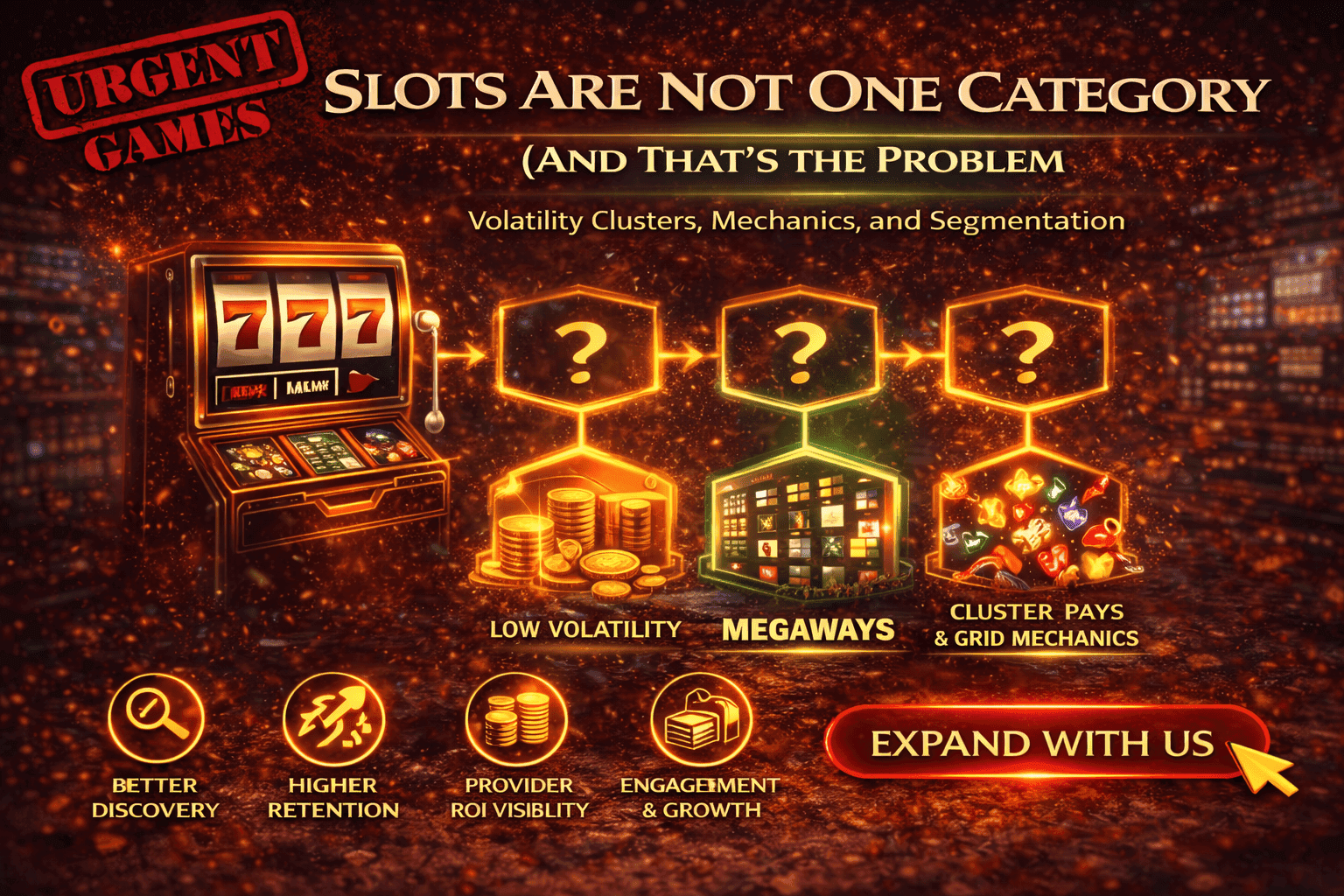
Slot aggregation is often misunderstood. Many operators treat slots as a single category within their casino platform. However, effective slot aggregation requires much deeper structure than simply listing thousands of games in one lobby.
Most casinos present slots as one unified product. Players see a single category, a simple filter system, and thousands of titles. At first glance this seems efficient. In reality, this approach hides a major strategic flaw.
Slots are not one product.
Instead, they represent multiple gameplay ecosystems with different player motivations, volatility profiles, and engagement rhythms.
When slot aggregation fails to recognize these differences, several problems appear:
-
Discovery becomes chaotic
-
Player retention declines
-
High-quality games remain hidden
-
Revenue potential is underused
To scale effectively, operators must move beyond simple catalog expansion and adopt structured slot aggregation strategies.
The Catalog Illusion in Slot Aggregation
Many operators measure platform strength using simple metrics such as:
-
Total number of games
-
Number of integrated providers
-
Frequency of new releases
It is common to see casinos promoting:
“5,000+ slots available.”
While this sounds impressive, it often creates confusion for players.
Users do not browse casinos by volume. Instead, they search for a specific type of gameplay experience.
However, most casino lobbies still group everything under a single category labeled simply:
Slots.
This lack of segmentation creates friction in discovery and reduces engagement across the catalog.
Industry research from Statista shows that digital users engage more when platforms organize large content libraries through structured categories and filters.
Why Slot Aggregation Must Recognize Gameplay Ecosystems
Effective slot aggregation requires understanding the structural differences between games. These differences influence how players interact with titles and how long they remain engaged.
Slots vary primarily across three core dimensions:
-
Volatility profile
-
Gameplay mechanics
-
Session rhythm
When combined, these elements create different player segments within the slot ecosystem.
Volatility Clusters in Slot Aggregation
Volatility determines how frequently wins occur and how large those wins can be. Players naturally gravitate toward volatility levels that match their risk tolerance.
Low Volatility Slots
Low volatility games produce frequent but smaller wins.
Typical characteristics include:
-
Stable gameplay
-
Lower bankroll swings
-
Longer entertainment sessions
These slots usually appeal to:
-
Casual players
-
Mobile users
-
Entertainment-focused sessions
Low volatility titles are particularly valuable for maintaining retention and longer session durations.
Medium Volatility Slots
Medium volatility slots balance risk and reward.
Players experience:
-
Regular wins
-
Occasional larger payouts
-
Consistent session pacing
This category often represents the most stable revenue segment for many operators. Core casino players frequently return to these titles for regular gameplay.
High Volatility Slots
High volatility slots offer large potential rewards but less frequent wins.
These games often feature:
-
Large jackpots
-
Higher risk levels
-
Intense excitement peaks
Typical audiences include:
-
Experienced slot players
-
Jackpot hunters
-
High-risk gamblers
These titles also generate strong marketing appeal due to big win moments.
Mechanics and Slot Aggregation Structure
Beyond volatility, gameplay mechanics create different psychological experiences for players. Modern slot aggregation must account for these differences to improve discovery.
Classic Line Slots
Traditional line slots use fixed paylines and familiar reel structures.
Advantages include:
-
Easy-to-understand gameplay
-
Low learning curve
-
Strong appeal for long-time casino players
These titles remain highly relevant despite newer innovations.
Megaways and Variable Reel Mechanics
Megaways-style games introduced dynamic reel structures that create thousands of potential win combinations.
Key characteristics:
-
Expanding reel layouts
-
Highly variable outcomes
-
Increased volatility potential
These games attract players seeking dynamic and unpredictable gameplay experiences.
Cluster Pays and Grid Mechanics
Cluster-based games replace paylines with symbol clusters.
Benefits include:
-
Visual satisfaction through cascading wins
-
Extended bonus sequences
-
Longer gameplay engagement
These mechanics are particularly effective at sustaining session length.
Feature-Rich Narrative Slots
Some modern slots resemble mini-games rather than traditional reels.
They often include:
-
Story progression
-
Multiple bonus stages
-
Interactive mechanics
These titles attract players who value entertainment depth and immersive gameplay.
Research from Nielsen Norman Group shows that interactive mechanics can significantly increase user engagement in digital entertainment platforms.
Session Rhythm in Slot Aggregation
Another factor often overlooked in slot aggregation is gameplay pacing.
Not all slots deliver the same session rhythm.
Fast-Cycle Slots
Fast-cycle slots provide quick spins and immediate results.
They perform particularly well in:
-
Mobile environments
-
Short-session gameplay
-
Multitasking users
These games support high-frequency play patterns.
Medium Rhythm Slots
Medium rhythm slots balance spin speed with occasional bonus triggers.
They encourage:
-
Habit formation
-
Regular daily sessions
-
Stable engagement cycles
These games often form the backbone of long-term player retention.
Long Engagement Slots
Feature-heavy slots create deeper gameplay experiences.
Common elements include:
-
Multi-stage bonus systems
-
Progressive features
-
Persistent progression mechanics
These games generate longer sessions and higher emotional investment.
Industry analysis from H2 Gambling Capital highlights how deeper engagement mechanics increase player lifetime value.
Why Traditional Slot Aggregation Fails
Many casino platforms approach slot aggregation with a simple objective: expand the catalog.
Typical strategies include:
-
Integrating additional providers
-
Increasing total game count
-
Expanding catalog coverage
However, without structured segmentation, discovery suffers.
Players often experience:
-
Decision fatigue
-
Hidden high-quality games
-
Poor recommendation relevance
As a result, more content does not always translate into higher engagement.
Effective slot aggregation focuses on structure rather than pure volume.
Building a Smarter Slot Aggregation Strategy
Operators who rethink slot categorization can unlock significant performance improvements.
Several structural improvements can transform slot discovery.
1. Segment by Volatility
Clear volatility filters help players find games matching their risk preference.
Examples include:
-
Low volatility
-
Balanced volatility
-
High volatility
These filters immediately reduce decision friction.
2. Highlight Gameplay Mechanics
Instead of generic categories, lobbies should highlight mechanics such as:
-
Megaways titles
-
Cluster-pay games
-
Progressive jackpots
-
Feature-rich slots
This structure helps players quickly identify their preferred gameplay styles.
3. Personalize Slot Recommendations
Modern aggregation platforms increasingly use behavioral data to recommend games based on:
-
Preferred volatility
-
Favorite mechanics
-
Frequently played providers
Personalized recommendations dramatically improve engagement and session depth.
4. Curate Instead of Overloading
Large catalogs only provide value when players can easily discover quality titles.
Operators should therefore highlight:
-
Trending games
-
Top-performing slots
-
New releases
-
Curated collections
Curation simplifies the browsing experience and improves conversion.
For a broader look at content structuring across casino platforms, see our casino content strategy guide:
/casino-content-strategy
Another important factor is lobby design. Our game lobby optimization guide explains how layout and visibility impact player engagement:
/game-lobby-optimization
The Strategic Advantage of Structured Slot Aggregation
When slot aggregation becomes structured and intelligent, operators gain several advantages:
-
Improved player discovery
-
Higher session depth
-
Better provider performance visibility
-
Stronger retention rates
Rather than overwhelming players with endless choices, structured aggregation guides them toward better experiences.
The Future of Slot Discovery
Casino platforms continue to evolve. In the next generation of slot aggregation systems, discovery will move beyond simple categories.
Future trends may include:
-
Volatility-driven browsing
-
Mechanic-based discovery
-
AI-powered recommendations
-
Personalized slot journeys
Operators who adopt these systems early can create stronger engagement and better monetization opportunities.
Final Thought
Slots dominate most casino catalogs, but they are not a single product category.
Operators who understand this shift can transform slot aggregation from a simple content supply problem into a powerful strategic advantage.
Expand Your Slot Ecosystem
If you want to build a smarter slot aggregation strategy with better discovery, structured segmentation, and scalable provider integration, it may be time to rethink how your catalog works.
Design a slot ecosystem built for engagement, clarity, and long-term growth.