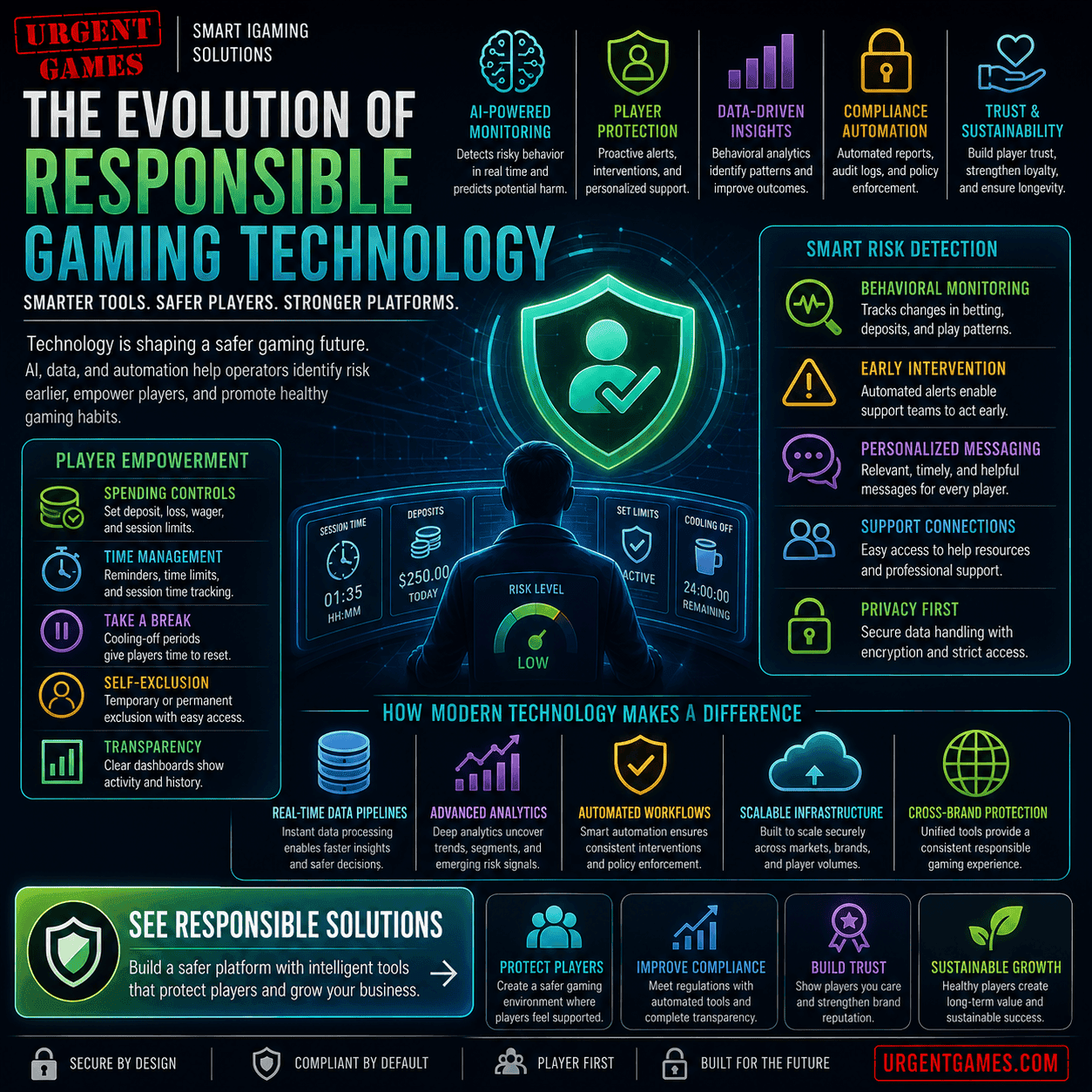
The online gaming industry has experienced remarkable technological innovation over the past decade. Modern platforms now deliver thousands of titles, instant payment distributions, heavily personalized frontend environments, real-time analytics, and advanced algorithmic recommendations. However, alongside these massive technical breakthroughs comes a crucial structural requirement.
Operators are now expected not only to entertain users but also to systematically protect them. Fortunately, modern responsible gaming technology has evolved far beyond basic manual deposit limits or binary self-exclusion switches. Today's enterprise iGaming platforms leverage cutting-edge artificial intelligence, continuous behavioral analytics, edge automation, and real-time telemetry pipelines to identify early risk markers and actively cultivate healthier player habits.
Consequently, prioritizing advanced safety infrastructure is no longer viewed solely as a tedious compliance burden. Instead, it has become an essential engineering pillar that actively drives player trust, boosts long-term platform retention, and secures sustainable commercial growth.
Why Next-Gen Player Protection Matters
Maintaining a highly transparent, healthy gaming ecosystem yields profound benefits across the entire iGaming landscape. For players, integrating modern data tracking structures provides better financial self-control, enhanced privacy security, and greater confidence in their chosen platform.
Simultaneously, casino operators receive considerable long-term operational advantages:
-
Flawless Compliance Frameworks: Avoid severe financial penalties from regulatory agencies like the UKGC or MGA.
-
Mitigated Financial Risk: Detect stolen credentials or chargeback liabilities before payment processors trigger flags.
-
Elevated Retention Mechanics: Shift the customer lifetime value model away from volatile, short-term spikes toward predictable long-term loyalty.
Technical Pillars of Modern Responsible Gaming Technology
1. Artificial Intelligence and Predictive Anomaly Scoring
Historically, safety mechanics were purely reactive. Users had to hit financial rock bottom before manually requesting help or locking their profiles. In contrast, modern responsible gaming technology leverages predictive AI modeling to monitor hundreds of background data points in real time.
By analyzing telemetry streams, machine learning frameworks flags critical behavioral shifts the moment they occur, including:
-
Elevated deposit velocity frequencies within a rolling 24-hour window.
-
Aggressive session duration expansion metrics compared to the player's 30-day baseline.
-
Compulsive loss-chasing patterns during historical low-activity time frames.
-
Abrupt wagers or rapid click rates indicating impulsive tilt gameplay.
[Telemetry Stream] ──> [AI Behavioral Anomaly Check] ──> [Dynamic In-App Intervention]
2. Flexible, Distributed Spending Control Limits
To retain player trust, modern setups expose highly granular, edge-enforced self-regulation tools directly inside user dashboards. Instead of relying on manual database overrides by support teams, players can instantly apply customized parameters:
| Control Tool Type | Architectural Enforcement Mechanics | Operational Benefit |
| Rolling Loss Limits | Blocks transactional balance routing if net losses hit a set threshold within a specified timeframe. | Stops short-term impulsive betting loops. |
| Session Timeouts | Implements an immutable front-end client log-out when continuous session timers expire. | Prevents fatigue-driven decision errors. |
| Cooling-Off Triggers | Temporarily invalidates authorization tokens for 24 hours up to 30 days without deleting user records. | Provides friction-free breathing room. |
Streamlining Audits via System Automation
One of the greatest engineering advantages of integrating automated responsible gaming technology is the elimination of administrative overhead. Modern compliance setups run silent, automated background pipelines that keep platforms perpetually prepared for regulatory audits.
Overcoming Common Compliance Implementation Errors
Engineering Warning: Treating safety metrics as an optional afterthought or a basic static checklist is the fastest path to catastrophic licensing failures.
-
Relying Solely on Static Rule Sets: Legacy engines flag users only after they hit rigid caps. Modern setups evaluate dynamic behavioral changes using advanced machine learning models.
-
Deploying Generic In-App Notification Bundles: Blasting players with identical alerts yields high user dismissal rates. Instead, tailor messages precisely to their real-time telemetry data.
-
Siloing Safety Data From Fraud Verification Infrastructure: Fraud, money laundering, and irregular play patterns are deeply linked. Ensure your internal infrastructure synchronizes these data streams across all operations.
To see how high-throughput platforms securely optimize these background connections without adding frontend lag, check out our guide on implementing low-latency casino caching states.