Introduction: Why Speed Defines Player Experience
In online gaming, speed is a core part of the product experience. Even small delays in system responses can affect how players perceive a platform.
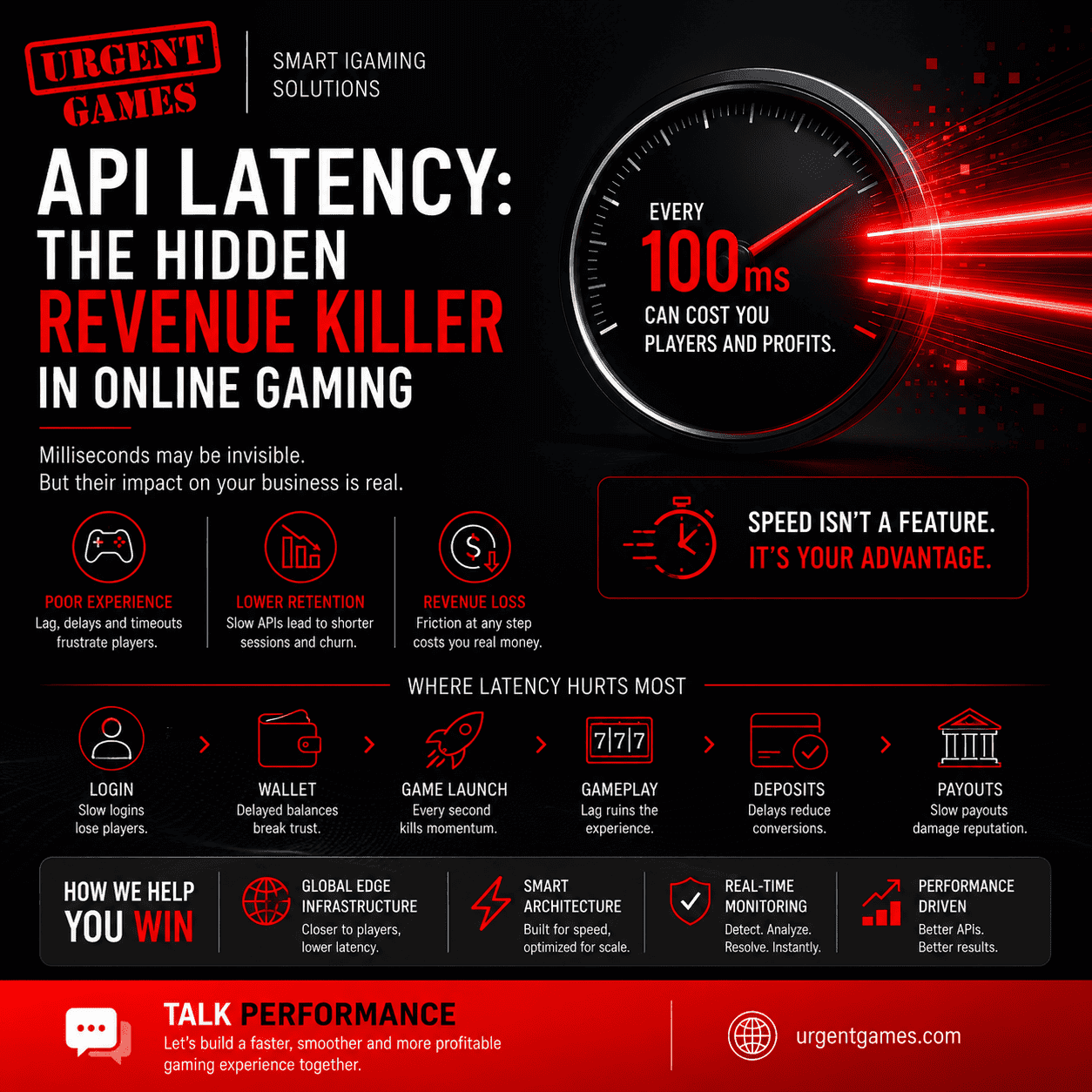
Casino API latency directly influences how smooth gameplay feels, especially during spins, bets, and balance updates. While players do not see backend systems, they immediately notice delays.
What API Latency Means in iGaming Systems
API latency is the time taken for a system to respond to a request.
In iGaming platforms, this affects:
- Game loading
- Wallet updates
- Bet processing
- Session validation
When response times increase, the platform feels slower—even if everything is technically working.
Why Latency Impacts Player Behavior
Players expect instant feedback. Therefore, even minor delays can create negative impressions.
Common effects include:
- Frustration during gameplay
- Reduced trust in the platform
- Early session drop-off
Importantly, users rarely identify the technical cause. They simply stop playing.
Revenue Impact of Slow Gaming Systems
Latency issues affect key business metrics:
Shorter Sessions
Players lose engagement when systems feel unresponsive.
Lower Conversions
Delays during deposits or onboarding reduce completion rates.
Reduced Retention
Over time, users migrate to faster competitors.
Game Launch Speed and User Drop-Off
One of the most critical pressure points is game startup time.
Delays are often caused by:
- Provider API response time
- Authentication checks
- Wallet synchronization
As a result, many users leave before the game even begins.
Why Latency Adds Up Across Systems
Modern platforms rely on multiple services working together:
- Game providers
- Payment gateways
- Wallet systems
- Risk engines
Each request adds delay. Together, these small delays become noticeable friction.
Mobile Gaming Makes Latency Worse
Mobile users experience higher variability due to:
- Network instability
- Signal fluctuations
- Packet loss
Since mobile dominates traffic in iGaming, performance optimization is essential.
Infrastructure Behind API Response Delays
Distributed System Distance
Long geographic routes increase response time.
Database Bottlenecks
Poor queries and locking slow down critical operations.
Monolithic Architecture
Shared systems create performance interference.
Learn more:
- https://aws.amazon.com/what-is/api/ (Amazon Web Services)
How to Improve System Performance
Edge Deployment
Place services closer to users to reduce travel time.
Caching Strategies
Store frequently accessed data to reduce API calls.
Async Processing
Use event-driven systems for faster response handling.
API Optimization Layers
Use gateways for routing, compression, and balancing.
Key Metrics That Actually Matter
Instead of focusing only on uptime, track:
- P95 response time
- Wallet update speed
- Game launch latency
- Session start time
These metrics reflect real user experience more accurately.
Images (Now Fixed + Optimized)
1. Server Infrastructure Optimization
Alt text: casino API latency server infrastructure optimization data centers
2. Network Delay Visualization
Alt text: casino API latency network delay visualization real-time gaming traffic
3. Mobile Gaming Performance
Alt text: casino API latency mobile gaming lag performance user experience
Why Speed Becomes a Competitive Advantage
In competitive iGaming markets, most operators offer similar games and bonuses. However, performance differences strongly affect user retention.
Faster platforms feel more reliable, which increases long-term engagement.
Final Thoughts
Latency is not just a technical constraint—it is part of the product experience.
Even small improvements in casino API latency can lead to:
- Higher retention
- Better conversion rates
- Stronger user trust
In modern iGaming, speed directly influences revenue outcomes.