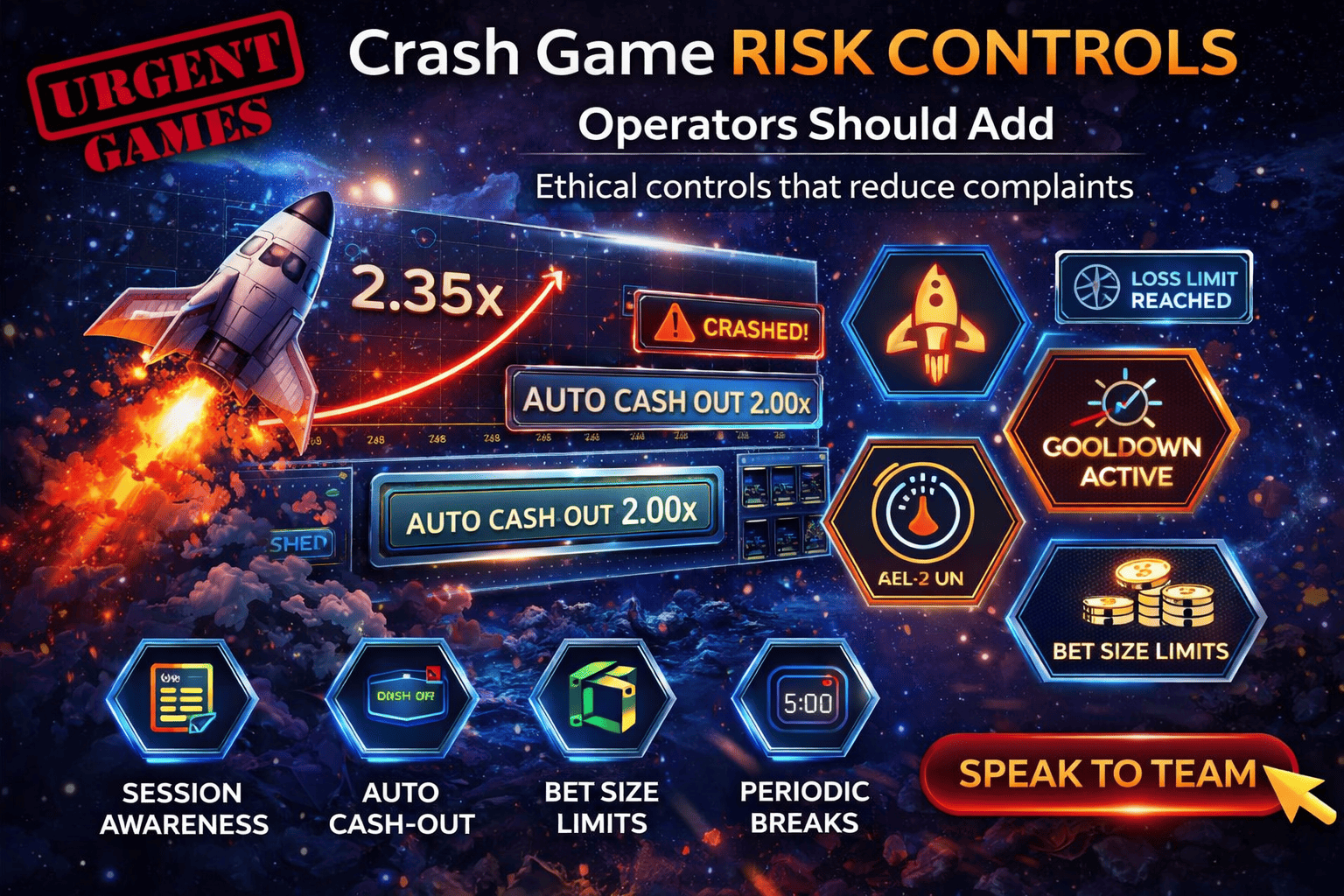
Crash game responsible design plays a critical role in managing player risk in fast-paced betting environments.
Crash games have surged in popularity due to their instant gameplay, simple mechanics, and rapid betting cycles. They are highly effective for engagement—but also introduce unique behavioral risks.
Without proper safeguards, operators may face increased complaints, player dissatisfaction, and regulatory pressure.
Why Fast-Paced Games Need Dedicated Safeguards
Unlike traditional casino formats, crash games involve:
-
continuous betting loops
-
real-time decisions
-
very short round cycles
This leads to:
-
reduced decision time
-
faster loss accumulation
-
more impulsive behavior
Standard responsible gaming tools alone are not enough in this environment.
Key Risk Controls for Crash Games
Session Visibility Tools
Players often lose track of activity during fast sessions.
Show real-time data:
-
total wagered
-
total won/lost
-
session balance
Visual indicators (like color changes) help players recognize loss patterns earlier.
Timed Break Prompts
Introduce gentle interruptions such as:
-
reminders after multiple rounds
-
session time alerts
-
optional pause suggestions
These create reflection points without disrupting gameplay flow.
Auto Cash-Out Support
Manual decisions under pressure can increase volatility.
Provide:
-
pre-set cash-out options
-
suggested multiplier ranges
-
saved preferences
This encourages more structured play.
Bet Control Mechanisms
To reduce loss chasing, implement:
-
limits on rapid bet increases
-
alerts for unusual bet jumps
-
optional caps per session
These controls help maintain stability.
Cooldown Features
After consecutive losses, players are more likely to act impulsively.
Useful safeguards include:
-
short automatic pauses
-
optional cooldown periods
-
temporary betting restrictions
Clear Game Transparency
Build trust by displaying:
-
RTP ranges
-
fairness explanations
-
volatility indicators
You can reference standards from organizations like UK Gambling Commission and Malta Gaming Authority for compliance alignment.
Behavioral Risk Detection
Advanced systems can identify:
-
increasing bet patterns
-
long uninterrupted sessions
-
rapid gameplay cycles
These signals can trigger:
-
personalized reminders
-
dynamic limits
-
safer play suggestions
For broader player protection practices, resources like GamCare provide useful guidance.
Integration With Platform Controls
Ensure consistency by linking with:
-
deposit limits
-
loss limits
-
self-exclusion tools
-
session tracking systems
(See also: /responsible-gaming-tools, /risk-monitoring-systems)
Why These Controls Matter
Most issues in crash games stem from:
-
rapid losses
-
lack of visibility
-
emotional decision-making
Structured safeguards improve:
-
player trust
-
complaint rates
-
long-term retention
Regulatory and Business Impact
Regulators are increasingly focused on high-speed game formats.
Operators who proactively implement safeguards benefit from:
-
smoother compliance processes
-
reduced operational risk
-
stronger brand positioning
Waiting for enforcement often leads to rushed and inefficient fixes.
Final Thought
Crash games are designed for speed—but sustainable success depends on control.
Well-designed safeguards don’t reduce engagement—they make it more stable, predictable, and scalable over time.
🎯 Speak to Team
Create gameplay that balances engagement with long-term sustainability.