
 Português do Brasil
  English
  简体中文
简体中文  Español
  Русский
  Türkçe
  Tiếng Việt
  Українська
  Български
  Suomi
Suomi  Ελληνικά
  Čeština
  اردو
اردو  Svenska
  עִבְרִית
  हिन्दी
  Français
  Հայերեն
  Italiano
  日本語
日本語  Română
  Polski
  Српски језик
  Latviešu valoda
  Deutsch (Sie)
  한국어
한국어 
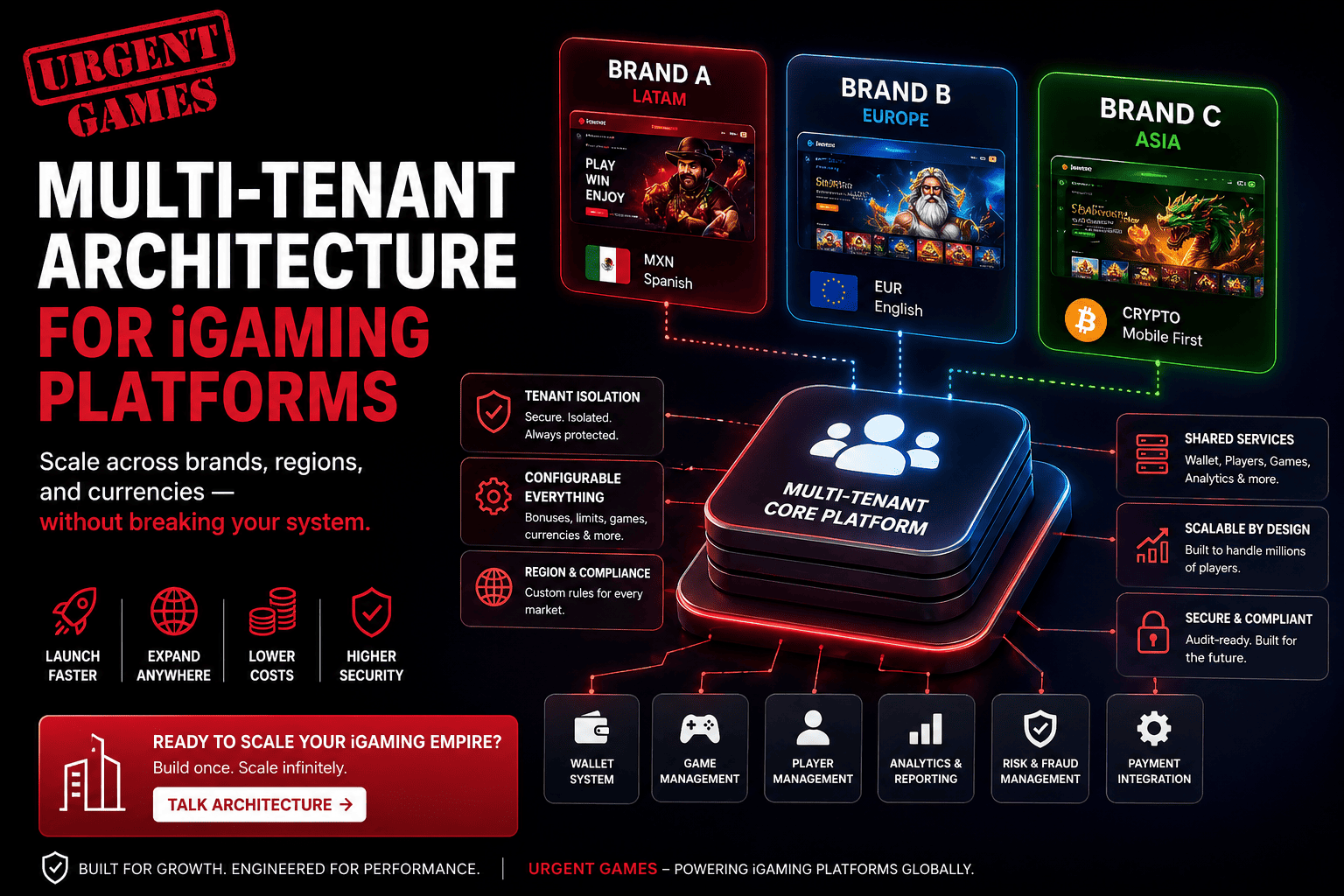
In 2026, a multi tenant casino architecture is essential for scaling iGaming platforms across brands, regions, and currencies without breaking your system.
Most operators don’t fail because of growth—they fail because their systems weren’t built for it.
Launching one brand is easy.
Scaling across multiple markets is where architecture gets tested.
Multi-Tenant Architecture Overview
- One backend serving multiple brands
- Shared infrastructure with isolated data
- Tenant-specific configurations
- Centralized updates and security
What Is a Multi-Tenant Casino System?
A multi-tenant setup allows a single backend to support multiple independent brands.
Each tenant has:
- Its own frontend
- Unique configurations
- Regional compliance rules
- Separate player base
While sharing:
- Infrastructure
- APIs
- Core logic
🖼️ Image: Architecture Overview
Alt: multi tenant casino architecture diagram with shared backend and isolated tenants
Why Multi-Tenant Architecture Matters
The iGaming ecosystem includes:
- Transações em tempo real
- Vários fornecedores
- Regional regulations
- Alta concorrência
This model enables:
- Lançamentos mais rápidos
- Lower costs
- Consistent security
- Centralized updates
Outbound references:
The Wrong Way: Copy-Paste Scaling
Many operators still:
- Clone backends
- Duplicate databases
- Deploy per brand
Problems:
- Maintenance complexity
- Security gaps
- Higher costs
- Slow updates
Scaling this way multiplies risk—not growth.
The Right Approach: System Design Principles
The correct foundation is:
Shared system + isolated data + flexible configuration
1. Tenant Isolation
Isolation is critical.
Methods:
- Tenant ID in every request
- Scoped queries
- Row-level separation
Advanced:
- Separate DB per tenant
- Partitioned shared database
Rule: No data crossover—ever.
2. Configuration Layer
This enables flexibility across brands.
Each tenant can control:
- Currency
- Bônus
- Game access
- Risk settings
Implementação:
- Dynamic config services
- Feature flags
👉 Internal link: /igaming-config-management
3. Wallet System Design
A common failure point.
Requisitos:
- Tenant-aware balances
- Currency isolation
- Transaction tagging
Risk:
Shared wallet logic without tenant context.
👉 Internal link: /wallet-architecture-guide
🖼️ Image: Wallet Flow
Alt: multi tenant casino wallet system with tenant-specific balances and transactions
4. Provider Integration Layer
Each tenant interacts differently with providers.
Solução:
- Abstract integration layer
- Tenant-based routing
👉 Internal link: /game-provider-integration
5. Authentication & User Segmentation
Each tenant must isolate users.
Requisitos:
- Tenant-scoped user IDs
- Independent login systems
- Strong access controls
6. Compliance & Regional Rules
Each market has different regulations.
Configure per tenant:
- KYC rules
- Limites de apostas
- Data storage
Outbound reference:
7. Infrastructure Strategy
Recommended stack:
- Microservices
- Containerization (Docker)
- Orchestration (Kubernetes)
- Horizontal scaling
Data Architecture Options
Shared Database
Pros:
- Lower cost
- Easier management
Cons:
- Higher risk
Separate Databases
Pros:
- Strong isolation
Cons:
- More complex
Hybrid (Recommended)
- Shared services
- Isolated critical data
🖼️ Image: Data Model
Alt: multi tenant casino database architecture shared vs isolated model
Performance Considerations
Desafios:
- Noisy neighbor problem
- Resource contention
Solutions:
- Rate limiting per tenant
- Caching layers
- balanceamento de carga
Security Considerations
Proteções indispensáveis:
- Tenant validation per request
- API gateway enforcement
- Encryption
- Registros de auditoria
Principle: Every action must map to a tenant.
Real-World Example
- Brand A → LATAM
- Brand B → Europe
- Brand C → Asia
One system handles all—with different configurations.
Sem essa abordagem:
Executar várias plataformas resulta em custos e complexidade maiores.
Quando este modelo não se encaixa
Evite se:
- Lógica de negócios completamente diferente
- Isolamento regulatório rigoroso
- Recursos de engenharia limitados
O Futuro: Sistemas Modulares
Próxima evolução:
- Núcleo multi-inquilino
- Extensões baseadas em plugins
Isso permite flexibilidade sem fragmentação do sistema.
Considerações finais
Um sistema multi-inquilino bem projetado permite:
- Lançamentos mais rápidos
- Melhor controle
- Menor risco operacional
- Escalabilidade a longo prazo
Construa uma vez. Expanda com eficiência.
CTA
Quer projetar sua arquitetura da maneira correta?