
 English
  简体中文
简体中文  Español
  Русский
  Türkçe
  Tiếng Việt
  Українська
  Български
  Suomi
Suomi  Ελληνικά
  Čeština
  اردو
اردو  Svenska
  עִבְרִית
  हिन्दी
  Français
  Հայերեն
  Italiano
  日本語
日本語  Română
  Polski
  Српски језик
  Latviešu valoda
  Deutsch (Sie)
  Português do Brasil
  한국어
한국어 
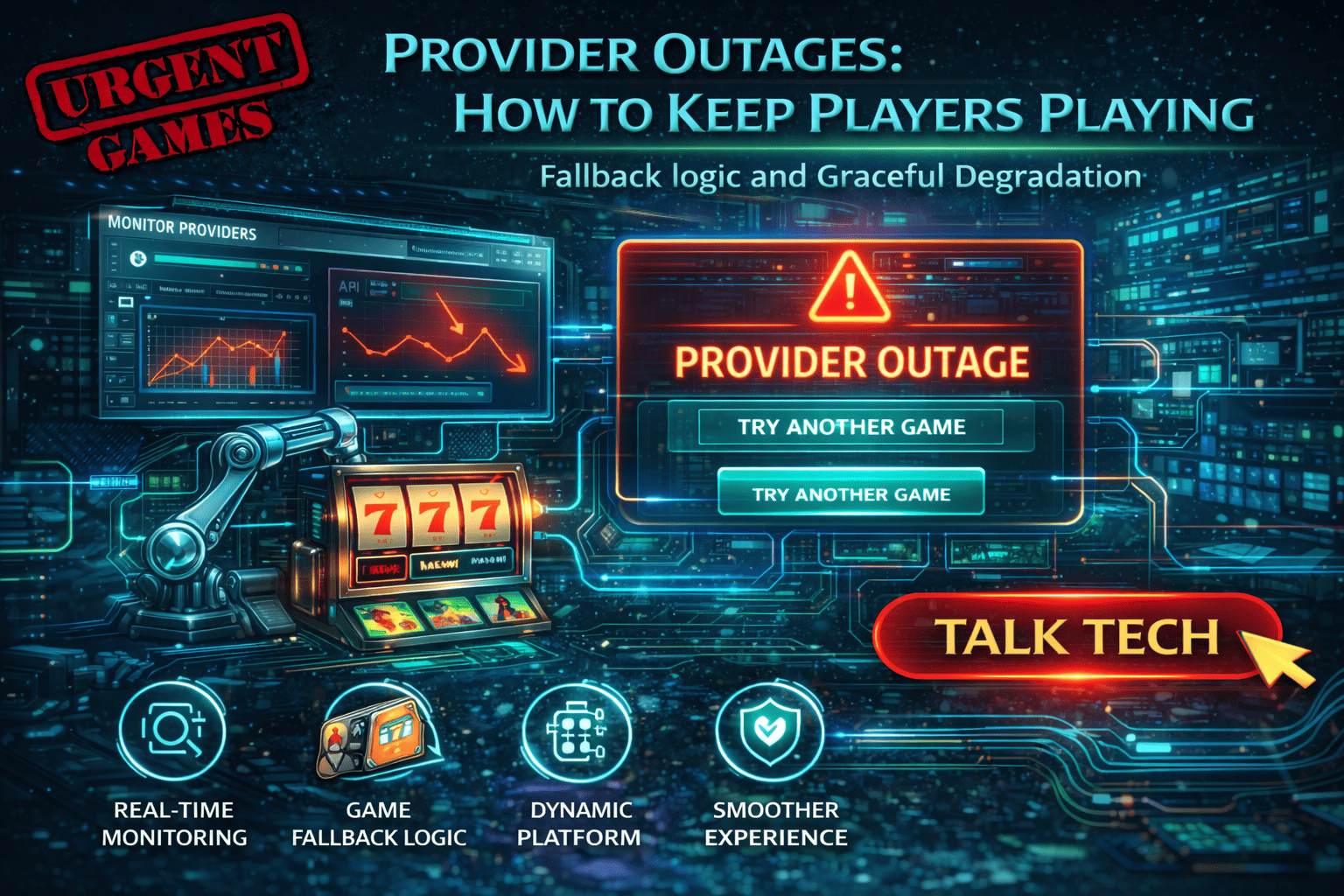
Provider outage handling plays a crucial role in keeping modern iGaming platforms stable. Online casinos rely on many external integrations including slot suppliers, live casino studios, and jackpot networks. When one of these providers experiences downtime, the platform must ensure the player experience remains smooth.
Instead of allowing outages to interrupt gameplay, resilient systems use monitoring tools, fallback logic, and dynamic content routing. These strategies allow players to continue exploring games even if one integration becomes temporarily unavailable.
Why Outages Are Common in Multi-Provider Platforms
Today’s casino platforms depend on a wide ecosystem of services.
Typical integrations include:
slot providers
live dealer platforms
crash game suppliers
jackpot networks
external gaming services
Each integration adds valuable content, but it also increases technical complexity.
Even reliable systems sometimes encounter problems such as:
server infrastructure failures
API timeout errors
deployment mistakes
traffic spikes that overload systems
Regulatory organizations like the Malta Gaming Authority encourage operators to maintain stable infrastructure and transparent operational processes.
For this reason, strong outage management strategies are essential.
The Player Experience Problem During Outages
Players do not think about technical infrastructure.
They simply expect games to launch instantly and perform smoothly.
If a player clicks a game and nothing happens, they rarely assume an external supplier failed. Instead, they assume the casino itself is unreliable.
Common player frustrations during outages include:
games failing to load
frozen screens
broken launch buttons
confusing error messages
Industry coverage from iGaming Business highlights that poor technical experiences are a common reason players abandon gaming sessions.
Maintaining a smooth experience during disruptions is therefore critical.
Graceful Degradation Keeps the Platform Running
A key principle in resilient software systems is graceful degradation.
Rather than shutting down the entire platform when something fails, the system continues operating with reduced functionality.
For casino platforms this may involve:
temporarily removing unavailable games
suggesting similar titles from other providers
preventing broken game sessions
Players continue browsing the lobby and discovering new games while the issue is resolved.
Real-Time Monitoring and Early Detection
Modern platforms rely heavily on monitoring tools that track provider performance.
Important signals include:
API response times
request failure rates
game launch success
callback reliability
When unusual patterns appear, monitoring systems generate alerts for operators.
Many platforms build these systems using technologies promoted by the Cloud Native Computing Foundation, which supports resilient distributed architectures.
Early detection allows operators to respond quickly before widespread player disruption occurs.
Automatic Provider Status Management
Once a problem is detected, the platform can automatically update provider availability.
These status changes affect multiple systems:
the game lobby
launch routing logic
administrative dashboards
If a provider becomes unstable, the platform may temporarily hide affected games or disable launch buttons.
This prevents players from encountering broken content.
For more technical details about platform architecture, see our guide to enterprise casino API systems.
Fallback Game Recommendations
Fallback systems help maintain engagement when certain games cannot load.
When a player selects an unavailable title, the platform can automatically recommend alternatives.
Examples include:
suggesting a similar slot from another provider
highlighting trending games
redirecting to curated categories
Players stay engaged and often discover new games instead of leaving the platform.
Session Recovery During Game Interruptions
Occasionally disruptions occur while a player is actively playing.
This creates challenges such as:
unfinished bets
interrupted bonus rounds
delayed win settlements
Reliable platforms include recovery systems that reconcile game events after the provider reconnects.
Typical mechanisms include:
transaction verification
event reconciliation
callback retry systems
These processes ensure player balances remain accurate.
You can explore related infrastructure in our article about casino wallet architecture.
Dynamic Game Lobby Adjustments
Casino lobbies should adapt automatically when integrations change status.
If a provider becomes unavailable, the platform can dynamically:
remove affected titles
promote other providers
update recommended game sections
Players always see content that works, which significantly reduces frustration.
Clear Messaging During Temporary Disruptions
Even well-designed systems occasionally experience downtime.
When this happens, transparent messaging improves player trust.
Instead of vague messages such as:
“Game failed to load.”
Platforms can display helpful notifications like:
“Game temporarily unavailable. Please try another title while we resolve the issue.”
This keeps players informed and encourages them to continue exploring.
Why Resilient Platforms Retain More Players
Players rarely remember the technical cause of a disruption.
However, they always remember the experience.
Platforms that manage outages effectively benefit from:
smoother gaming sessions
fewer abandoned visits
stronger platform trust
better long-term retention
Instead of leaving, players simply choose another game.
Final Thoughts
Distributed gaming ecosystems inevitably experience occasional outages.
However, well-designed platforms minimize the impact on players.
Through monitoring systems, fallback recommendations, dynamic lobbies, and resilient infrastructure, operators can maintain a seamless gaming experience even when providers encounter issues.
The most successful platforms focus not only on game variety but also on reliability.
Stable systems ensure players stay engaged and keep returning to the platform.