 English
  简体中文
简体中文  Español
  Русский
  Türkçe
  Tiếng Việt
  Українська
  Български
  Suomi
Suomi  Ελληνικά
  Čeština
  اردو
اردو  Svenska
  עִבְרִית
  हिन्दी
  Français
  Հայերեն
  Italiano
  日本語
日本語  Română
  Polski
  Српски језик
  Latviešu valoda
  Deutsch (Sie)
  Português do Brasil
  한국어
한국어 
Introduction: Growth Without Chaos
A multi brand casino platform is one of the fastest ways to scale in iGaming today.
You can target different markets, audiences, and positioning strategies—all at once.
However, most operators make a critical mistake.
They scale by duplicating everything:
- Separate backends
- Separate wallets
- Separate integrations
- Separate teams
As a result, this creates unnecessary complexity.
Instead of scaling efficiently, you end up with:
- Higher operational overhead
- Fragmented data
- Slower product updates
- Inconsistent user experiences
So, what’s the smarter approach?
In 2026, successful operators build one powerful backend with multiple distinct brands.
Multi Brand Casino Platform Strategy: Centralize and Differentiate
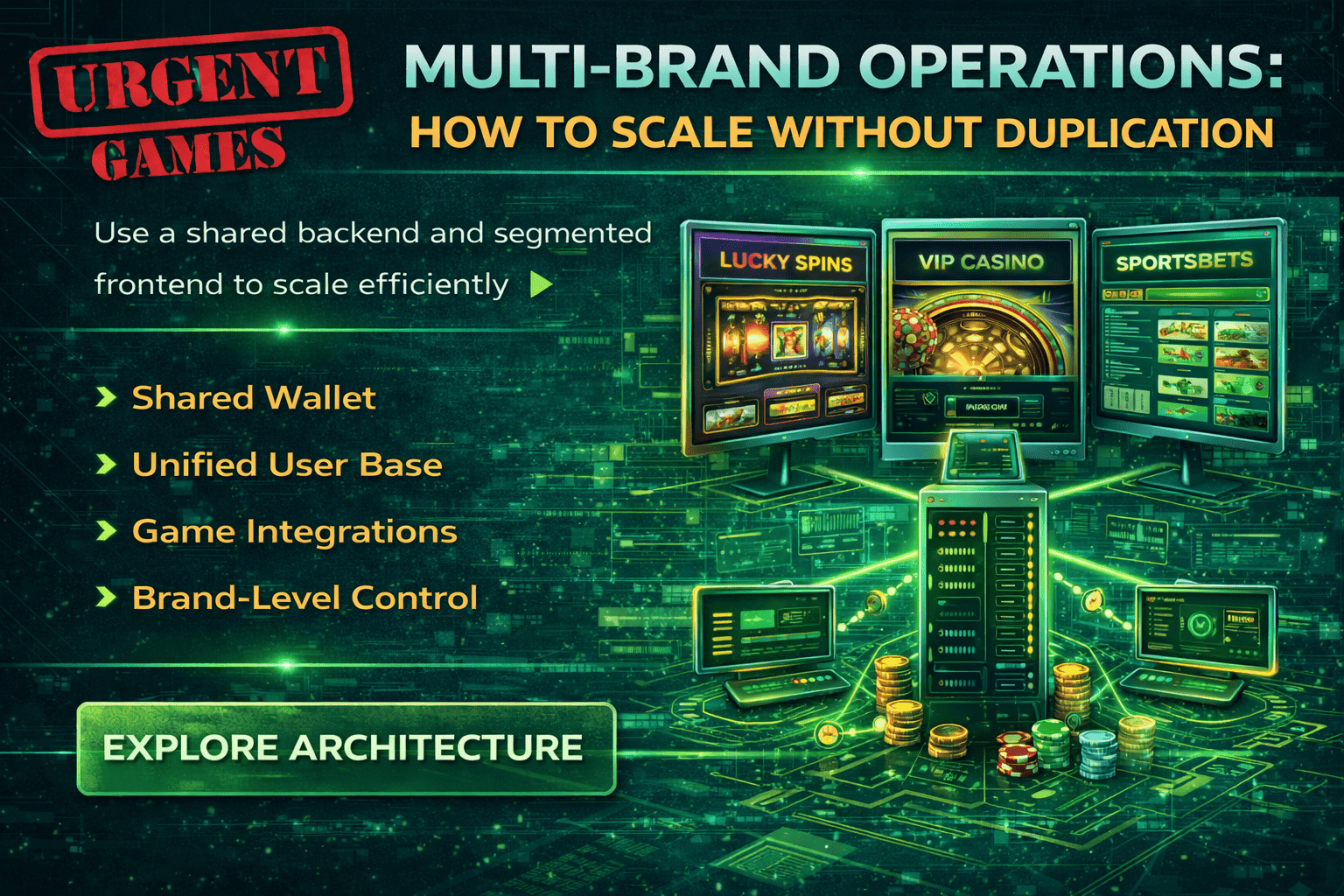
To scale effectively, you need to separate your system into two layers.
1. Centralized Backend (Shared Power)
This layer includes:
- Wallet system
- Game integrations
- Payments
- Player data
- Risk and compliance
2. Brand-Level Frontend (Unique Experience)
Meanwhile, each brand controls:
- UI/UX design
- Content and language
- Promotions
- Game presentation
👉 Key insight: Build your backend once—but scale your brands infinitely.
Why Multi Brand Casino Platforms Win in 2026
Today, operators no longer rely on a single brand.
Instead, they build:
- A sports-focused brand
- A casual mobile-first brand
- A VIP/high-roller brand
- Region-specific brands
Because of this, they gain:
- Better targeting
- Higher conversion rates
- Improved retention
- Faster experimentation
The Problem With Duplicate Systems
If each brand runs independently, several issues appear.
1. Operational Complexity
Every update must be repeated across systems.
2. Inconsistent Data
Player insights become fragmented.
3. Higher Costs
Infrastructure and teams are duplicated.
4. Slower Innovation
Rolling out features takes longer.
Shared Wallet System for Multi Brand Casino Platforms
The wallet is the core of your platform.
What to implement:
- Centralized wallet across brands
- Unified balance management
- Cross-brand transaction tracking
Why it matters:
Players may use multiple brands, so you need a single financial source of truth.
Unified Player Identity Layer
A single user should not exist as multiple identities.
What to implement:
- Global user ID
- Cross-brand login
- Shared KYC verification
Why it matters:
This reduces fraud and improves personalization.
For more on identity systems, see:
https://auth0.com/docs/get-started/identity-fundamentals
Modular Game Integration
Instead of repeating integrations, build once and reuse.
What to implement:
- Aggregation layer for providers
- Standardized APIs
- Brand-level game controls
Why it matters:
You avoid redundant integrations and speed up expansion.
Brand Configuration Engine
Each brand should feel unique without separate infrastructure.
Control per brand:
- Game availability
- Bonuses and promotions
- UI themes
- Localization
Why it matters:
This enables flexibility without duplication.
Frontend Architecture for Multi Brand Casino Platforms
Your frontend defines the brand experience.
Best approach:
- Separate frontends or themes
- Shared component libraries
- Brand-specific design systems
👉 Internal link suggestion:
See your “Frontend Architecture Guide” for deeper insights.
Centralized Analytics and Reporting
Data should always remain unified.
What to implement:
- Shared analytics dashboard
- Brand-level segmentation
- Cross-brand comparison
For analytics best practices, see:
https://cloud.google.com/architecture/data-analytics
Why it matters:
You can identify trends and optimize faster.
Platform-Level Risk and Compliance
Risk management must be centralized.
What to include:
- Fraud detection
- AML monitoring
- Responsible gaming systems
Why it matters:
A flagged user should be recognized across all brands instantly.
Marketing and CRM Segmentation
Although marketing is brand-specific, the data should be shared.
What to implement:
- Central CRM
- Brand-level targeting
- Cross-brand insights
👉 Internal link suggestion:
Read your “CRM Optimization Playbook” for more.
How This Model Drives Growth
When implemented correctly, a multi brand casino platform allows you to:
Launch Faster
New brands go live in weeks.
Test More
You can experiment with different strategies.
Optimize Better
Insights from one brand improve others.
Scale Globally
Expand into new markets without rebuilding infrastructure.
The Psychology Behind Multi-Brand Success
Different players want different experiences.
For example:
- Some prefer simplicity
- Others want VIP treatment
- Many expect localized content
- Some enjoy high-risk gameplay
Therefore, multiple brands allow you to match each mindset effectively.
Common Mistakes to Avoid
1. Cloning Everything
This creates inefficiency.
2. Over-Centralization
Brands lose uniqueness.
3. Poor Data Integration
Limits insights.
4. Inconsistent UX
Reduces trust.
The Future of Multi Brand Casino Platforms
Looking ahead, operators will adopt:
- Platform-first architecture
- API-driven systems
- Modular brand deployment
- Real-time shared intelligence
As a result, scaling from 1 to 10+ brands becomes seamless.
Final Thoughts: Scale Smarter
Growth is not about doing more work.
Instead, it’s about building smarter systems.
A strong multi brand casino platform gives you:
- Flexibility
- Speed
- Efficiency
- Competitive advantage
Ultimately, the winners in 2026 won’t be those with the most brands—
But those who scale them intelligently.
🚀 CTA: Explore Architecture
If you want to build a scalable multi brand casino platform with shared infrastructure and flexible frontends—