
 English
  简体中文
简体中文  Español
  Русский
  Türkçe
  Tiếng Việt
  Українська
  Български
  Suomi
Suomi  Ελληνικά
  Čeština
  اردو
اردو  Svenska
  עִבְרִית
  हिन्दी
  Français
  Հայերեն
  Italiano
  日本語
日本語  Română
  Polski
  Српски језик
  Latviešu valoda
  Deutsch (Sie)
  Português do Brasil
  한국어
한국어 
Multi Brand Casino Platform: Scaling Casino Operations Efficiently
Introduction
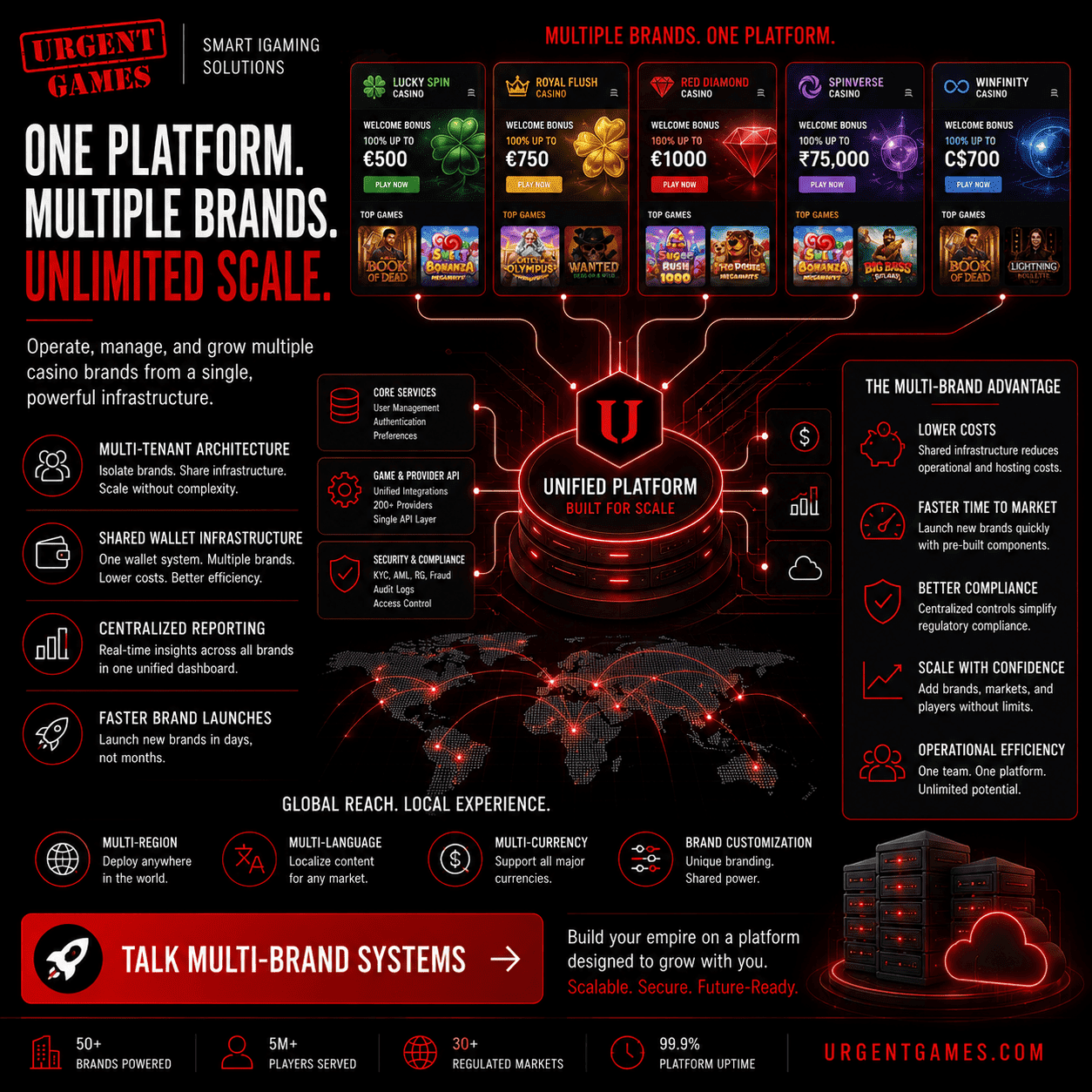
A multi brand casino platform enables operators to launch, manage, and scale multiple casino brands through a shared infrastructure ecosystem. As iGaming companies expand into new markets, languages, currencies, and customer segments, managing multiple brands becomes increasingly complex.
Launching a single casino brand is already challenging. Managing ten, twenty, or even fifty brands efficiently requires a completely different operational approach.
Many operators initially create separate environments for every brand. While this strategy may work in the short term, it often results in operational inefficiencies, higher infrastructure costs, slower launches, increased maintenance requirements, and long-term technical debt.
Modern operators are increasingly adopting a multi brand casino platform architecture to simplify growth and improve scalability. Instead of maintaining independent systems, they manage multiple brands through a centralized infrastructure layer that reduces complexity and accelerates expansion.
What Is a Multi Brand Casino Platform?
A multi brand casino platform allows operators to manage multiple casino brands from a single backend ecosystem.
Each brand can maintain:
- Unique branding
- Independent domains
- Multiple languages
- Different currencies
- Customized content configurations
At the same time, brands share:
- Core infrastructure
- Wallet systems
- APIs
- Reporting tools
- Compliance frameworks
The result is greater operational efficiency without sacrificing flexibility.
Why Multi Brand Casino Operations Are Growing
Modern operators increasingly target:
- Multiple geographic markets
- Diverse player demographics
- Various acquisition channels
- Localized gaming experiences
Rather than building entirely separate systems, operators can launch new brands on top of existing infrastructure.
Key benefits include:
- Faster expansion
- Lower operating costs
- Better resource utilization
- Improved scalability
The Problem With Separate Casino Platforms
Many operators begin with a simple model:
One Brand = One Platform
Initially, this approach appears manageable.
However, as additional brands are launched, every new brand requires:
- New deployments
- Additional monitoring
- Separate maintenance cycles
- Repeated software updates
Complexity grows exponentially as the business scales.
How a Multi Brand Casino Platform Reduces Infrastructure Costs
Separate environments often duplicate:
- Databases
- Servers
- Monitoring systems
- Third-party integrations
As the number of brands increases, infrastructure spending rises unnecessarily.
A multi brand casino platform enables operators to share core infrastructure resources while maintaining logical separation between brands, dramatically improving cost efficiency.
Multi-Tenant Architecture Powers Multi Brand Casino Platforms
Most modern platforms rely on multi-tenant architecture.
In a multi-tenant environment:
- One application serves multiple brands
- Brand data remains logically isolated
- Shared services reduce duplication
- Resources are utilized more efficiently
This architectural approach supports rapid scaling without requiring separate deployments for every brand.
Centralized Management Simplifies Operations
One of the biggest advantages of a multi brand casino platform is centralized administration.
Operators can:
- Configure settings globally
- Deploy updates once
- Monitor all brands from a single dashboard
- Standardize operational processes
This significantly reduces operational overhead.
Faster Brand Launches Create Competitive Advantage
Launching a new casino brand should not require rebuilding infrastructure from scratch.
With a modern platform, operators can:
- Reuse integrations
- Reuse compliance workflows
- Reuse wallet infrastructure
- Reuse reporting systems
As a result, new brands can often launch in days instead of months.
Shared Wallet Infrastructure Reduces Complexity
Wallet management is one of the most critical components of any iGaming ecosystem.
Separate wallet systems often create:
- Reconciliation challenges
- Operational inefficiencies
- Increased maintenance costs
- Greater risk exposure
Shared wallet architecture delivers:
- Consistent transaction processing
- Simplified reporting
- Better financial visibility
- Lower operational risk
Learn more about centralized payment processing through your Casino Wallet System solutions.
Unified APIs Improve Scalability
Modern operators frequently integrate:
- Casino content providers
- Sportsbook platforms
- Payment gateways
- Fraud prevention systems
- CRM solutions
Without standardization, every new brand requires additional integration work.
A unified API layer eliminates duplication and accelerates expansion.
Configuration Over Customization
A common scaling mistake is excessive customization.
Instead of writing new code for every brand, successful operators focus on configurable architecture.
Examples include:
- Theme settings
- Language packs
- Payment options
- Promotional rules
- Content management
Configuration scales far more efficiently than customization.
Centralized Reporting Across Brands
Multi-brand operators require visibility into:
- Revenue performance
- Deposits and withdrawals
- Customer retention
- Provider performance
- Marketing effectiveness
Centralized reporting creates a single source of operational truth and improves decision-making.
Compliance Management Becomes Easier
Regulatory obligations increase as operators expand.
Managing compliance independently for every brand creates:
- Duplicate processes
- Higher costs
- Increased risk
Shared compliance infrastructure improves:
- Audit readiness
- Reporting consistency
- Risk monitoring
- Regulatory oversight
Multi-Currency Support Is Essential
Growing operators frequently support:
- USD
- EUR
- GBP
- BRL
- MXN
- Stablecoins
A modern multi brand casino platform handles multiple currencies through a unified architecture, enabling efficient global expansion.
Localization Without Infrastructure Duplication
Different markets require:
- Local languages
- Regional content
- Market-specific promotions
- Local payment methods
Multi-brand architecture allows operators to localize player experiences while maintaining centralized operational control.
Shared Observability Improves Reliability
Infrastructure monitoring becomes more effective when teams can track:
- System health
- Provider performance
- Transaction activity
- User experience metrics
Centralized observability improves reliability across every brand.
Organizations commonly leverage technologies such as Kubernetes and cloud-native monitoring solutions to support these requirements.
Fraud Detection Benefits From Shared Intelligence
Fraud rarely targets a single brand.
Shared infrastructure enables:
- Cross-brand device monitoring
- Transaction correlation
- Risk scoring
- Behavioral analysis
This strengthens fraud prevention capabilities across the entire operator ecosystem.
Real-Time Analytics Drive Better Decisions
Multi-brand operators generate significant amounts of operational data.
Centralized analytics helps identify:
- Top-performing brands
- Expansion opportunities
- Operational bottlenecks
- Customer behavior trends
Better insights lead to better business outcomes.
DevOps Efficiency Improves Dramatically
Engineering teams benefit from:
- Unified deployment pipelines
- Standardized infrastructure
- Shared monitoring systems
- Automated scaling processes
Reduced duplication allows teams to focus on innovation rather than maintenance.
The Importance of Brand Isolation
Although infrastructure is shared, proper isolation remains essential.
Areas requiring isolation include:
- Data access controls
- Reporting permissions
- Brand-specific configurations
- Security policies
Proper separation protects operational integrity while preserving efficiency.
Cloud-Native Infrastructure Accelerates Growth
Modern platforms increasingly utilize:
- Containers
- Kubernetes
- Event-driven architecture
- Auto-scaling services
- Cloud-native deployments
Cloud-native infrastructure provides the flexibility required for rapid growth and global expansion.
Key Metrics for Multi Brand Casino Platform Success
Infrastructure Metrics
- Deployment frequency
- Infrastructure utilization
- API performance
- System availability
Business Metrics
- Revenue by brand
- Brand launch time
- Market expansion velocity
- Customer acquisition efficiency
Operational Metrics
- Support effectiveness
- Compliance workload
- Provider uptime
- Incident response times
Common Multi Brand Casino Platform Mistakes
Separate Infrastructure for Every Brand
Costs rise rapidly and operational complexity increases.
Excessive Customization
Maintenance becomes difficult and scalability suffers.
Fragmented Reporting
Decision-making becomes slower and less accurate.
Independent Compliance Workflows
Duplicate effort increases operational overhead.
The Future of Multi Brand Casino Platforms
The next generation of platforms will increasingly offer:
- Advanced multi-tenant architecture
- Unified wallet ecosystems
- Shared analytics platforms
- Automated compliance workflows
- AI-powered operational tools
Operators require scalability without complexity, making centralized platform architecture increasingly important.
Final Thoughts
The most successful iGaming operators are no longer building separate systems for every brand.
Instead, they are investing in a multi brand casino platform that enables efficient growth through a shared operational foundation.
By centralizing infrastructure, reporting, compliance, wallet management, and integrations, operators can:
- Launch brands faster
- Reduce operating costs
- Improve visibility
- Strengthen compliance
- Scale globally
In modern iGaming, the competitive advantage is not managing more brands.
It is managing more brands without multiplying complexity.