
 Latviešu valoda
  English
  简体中文
简体中文  Español
  Русский
  Türkçe
  Tiếng Việt
  Українська
  Български
  Suomi
Suomi  Ελληνικά
  Čeština
  اردو
اردو  Svenska
  עִבְרִית
  हिन्दी
  Français
  Հայերեն
  Italiano
  日本語
日本語  Română
  Polski
  Српски језик
  Deutsch (Sie)
  Português do Brasil
  한국어
한국어 
Spēlētāju prasības nekad nav bijušas tik augstas. Mūsdienās tiešsaistes kazino lietotāji sagaida tūlītēju spēļu palaišanu, ātru vestibila ielādi, reāllaika atlikumus, atsaucīgu navigāciju un pilnīgi nemanāmu spēles gaitu. Tāpēc katra papildu kavēšanās sekunde tieši palielina iespējamību, ka spēlētājs pamet platformu.
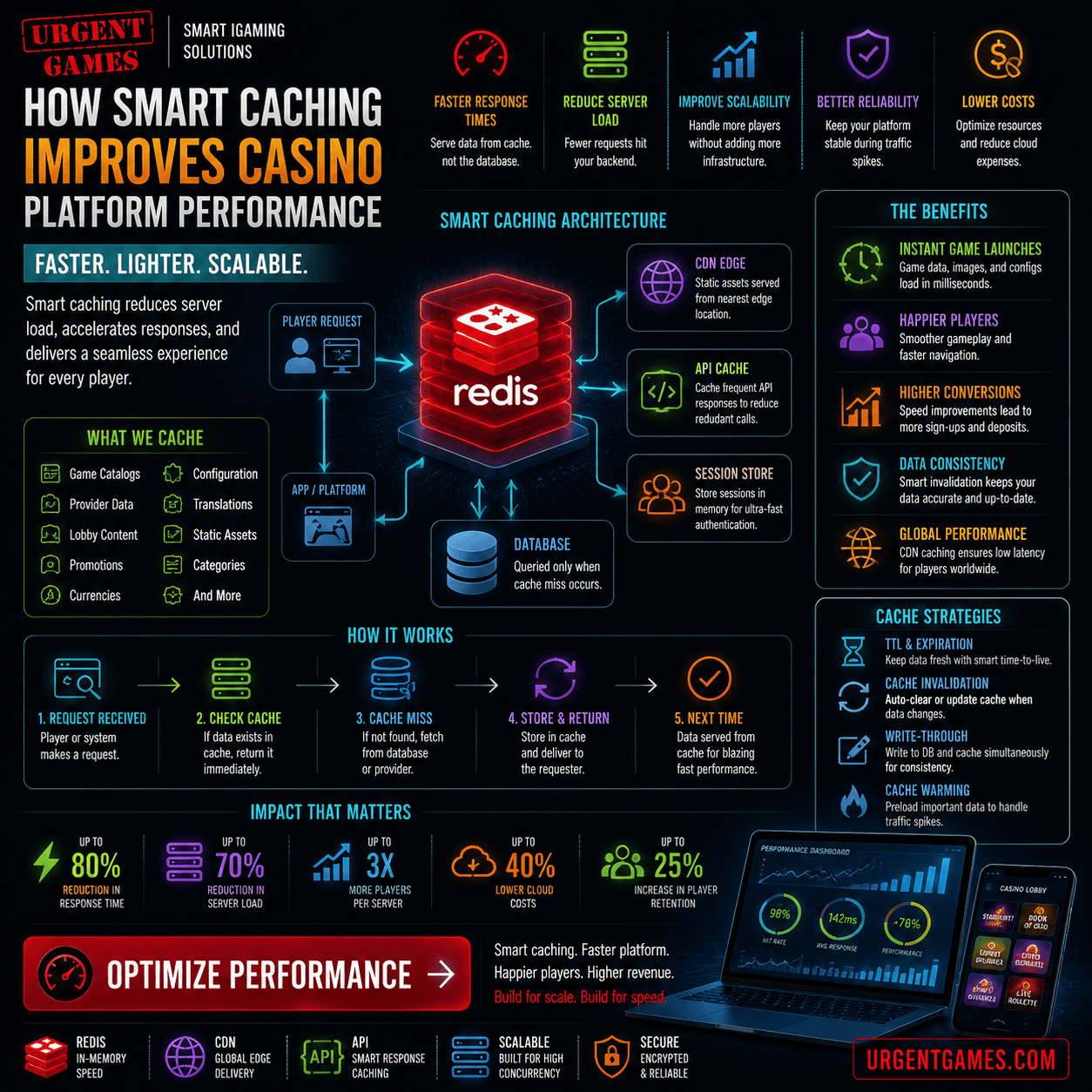
Aiz katras veiksmīgas spēļu platformas atrodas infrastruktūra, kas īpaši izstrādāta, lai samazinātu latentumu un palielinātu veiktspēju. Viens no efektīvākajiem veidiem, kā to panākt, ir ar viediem kazino kešatmiņa. Sākot ar Redis un satura piegādes tīklu (CDN) izmantošanu un beidzot ar API atbildes reakcijas optimizāciju un izkliedētu perifērijas infrastruktūru, mūsdienīgas kešatmiņas stratēģijas samazina servera slodzi, paātrina atbildes laikus un ievērojami uzlabo mērogojamību. Operatoriem, kas pārvalda tūkstošiem vienlaicīgu spēlētāju, efektīva kazino kešatmiņas stratēģija nav tikai veiktspējas optimizācija; tā ir absolūta darbības nepieciešamība.
Kas ir kazino kešatmiņa?
Interneta azartspēļu kontekstā kazino kešatmiņa ir process, kurā īslaicīgi tiek glabāti bieži pieprasītie dati, lai tos varētu sniegt lietotājiem gandrīz nekavējoties, atkārtoti nevaicājot aizmugursistēmas datubāzēs vai trešo pušu pakalpojumos. Tā vietā, lai tūkstošiem reižu ģenerētu tieši tādu pašu atbildi, platforma to izgūst no ātrdarbīgas kešatmiņas.
Parasti kešatmiņā saglabātie dati ietver:
Spēļu katalogi un pakalpojumu sniedzēju saraksti
Valūtas un konfigurācijas iestatījumi
Valodas faili un lokalizācijas dati
Vestibila saturs un reklāmas baneri
Statiskie front-end resursi (CSS, JavaScript, attēli)
Galu galā rezultāts ir ievērojami ātrāks reakcijas laiks un ievērojami samazinātas servera pieslodzes.
Kāpēc katra milisekunde ir svarīga
Veiktspēja tieši ietekmē jūsu peļņu. Konkrēti, tā nosaka spēlētāju noturību, sesiju ilgumu, konversijas rādītājus un kopējos ieņēmumus. Pētījumi dažādās digitālajās platformās konsekventi liecina, ka lēnāka lapu ielāde ievērojami palielina atteikšanos no vietnes.
Spēļu operatoriem pat nelielas kavēšanās pieteikšanās autentifikācijas, spēļu palaišanas, maka ielādes vai vestibila navigācijas laikā var ātri novest pie ieņēmumu zaudējumiem. Līdz ar to stabilas kazino kešatmiņas arhitektūras ieviešana ir vienkāršākais veids, kā novērst šīs sastrēgumus.
Ātrgaitas datu piekļuve ar Redis
Redis ir strauji kļuvusi par vienu no visplašāk izmantotajām kešatmiņas tehnoloģijām mūsdienu spēļu platformās. Atšķirībā no tradicionālajām relāciju datubāzēm, Redis datus pilnībā glabā atmiņā.
Šī arhitektūra nodrošina ārkārtīgi zemu latentumu un augstu caurlaidspēju, kas ir ideāli piemērots ātrai sesiju izguvei, ātrai līderu sarakstu atjaunināšanai un efektīvai ātruma ierobežošanai. Turklāt Redis ir īpaši vērtīgs bieži piekļūtai informācijai, kas bieži mainās, bet vienkārši neprasa atkārtotus, apjomīgus datubāzes vaicājumus.
CDN kešatmiņa uzlabo globālo veiktspēju
Spēļu platformas apkalpo spēlētājus no visas pasaules. Tomēr bez CDN (satura piegādes tīkla) katram spēlētāja pieprasījumam ir jānonāk atpakaļ uz jūsu sākotnējo serveri.
Satura piegādes tīkls (Content Delivery Network) uzglabā statiskos resursus tuvāk spēlētājiem, izmantojot globāli izkliedētu perifērijas atrašanās vietu tīklu. Kešatmiņā saglabājot resursus, piemēram, attēlus, spēļu sīktēlus, fontus un mārketinga saturu perifērijā, operatori samazina tīkla latentumu, vienlaikus uzlabojot globālo mērogojamību.
API atbildes optimizācija
Daudzi servera API galapunkti atgriež informāciju, kas mainās reti, piemēram, atbalstītās valūtas, kategoriju tagus vai spēļu nodrošinātāju metadatus. Kešatmiņā saglabātās API atbildes ievērojami samazina servera darba slodzi, nevis atkārtoti ģenerē identiskas atbildes.
Atslogojot šos atkārtotos pieprasījumus, inženieru komandas var droši rezervēt lielus datubāzes resursus kritiski svarīgām reāllaika darbībām, tostarp maku darījumiem, spēļu sesiju validācijai un spēlētāju autentifikācijai.
Labākā prakse kazino kešatmiņas anulēšanai
Novecojušas informācijas kešatmiņā glabāšana rada briesmīgu lietotāja pieredzi. Tāpēc efektīvām kazino kešatmiņas stratēģijām jāietver inteliģenti anulēšanas noteikumi.
Kas nekad nedrīkst tikt kešatmiņā saglabāts?
Lai gan kazino kešatmiņa ir jaudīga, finanšu informācijai ir nepieciešama absolūta precizitāte reāllaikā. Tādām operācijām kā maku atlikumi, iemaksas, izmaksas, aktīvās likmes un laimesti vienmēr ir tieši jāpiekļūst autoritatīvām darījumu sistēmām. Kešatmiņai vienmēr jāpaātrina veiktspēja — tai nekad nevajadzētu apdraudēt finanšu integritāti. Lai iegūtu sīkāku informāciju par drošu finanšu datu apstrādi, skatiet sadaļu mūsu ceļvedis iekšējās pamatmaka sinhronizācijai.
Galvenie rādītāji, kas operatoriem jāuzrauga
Lai nodrošinātu optimālu infrastruktūras darbību, nepārtraukti uzraugiet šos svarīgos datu punktus:
| Metrikas kategorija | Galvenie rādītāji | Kāpēc tas ir svarīgi |
| Kešatmiņas efektivitāte | Kešatmiņas trāpījumu biežums, kešatmiņas nokavēšanas biežums, izlikšanas biežums | Nosaka, vai kešatmiņas noteikumi faktiski pārtver datubāzes trafiku. |
| Veiktspēja | Vidējais atbildes laiks, API latentums, lapas ielādes ātrums | Mēra kešatmiņas tiešo ietekmi uz spēlētāja pieredzi. |
| Infrastruktūra | Datu bāzes vaicājumu apjoms, servera centrālā procesora noslodze | Izceļ izmaksu ietaupījumus un kopējo aizmugursistēmas stāvokli. |
Kazino kešatmiņas infrastruktūras nākotne
Nākamās paaudzes spēļu platformas jau virzās tālāk par pamata atmiņas krātuvi. Nozare arvien vairāk izmanto mākslīgā intelekta vadītu kešatmiņas optimizāciju, paredzamo iepriekšielādi (kur spēles tiek saglabātas kešatmiņā pārlūkprogrammā, pirms spēlētājs uz tām pat noklikšķina) un izkliedētu bezserveru perifērijas skaitļošanu.
Kāpēc? Tāpēc, ka katra ietaupītā milisekunde tieši veicina vienmērīgāku un saistošāku spēlētāja pieredzi.