
 English
  简体中文
简体中文  Español
  Русский
  Türkçe
  Tiếng Việt
  Українська
  Български
  Suomi
Suomi  Ελληνικά
  Čeština
  اردو
اردو  Svenska
  עִבְרִית
  हिन्दी
  Français
  Հայերեն
  Italiano
  日本語
日本語  Română
  Polski
  Српски језик
  Latviešu valoda
  Deutsch (Sie)
  Português do Brasil
  한국어
한국어 
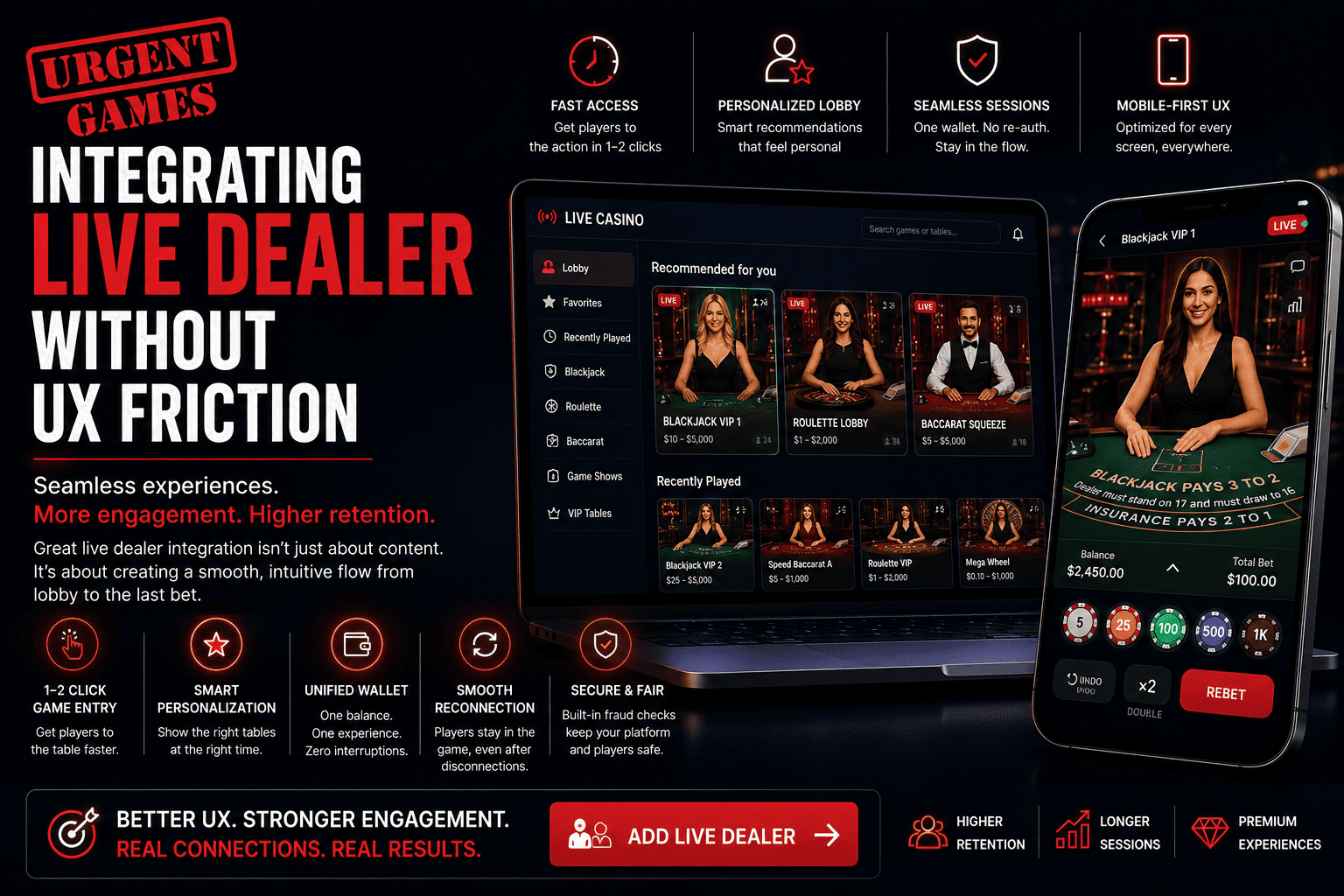
Live dealer integration is now a key part of the modern iGaming experience.
For many operators, live dealer products help:
- Increase player retention
- Attract VIP users
- Create a premium casino environment
However, many platforms still add live dealer content in ways that introduce unnecessary friction.
Because of this, players often experience:
- Slow lobby loading
- Confusing navigation
- Session interruptions
- Frustrating game transitions
Today, successful live dealer integration is not only about adding more tables. Instead, it is about creating a smooth and connected experience from start to finish.
The UX Problem Many Operators Ignore
Most operators focus heavily on:
- Provider partnerships
- Game selection
- Promotions
At the same time, user experience issues are often left behind.
These issues usually include:
- Poor session flow
- Navigation friction
- Overcrowded lobbies
As a result, many players leave before placing their first bet.
👉 Learn more about improving player journeys on your /igaming-user-experience page.
Why Live Dealer UX Is Different
Live dealer products behave differently compared to slots or sportsbook platforms.
Unlike standard casino games, live dealer tables include:
- Streaming video
- Real-time interaction
- Human-paced gameplay
- Continuous sessions
Therefore, the entire experience must feel fast, stable, and easy to follow.
In most cases, players expect:
- Quick loading
- Stable streaming
- Simple navigation
- Minimal interruptions
Without these elements, immersion breaks very quickly.
Common Friction Points in Live Dealer Integration
Slow Game Entry
Every second matters when a player enters a game.
Unfortunately, many platforms still introduce delays through:
- Multiple loading screens
- Provider redirects
- Session handoffs
Ideally, users should reach a table within one or two clicks. At the same time, this flow should remain consistent across desktop and mobile devices.
Confusing Lobby Structure
Many live casino lobbies feel crowded and difficult to navigate.
For example, players often see:
- Too many categories
- Endless table lists
- Complex filters
- Competing promotions
Consequently, decision fatigue increases and engagement drops.
A better approach is to highlight:
- Recently played tables
- Recommended games
- Favorite dealers
- Language preferences
This creates a cleaner and more intuitive experience.
Session Breaks Between Providers
Nothing hurts immersion more than interruptions during gameplay.
For instance, players often face:
- Forced logins
- Wallet reloads
- Lost session progress
Instead of this, operators should design one continuous experience across providers. As a result, the platform feels more unified and reliable.
Designing a Frictionless Live Dealer Lobby
Use Smart Personalization
The best live casino lobbies adjust automatically to player behavior.
They can include:
- Favorite tables
- Recently played games
- Betting-level suggestions
- Language-based sorting
Because of this, players return to familiar experiences much faster.
Reduce Cognitive Load
Too much information can overwhelm users.
Therefore, it is better to avoid:
- Large game grids
- Technical labels
- Excessive banners
Instead, focus on:
- Clear categories
- Simple navigation
- Strong visual hierarchy
As a result, users make decisions faster and with less effort.
Prioritize Mobile-First Design
Today, most live dealer traffic comes from mobile devices.
Because of this shift, mobile optimization is no longer optional.
Your platform should support:
- Fast loading times
- Portrait-friendly layouts
- Responsive controls
- Stable video playback
Most importantly, betting controls must remain easy to use while streams are active.
👉 Related: Improve mobile performance on your /mobile-igaming-platforms page.
Session Flow Best Practices
The session experience often decides whether players stay or leave.
Seamless Wallet Integration
Gameplay should never stop due to payment friction.
Therefore, operators should use:
- Shared wallet systems
- Instant balance synchronization
At the same time, it is important to avoid:
- Separate wallets
- Manual transfers between products
A seamless wallet flow improves both trust and retention.
One-Click Re-Entry
Many players return repeatedly to:
- Blackjack tables
- Dealers
- VIP rooms
Because of this, instant rejoin functionality becomes a major UX advantage. In addition, it strengthens user satisfaction over time.
Smart Recovery Flows
Disconnections are unavoidable.
However, strong systems handle them by:
- Restoring sessions automatically
- Preserving user context
- Reconnecting players quickly
As a result, users feel less frustration after interruptions.
Choosing the Right Live Dealer Provider
Not all providers deliver the same experience.
Before selecting one, evaluate:
- Stream stability
- Mobile performance
- Loading speed
- Interface consistency
Ultimately, a strong UX depends on reliable infrastructure.
For compliance information, visit the Malta Gaming Authority website:
Malta Gaming Authority
Performance Optimization Improves UX
Live dealer systems require strong technical performance.
Therefore, operators should monitor:
- Stream latency
- Buffering rates
- Session drop-offs
In addition, optimization should include:
- CDN routing
- Regional servers
- Adaptive bitrate streaming
Together, these improvements create a smoother experience.
Cross-Selling Without Disruption
Many operators still interrupt gameplay with aggressive promotions.
However, popups during live sessions break immersion.
Instead, it is better to use:
- Soft recommendations
- Session-end offers
- Contextual promotions
This approach supports conversion while protecting UX quality.
Localization Improves Retention
Live dealer experiences vary by region.
Therefore, localization plays a key role in retention.
Important elements include:
- Language support
- Dealer preferences
- Currency settings
- Betting limits
In many cases, localization improves both engagement and session time.
VIP Experience Considerations
High-value players expect smooth, premium experiences.
Useful VIP features include:
- Fast table access
- Favorite table shortcuts
- Quick deposits
- Priority recommendations
Even small improvements can have a big impact on retention.
Metrics That Actually Matter
Many operators focus only on total sessions.
However, better insights come from tracking:
- Lobby-to-table conversion rate
- Time to first bet
- Session abandonment rate
- Return session frequency
These metrics clearly show how smooth the experience is.
👉 Explore more on your /igaming-retention-tools page.
Common Mistakes Operators Make
❌ Treating live dealer like slots
❌ Adding too many categories
❌ Ignoring mobile optimization
❌ Creating poor provider transitions
Over time, these mistakes increase friction and reduce engagement.
The Future of Live Dealer Integration
The next generation of live dealer platforms will focus on:
- Faster personalization
- AI-driven recommendations
- Unified provider experiences
- Lower-latency streaming
As competition grows, UX quality will become a major differentiator.
For industry insights, visit Gambling Insider:
Gambling Insider
Final Thoughts: Friction Kills Retention
Players choose live dealer products for:
- Realism
- Engagement
- Smooth gameplay flow
However, every interruption reduces immersion.
Successful live dealer integration is not about adding more games. Instead, it is about building a smooth and consistent experience.
Ultimately, the better the flow, the longer players stay.
🎥 Add Live Dealer the Right Way
Want to create a live casino experience players actually enjoy?