
 English
  简体中文
简体中文  Español
  Русский
  Türkçe
  Tiếng Việt
  Українська
  Български
  Suomi
Suomi  Ελληνικά
  Čeština
  اردو
اردو  Svenska
  עִבְרִית
  हिन्दी
  Français
  Հայերեն
  Italiano
  日本語
日本語  Română
  Polski
  Српски језик
  Latviešu valoda
  Deutsch (Sie)
  Português do Brasil
  한국어
한국어 
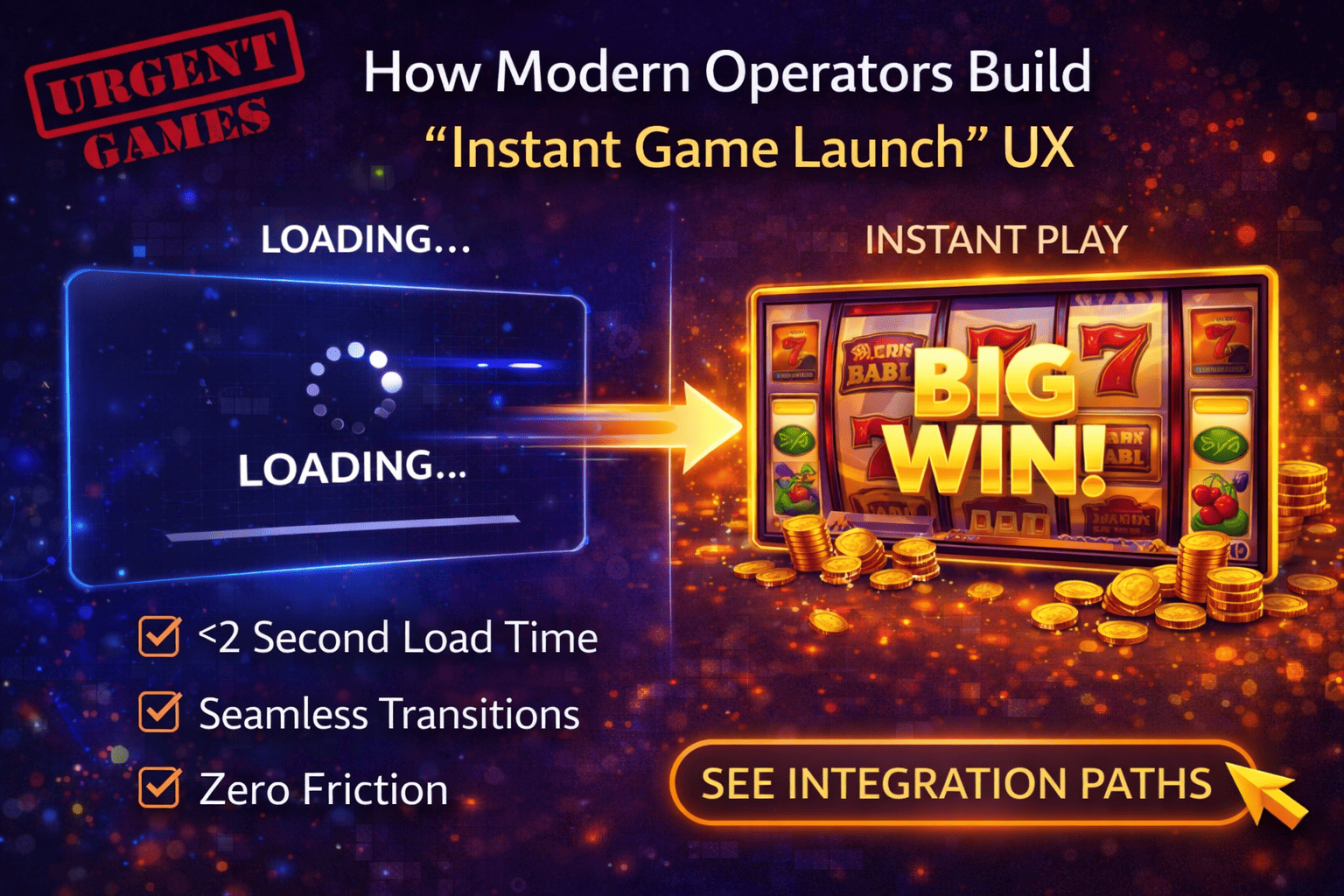
Instant Game Launch UX: The Most Expensive Drop-Off Point
Instant game launch UX is one of the most critical factors in player conversion. Operators invest heavily in acquisition, onboarding, and promotions—but many users leave right before the first game even loads.
Even a short delay can lead to:
- session abandonment
- reduced conversion
- lower lifetime value
Why Instant Game Launch UX Defines First Impressions
The first interaction sets the tone for everything that follows. It directly impacts:
- user trust
- perceived performance
- platform quality
If the experience feels fast, players continue. However, if it feels slow, they leave almost instantly.
Today’s users expect:
- immediate response
- seamless transitions
- zero friction
What “Instant Game Launch UX” Really Means
“Instant” doesn’t mean zero milliseconds. Instead, it means perceived speed.
The goal:
Reduce the gap between:
player intent → gameplay start
Target benchmarks:
- under 2 seconds load time
- no visible errors
- minimal friction
Why Players Drop Off Before Gameplay
Heavy Loading Sequences
- multiple API calls
- unoptimized assets
- blocking processes
Poor Provider Handling
- slow responses
- no fallback logic
Weak UX Transitions
- blank screens
- unclear loading states
Authentication Delays
- session validation lag
- token refresh delays
👉 As a result, users click, wait, and leave.
Instant Game Launch UX Optimization Layers
Pre-Launch Optimization
- preload popular games
- cache provider data
- pre-fetch assets
This reduces load time at the moment of interaction.
API Performance Optimization
- reduce API round trips
- optimize payload sizes
- use edge caching
Target response times should be under 200ms.
For best practices, see:
https://web.dev/fast/
Session Management
- persistent sessions
- fast authentication
- seamless token handling
Avoid unnecessary re-authentication—it slows everything down.
Provider Integration
- maintain active connections
- monitor latency
- implement fallback providers
Provider delays are one of the biggest performance risks.
UX Design for Instant Perception
Users should see:
- immediate feedback on click
- smooth transitions
- clear loading indicators
Avoid:
- blank screens
- frozen UI
- confusing states
👉 Perception is just as important as actual speed.
UX Techniques That Improve Instant Game Launch UX
Skeleton Screens
Display structure instantly while content loads.
Progressive Loading
Load key elements first, then enhance.
Predictive Navigation
Prepare content based on expected behavior.
Micro-Animations
Create a sense of speed and responsiveness.
Learn more about UX performance:
https://www.nngroup.com/articles/response-times-3-important-limits/
Infrastructure Behind Instant Game Launch UX
UX alone is not enough. Backend performance must support it.
Required capabilities:
- low-latency architecture
- CDN distribution
- scalable infrastructure
- real-time monitoring
For CDN fundamentals, see:
https://www.cloudflare.com/learning/cdn/what-is-a-cdn/
Measuring Instant Game Launch UX Performance
Key metrics:
- time to first interaction (TTFI)
- game launch time
- drop-off rate
- error rate
Benchmarks:
- under 2 seconds launch
- minimal abandonment
- consistent performance
Business Impact of Faster Launch Speed
Improving launch speed directly increases:
- conversion rate
- session depth
- retention
- revenue per user
Even a one-second improvement can significantly reduce drop-off.
Internal Resources
To go deeper into platform performance:
- Scalable Casino Platform → /scalable-casino-platform
- Casino Growth Stack → /casino-growth-stack-tech-layers
- Provider Traffic Optimization → /scaling-provider-traffic
The Future of Instant Game Launch UX
Platforms are evolving toward:
- one-click game entry
- auto-resume sessions
- predictive preloading
- AI-driven UX optimization
As a result, the gap between intent and gameplay continues to shrink.
Final Thought
In modern iGaming, speed defines success.
You are not competing on games alone—you are competing on how fast players can start playing them.
Because the fastest experience wins the first impression.
🚀 See Integration Paths
If you want to build a high-performance instant game launch UX with optimized infrastructure, fast integrations, and seamless UX—