
 English
  简体中文
简体中文  Español
  Русский
  Türkçe
  Tiếng Việt
  Українська
  Български
  Suomi
Suomi  Ελληνικά
  Čeština
  اردو
اردو  Svenska
  עִבְרִית
  हिन्दी
  Français
  Հայերեն
  Italiano
  日本語
日本語  Română
  Polski
  Српски језик
  Latviešu valoda
  Deutsch (Sie)
  Português do Brasil
  한국어
한국어 
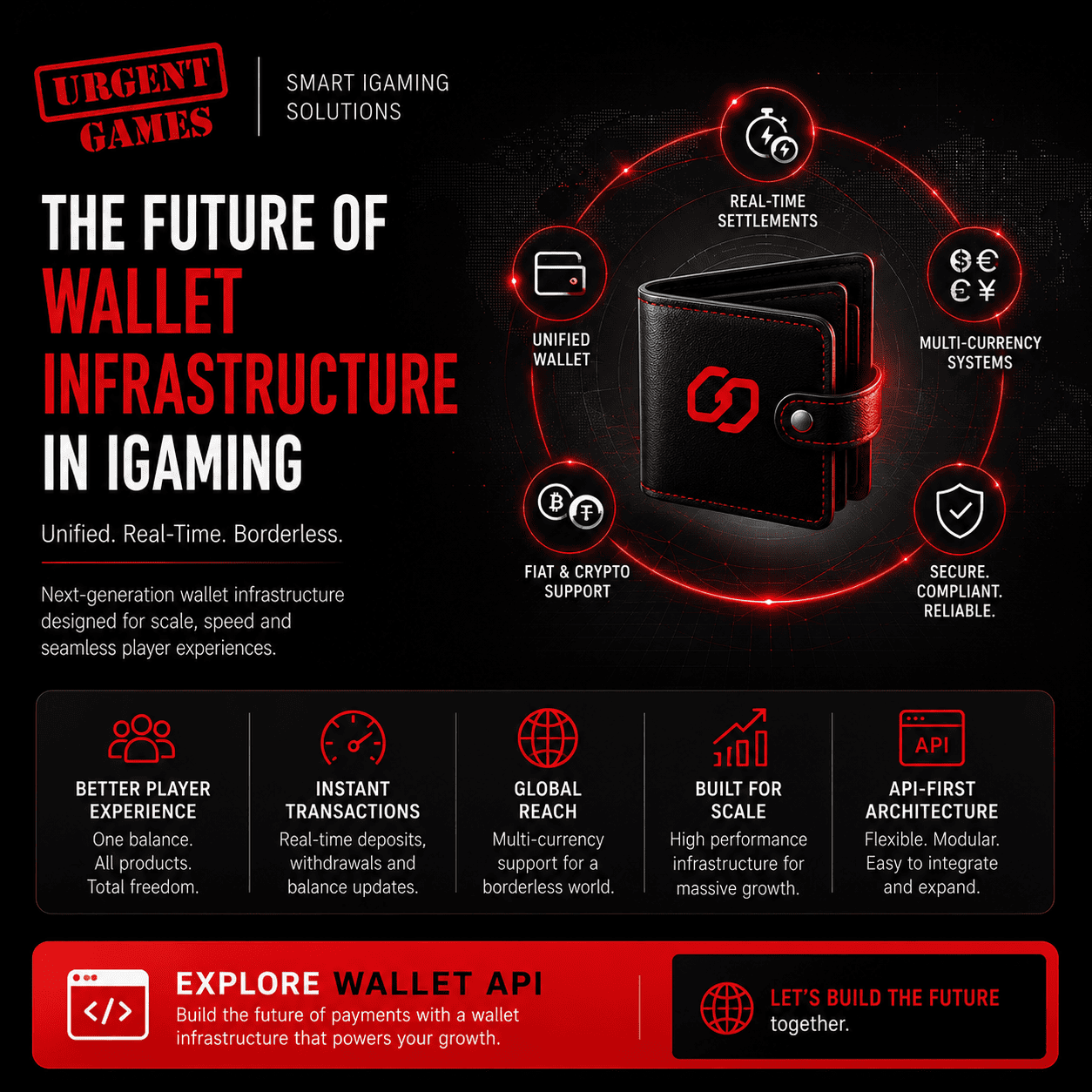
Modern iGaming wallet infrastructure is rapidly becoming the strategic foundation of online gaming platforms. Unified wallets, real-time settlements, and multi-currency transaction systems are reshaping how operators scale globally, improve player retention, and deliver seamless gaming experiences.
The wallet is no longer just a payment feature.
It has become:
- The financial core of the platform
- The foundation of player trust
- The engine behind scalability and retention
Yet many operators still rely on wallet systems designed for a much simpler era — before multi-brand ecosystems, real-time gaming, instant withdrawals, and global payment complexity became standard.
In 2026 and beyond, wallet infrastructure is no longer backend plumbing.
It is competitive infrastructure.
Why Traditional iGaming Wallet Infrastructure Is Breaking
Older wallet systems were designed for:
- Single-region operations
- Lower transaction volume
- Basic payment workflows
- Limited provider integrations
Modern gaming platforms now process:
- Thousands of transactions per second
- Real-time balance updates
- Multiple gaming providers simultaneously
- Global deposits and withdrawals
- Fiat and crypto transactions side by side
As a result, legacy wallet systems struggle under modern operational pressure.
Common issues include:
- Delayed settlements
- Wallet desynchronization
- Transaction mismatches
- High operational overhead
- Poor player experience
Modern operators require infrastructure built for scalability from day one.
Unified Wallet Systems Are Becoming the Industry Standard
One of the biggest shifts in modern iGaming wallet infrastructure is the adoption of unified wallet systems.
Instead of maintaining:
- Separate provider balances
- Fragmented account systems
- Multiple wallet experiences
Operators increasingly want:
One wallet balance across the entire gaming ecosystem.
Unified wallets allow players to move seamlessly between:
- Sportsbook
- Slots
- Live casino
- Crash games
- Virtual sports
Without:
- Manual balance transfers
- Session interruptions
- Re-authentication
- Payment friction
This creates a significantly smoother player experience.
Benefits of Unified Wallet Infrastructure
Unified wallets improve:
- Player retention
- Cross-sell opportunities
- Session duration
- Deposit conversion rates
- User experience consistency
For modern operators, shared wallet architecture is becoming essential for long-term scalability.
Real-Time Settlements Are Redefining Player Expectations
Today’s players expect instant everything.
This includes:
- Deposits
- Withdrawals
- Bonus applications
- Wallet synchronization
- Bet settlement updates
Delayed settlement systems create:
- Confusion
- Support tickets
- Reduced trust
- Higher churn rates
That’s why real-time settlement capabilities are now a core requirement in modern iGaming wallet infrastructure.
Why Real-Time Wallet Settlements Are Difficult
Building real-time financial infrastructure is technically complex.
Modern wallet systems must support:
- Strong consistency
- High concurrency
- Fault tolerance
- High availability
- Atomic transaction handling
Challenges often include:
- Provider callback delays
- Retry storms
- Network failures
- Duplicate processing
- Settlement race conditions
Weak infrastructure can lead to:
- Balance drift
- Financial inconsistencies
- Duplicate transactions
- Failed reconciliation processes
Modern platforms increasingly solve these issues using ledger-first architecture.
Ledger-First Wallet Architecture Explained
The future of iGaming wallet infrastructure is ledger-first.
Instead of directly updating balances, modern systems record every financial action as an immutable ledger event.
Examples include:
- Deposit created
- Bet placed
- Win settled
- Bonus credited
- Withdrawal approved
Balances are then derived from ledger history rather than manually overwritten values.
Why Ledger-Based Wallet Systems Are Superior
Ledger-first systems provide:
- Financial traceability
- Auditability
- Easier reconciliation
- Safer rollback processes
- Improved fraud investigations
Most importantly, they create:
A single financial source of truth.
This approach dramatically improves operational reliability at scale.
Multi-Currency Wallet Infrastructure Is Expanding Rapidly
Modern gaming operators increasingly support:
- USD
- EUR
- BRL
- MXN
- USDT
- Bitcoin
- Stablecoins
However, many legacy wallet systems were never designed for:
- Multi-currency accounting
- Real-time exchange rate management
- Currency-aware ledgers
- Cross-border settlement logic
This creates significant operational complexity.
Multi-Currency Transaction Challenges
A modern player may:
- Deposit in EUR
- Play games in USD
- Withdraw in crypto
Infrastructure must then handle:
- FX conversions
- Precision management
- Settlement timing
- Currency reporting
- Regulatory compliance
In real time.
Real-Time FX Handling Is Becoming Essential
Modern wallet systems increasingly require:
- Live exchange rate feeds
- Dynamic conversion logic
- Currency-aware settlement calculations
- Regional payout optimization
Players now expect:
- Transparent balances
- Accurate exchange rates
- Instant conversion processing
Without delays or hidden discrepancies.
Event-Driven Wallet Infrastructure Enables Scalability
Future-ready iGaming wallet infrastructure increasingly relies on event-driven systems.
This includes technologies such as:
- Event queues
- Async transaction processing
- Distributed streaming systems
- Transaction replay architecture
Technologies like Apache Kafka are commonly used to support scalable event streaming and resilient financial processing.
Benefits of Event-Driven Wallet Systems
Event-driven architectures improve:
- Scalability
- Fault tolerance
- Recovery speed
- Transaction replay capabilities
- Provider integration reliability
This approach is especially important during:
- Traffic spikes
- Live sporting events
- Promotional campaigns
- Regional outages
Why Idempotency Matters in Modern Wallet Infrastructure
As transaction volume grows, duplicate processing risk increases significantly.
Modern wallet systems require:
- Idempotency keys
- Transaction uniqueness validation
- Atomic settlement logic
- Duplicate callback protection
Financial consistency must survive:
- Provider retries
- Network interruptions
- Queue reprocessing
- Async settlement workflows
Without idempotency protection, operators risk severe financial inconsistencies.
Fraud Prevention Is Becoming Wallet-Centric
The wallet is now one of the largest fraud surfaces within online gaming platforms.
Modern iGaming wallet infrastructure increasingly includes:
- Real-time risk scoring
- Geo-location validation
- Device fingerprinting
- Velocity monitoring
- Behavioral analytics
Integrated directly into transaction workflows.
This enables operators to detect suspicious financial activity before losses occur.
Financial Observability Is Critical for Wallet Operations
Modern operators require real-time visibility into wallet infrastructure health.
Key observability metrics include:
- Settlement latency
- Failed provider callbacks
- Queue processing delays
- Balance mismatches
- Transaction failure rates
Financial systems cannot be protected blindly.
Real-time monitoring significantly improves operational stability and incident response.
High Availability Wallet Infrastructure for Global Gaming Platforms
Modern wallet systems must remain operational during:
- Viral traffic spikes
- Regional outages
- Provider failures
- Peak sporting events
Best practices include:
- Multi-region deployments
- Active-active infrastructure
- Queue-based recovery systems
- Distributed ledger replication
This improves uptime and financial resilience across global markets.
API-First Wallet Infrastructure Is Driving Faster Growth
Operators increasingly demand:
- Faster provider onboarding
- Modular architecture
- Easier integrations
- Flexible experimentation
This is accelerating adoption of API-first wallet systems.
Standards such as OpenAPI Specification are helping operators build more scalable and integration-friendly financial ecosystems.
Benefits of API-First Wallet Systems
API-first infrastructure enables:
- Faster platform launches
- Easier market expansion
- Better provider interoperability
- Improved development velocity
This flexibility is becoming a major competitive advantage.
Security and Compliance Remain Foundational
As wallet complexity grows, regulatory and security requirements become increasingly important.
Operators should align with standards from the PCI Security Standards Council to improve payment security and financial compliance.
Critical areas include:
- Transaction encryption
- AML monitoring
- Access controls
- Audit logging
- Secure payout processing
Modern wallet infrastructure must balance scalability with regulatory integrity.
The Biggest Mistake iGaming Operators Make
Many operators still treat wallet systems as:
A backend utility.
In reality, the wallet determines:
- Player trust
- Transaction speed
- Retention
- Financial accuracy
- Scalability potential
The strongest gaming platforms increasingly view wallet infrastructure as a core product layer — not just a supporting service.
The Future of iGaming Wallet Infrastructure
The next generation of wallet systems will focus on:
- Unified balances
- Real-time settlements
- Event-driven ledgers
- Multi-currency transaction support
- AI-assisted fraud prevention
- Global payment orchestration
Modern gaming platforms require:
- Financial accuracy
- Instant responsiveness
- High availability
- Global scalability
At all times.
Final Thoughts
The future winners in online gaming will not simply have:
- More games
- Bigger bonuses
- Larger acquisition budgets
They will have:
Better infrastructure.
Modern iGaming wallet infrastructure enables:
- Faster transactions
- Better player experiences
- Lower operational risk
- Stronger financial trust
- Scalable global operations
Because in modern iGaming:
The wallet is no longer part of the platform.
The wallet is the platform.