
 English
  简体中文
简体中文  Español
  Русский
  Türkçe
  Tiếng Việt
  Українська
  Български
  Suomi
Suomi  Ελληνικά
  Čeština
  اردو
اردو  Svenska
  עִבְרִית
  हिन्दी
  Français
  Հայերեն
  Italiano
  日本語
日本語  Română
  Polski
  Српски језик
  Latviešu valoda
  Deutsch (Sie)
  Português do Brasil
  한국어
한국어 
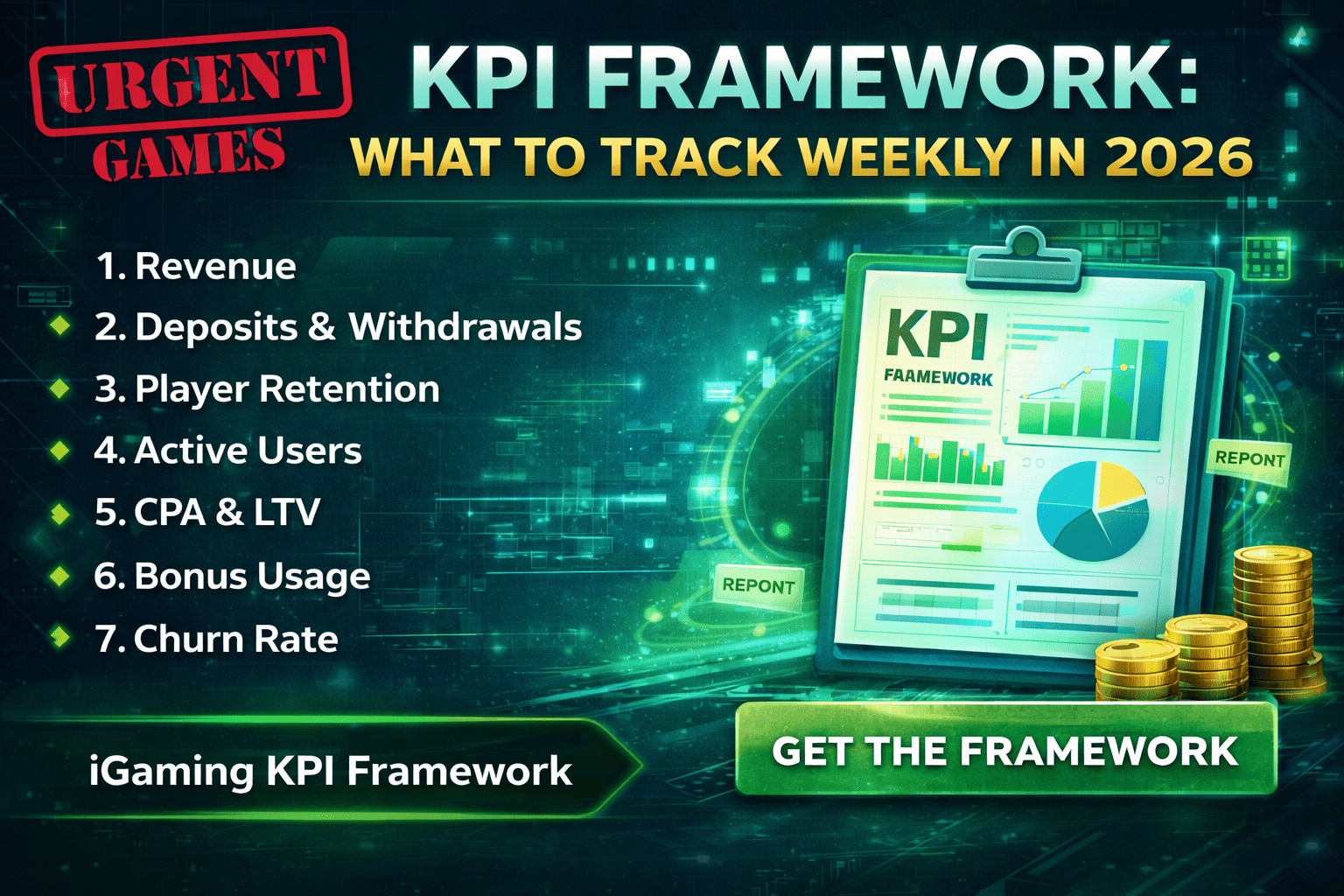
Introduction: Why iGaming KPI Tracking Matters in 2026
In 2026, tracking the right iGaming KPI is no longer a monthly task. Instead, top operators review key metrics weekly to stay competitive. Platforms now generate massive amounts of player data every hour. However, the real advantage comes from analyzing that data quickly and acting on it. That is why building a clear iGaming KPI framework is essential.
Rather than tracking every number, successful teams focus on metrics that directly influence revenue, player retention, and long-term growth. For additional insights, visit Statista.
Core Principle: Fewer iGaming KPIs, Better Decisions
Many operators track too many metrics, which can slow decision-making. To avoid this, a strong iGaming KPI framework should be simple, actionable, and directly tied to results. Specifically, it should:
- Be quick to review each week
- Highlight actionable insights
- Connect to business outcomes
- Reduce unnecessary noise
In short, metrics should feel clear and easy to act on, enabling faster decision-making.
Weekly iGaming KPI Framework: Key Metrics to Track
1. Revenue (GGR & NGR) Tracking
Revenue remains the top performance metric. Nevertheless, context matters more than raw totals.
Track:
- Gross Gaming Revenue (GGR)
- Net Gaming Revenue (NGR)
- Revenue by game type (Slots, Live, Sports, Crash)
- ARPU (Average Revenue Per User)
For example, a sudden spike may come from a few high-value players. Meanwhile, steady growth usually indicates broad engagement. Internal resource: Learn more in [iGaming Revenue Optimization Guide](/igaming-revenue-optimization).
2. Deposits & Withdrawals Analysis
Cash flow reflects platform health and player trust. Therefore, deposits and withdrawals must be monitored closely each week.
Track:
- Total deposits vs withdrawals
- Deposit frequency
- Withdrawal processing times
If withdrawals increase suddenly, this could signal trust issues. On the other hand, smooth and fast payouts build player confidence. For security guidance, see Gambling Commission.
3. Active Users (DAU / WAU) Metrics
User activity shows product stickiness. In other words, it indicates whether players return consistently.
Track:
- Daily Active Users (DAU)
- Weekly Active Users (WAU)
- DAU/WAU ratio
A high ratio generally signals strong engagement. Conversely, a low ratio may point to retention problems. Explore strategies in [iGaming Retention Strategies Guide](/igaming-retention-strategies).
4. Player Retention KPIs
Retention drives long-term profitability. Without loyal users, growth becomes difficult to sustain.
Track:
- Day 1, Day 7, Day 30 retention
- Returning users per week
- Session frequency
When retention drops, the problem often lies in the product or UX. In addition, understanding retention psychology can guide improvements. See insights from eCOGRA.
5. CPA vs LTV (Acquisition Efficiency)
Efficient growth is essential for sustainability. Otherwise, overspending on acquisition can hurt margins.
Track:
- Cost Per Acquisition (CPA)
- Lifetime Value (LTV)
- LTV/CPA ratio
Ideally, LTV should be 2–3x higher than CPA. For additional strategies, see [How to Increase Player Lifetime Value Guide](/player-ltv-guide).
6. Bonus Usage & Efficiency
Bonuses can increase engagement. However, they should not replace organic player interest.
Track:
- Bonus cost as % of revenue
- Conversion rate
- Retention from bonus campaigns
If players only return for bonuses, the strategy may need adjustment. In that case, review [Casino Bonus Optimization Guide](/casino-bonus-optimization).
7. Churn Rate Metrics
Churn measures players leaving over time. Therefore, reducing churn is often more profitable than acquiring new users.
Track:
- Weekly churn rate
- Inactive users (7–14 days)
- Lifecycle drop-off points
By identifying friction points early, teams can retain more players. As a result, long-term profitability improves.
Structuring Your Weekly iGaming KPI Review
A structured process helps convert data into action. Without it, valuable insights are often missed.
Step 1: Snapshot (10–15 mins)
First, review revenue, active users, and cash flow.
Step 2: Deep Dive (30 mins)
Next, analyze anomalies, week-over-week changes, and segment performance.
Step 3: Decision Layer (15 mins)
Finally, decide which actions to take and what experiments to run next week.
Understanding Player Psychology Through KPIs
Each KPI tells a story about user behavior. Therefore, interpreting intent is as important as tracking data.
- Retention reflects habit formation
- Deposits show trust and motivation
- Churn highlights friction or boredom
- Bonuses reveal incentive dependency
By understanding these patterns, operators can make faster and smarter decisions.
Common KPI Mistakes to Avoid
Many teams make avoidable errors. For instance:
- Tracking metrics that do not impact growth
- Ignoring long-term trends
- Reacting too quickly to short-term changes
- Reviewing data in isolation
Instead, focus on patterns and consistency over time.
Why a Strong KPI Framework Wins in 2026
A clean iGaming KPI framework enables operators to:
- Make faster decisions
- Allocate resources more effectively
- Improve retention
- Build sustainable growth
According to Statista, the iGaming market is growing rapidly. In addition, standards from eCOGRA and oversight by Gambling Commission ensure transparency and player trust.
Get the Framework
Operators who act on KPIs—not just track them—win.