
 English
  简体中文
简体中文  Español
  Русский
  Türkçe
  Tiếng Việt
  Українська
  Български
  Suomi
Suomi  Ελληνικά
  Čeština
  اردو
اردو  Svenska
  עִבְרִית
  हिन्दी
  Français
  Հայերեն
  Italiano
  日本語
日本語  Română
  Polski
  Српски језик
  Latviešu valoda
  Deutsch (Sie)
  Português do Brasil
  한국어
한국어 
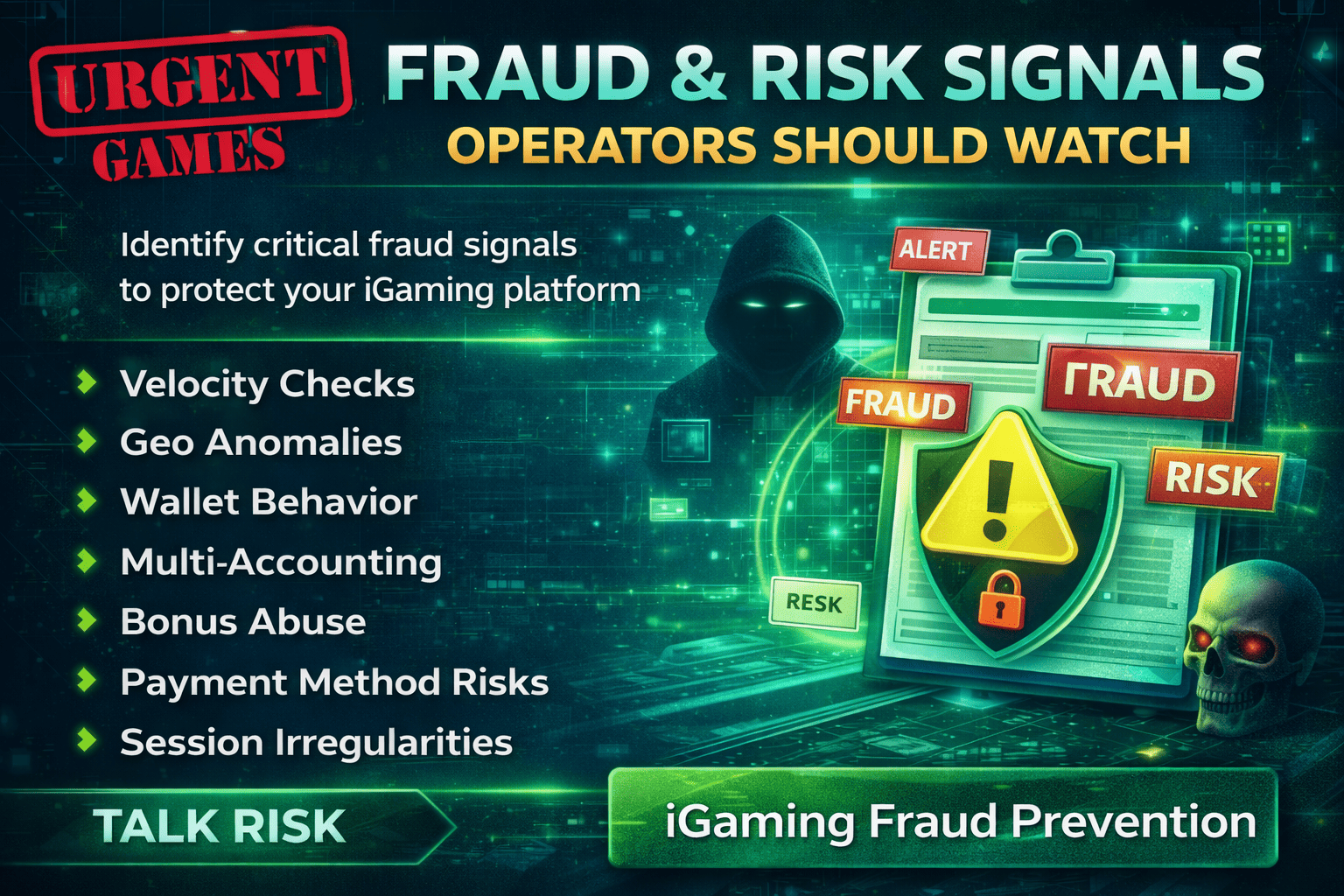
Introduction: Why Fraud Prevention Matters More Than Ever
In 2026, iGaming fraud prevention is no longer optional—it’s essential for platform growth. Fraud rarely appears as one big event. Instead, it builds slowly through bonuses, wallets, and user behavior gaps.
Today, fraud is more advanced. For example, multi-accounting is automated, VPN usage is common, and bonus abuse is often coordinated. As a result, operators must detect early warning signals instead of reacting late.
According to Statista, the iGaming industry continues to expand, which also increases fraud exposure.
The Core Idea Behind Fraud Detection
Effective fraud detection focuses on patterns, not single events. In other words, it’s about spotting behavior that feels unusual.
Common signals include:
- Repeated actions
- Abnormal speed
- Location mismatches
- Suspicious money movement
Instead of blocking everything, focus on identifying what looks different from normal player behavior.
1. Velocity Signals
Velocity is one of the strongest fraud indicators.
What to track:
- Deposits per minute or hour
- Instant betting after deposits
- Rapid withdrawals
- Account creation spikes
Why it matters:
Real users act naturally. However, fraud activity often happens in bursts.
Red flags:
- Multiple deposits within minutes
- Instant bonus usage
- High-frequency betting
2. Geo and Location Signals
Location alone is not enough. However, inconsistencies reveal risk.
What to track:
- IP vs registered country mismatch
- Frequent country switching
- VPN or proxy usage
- Impossible travel patterns
Why it matters:
Fraudsters hide their location, but patterns still appear. For regulatory context, see Gambling Commission.
3. Wallet and Transaction Behavior
Following the money is critical.
What to track:
- Deposit → low play → withdrawal
- Repeated small deposits
- Balance spikes
- Circular transactions
Red flags:
- Low wager-to-deposit ratio
- High withdrawal frequency
- Bonus-only activity
4. Multi-Account Detection
Multi-accounting is a major risk factor.
What to track:
- Shared IPs
- Device overlaps
- Similar gameplay patterns
- Repeated bonus claims
Why it matters:
One user can exploit multiple accounts at scale.
5. Bonus Abuse Signals
Bonuses often attract both users and exploiters.
What to track:
- Bonus-to-deposit ratio
- Conversion rates
- Time to complete wagering
Red flags:
- High bonus use with low retention
- Identical strategies across users
For fairness standards, refer to eCOGRA.
6. Payment Risk Signals
Payment systems can introduce risk if not monitored.
What to track:
- Chargeback rates
- Failed deposits
- Payment switching
Red flags:
- High chargebacks
- Mismatched payment methods
7. Gameplay Behavior Signals
Fraud behavior is often structured, not natural.
What to track:
- Session duration
- Bet size consistency
- Continuous play
Red flags:
- No variation in bets
- No pauses in gameplay
8. Withdrawal Risk Signals
Withdrawals show where money leaves your system.
What to track:
- Withdrawal size vs deposits
- Frequency changes
- First-time withdrawals
Red flags:
- Large withdrawals from new users
- Minimal gameplay before cash-out
How to Build a Weekly Fraud Monitoring Process
A structured process improves detection.
Step 1: Weekly Dashboard
Review velocity, geo signals, and wallet activity.
Step 2: Pattern Analysis
Group accounts and identify shared behavior.
Step 3: Action Layer
Apply limits, review accounts, or block suspicious activity.
Common Mistakes to Avoid
Many teams make similar mistakes. For example:
- Blocking too aggressively
- Ignoring small fraud losses
- Looking at signals in isolation
- Using fixed rules
Instead, focus on patterns and adapt over time.
Why This Matters for Growth
Fraud prevention is not just about security. It directly affects revenue, trust, and scalability.
A strong system helps you:
- Protect revenue
- Improve user trust
- Reduce operational risk
- Scale safely
Final Thoughts
In today’s environment, early detection is key. While fraud will always exist, better systems reduce its impact. Therefore, the goal is not perfection—but continuous improvement.
CTA: Talk Risk
If you want to build a smarter fraud detection system—