
 English
  简体中文
简体中文  Español
  Русский
  Türkçe
  Tiếng Việt
  Українська
  Български
  Suomi
Suomi  Ελληνικά
  Čeština
  اردو
اردو  Svenska
  עִבְרִית
  हिन्दी
  Français
  Հայերեն
  Italiano
  日本語
日本語  Română
  Polski
  Српски језик
  Latviešu valoda
  Deutsch (Sie)
  Português do Brasil
  한국어
한국어 
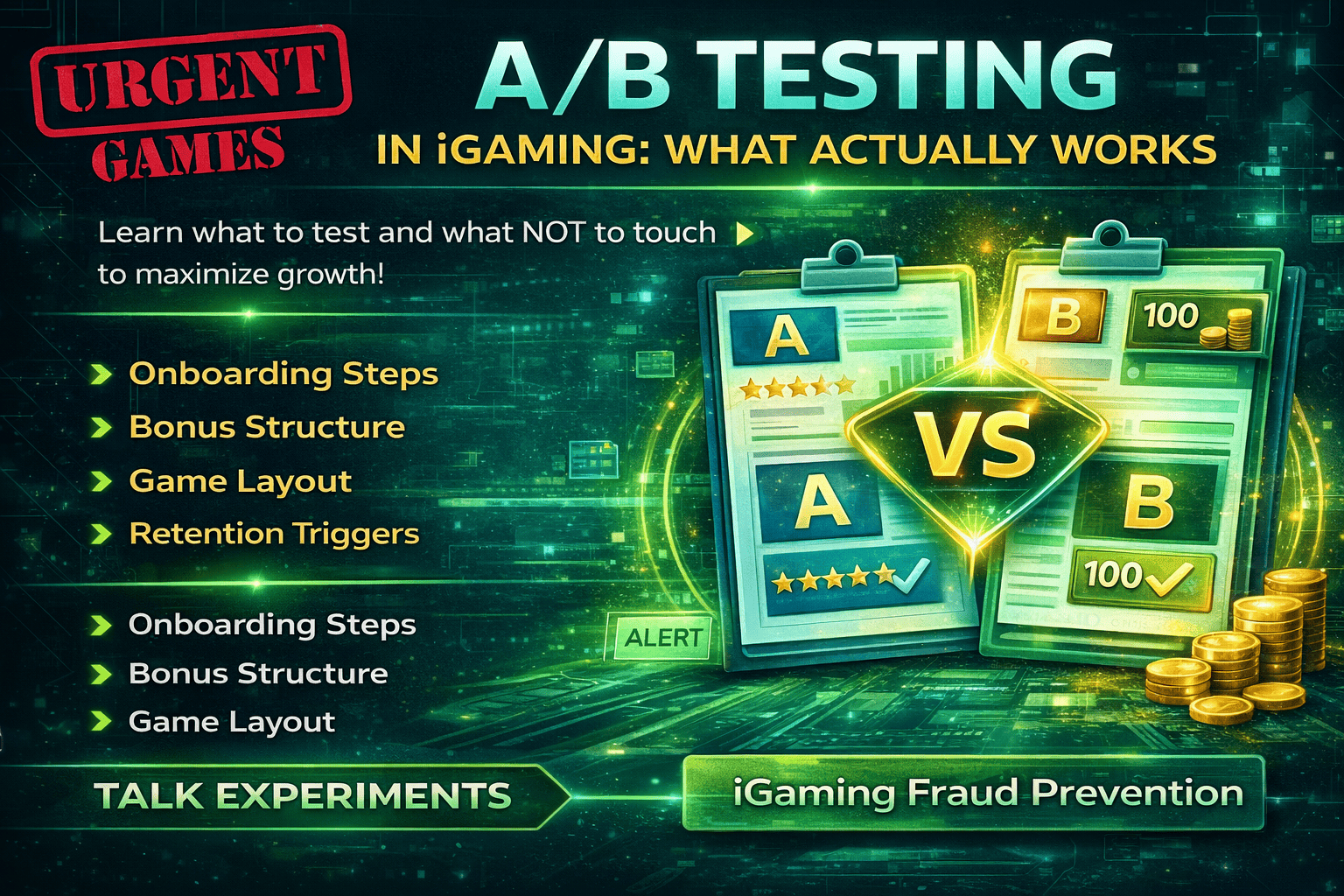
Introduction: Why iGaming A/B Testing Matters
iGaming A/B testing is one of the most powerful tools for growth in 2026. However, most operators fail to get real results from it.
The issue is not testing itself—it’s testing the wrong things. While some changes can significantly improve revenue, others have almost no impact. Therefore, focusing on high-impact areas is essential.
As competition increases, data-driven strategies become critical. For industry trends, see https://www.statista.com/topics/1710/online-gambling/
The Core Principle of iGaming A/B Testing
Effective iGaming A/B testing focuses on behavior, not just design.
Instead of testing minor UI changes, focus on:
- Player motivation
- Friction points
- Decision triggers
In other words, the goal is to improve how players act—not just how pages look.
High-Impact Areas to Test
Onboarding Flow Testing
The first user experience has the biggest impact.
Test:
- Registration steps
- Login options
- Bonus timing
Reducing friction here improves conversion and retention.
Deposit Flow Optimization
Deposits directly impact revenue.
Test:
- Payment method order
- Default deposit values
- One-click payments
Even small changes can increase conversions.
Bonus Strategy Experiments
Bonuses influence player decisions.
Test:
- Bonus types
- Wagering requirements
- Simplicity vs complexity
For best practices, see https://www.ecogra.org/what-we-do/
Game Discovery and Navigation
Players need to find content easily.
Test:
- Game sorting
- Search experience
- Featured sections
Better discovery leads to longer sessions.
Retention and Engagement Testing
Retention drives long-term growth.
Test:
- Notifications
- Email campaigns
- Rewards
Timing and personalization are key.
Withdrawal Experience Testing
Trust impacts retention.
Test:
- Withdrawal clarity
- Processing visibility
- Messaging
For compliance standards, visit https://www.gamblingcommission.gov.uk/
What NOT to Test
Avoid high-risk areas such as:
- Core game mechanics
- Compliance processes
- Payment security
These areas affect trust and regulations.
How to Run Better Tests
Step 1: Define a Hypothesis
Start with a clear assumption.
Step 2: Track One KPI
Focus on a single metric like conversion or retention.
Step 3: Segment Users
Different users behave differently.
Step 4: Run Long Enough
Ensure reliable results.
Step 5: Document Results
Track what works and why.
Common Mistakes
Many teams make avoidable mistakes:
- Testing too many variables
- Ignoring long-term impact
- Copying competitors
- Focusing only on acquisition
Instead, focus on sustainable growth.
Why iGaming A/B Testing Drives Growth
A strong iGaming A/B testing strategy helps:
- Improve conversion rates
- Increase retention
- Boost revenue
- Make better decisions
As a result, it becomes a core growth system.
Final Thoughts
Testing is no longer optional. Instead, it is essential for staying competitive. When done correctly, it provides clear insights and measurable improvements.
CTA: Talk Experiments
If you want to build a structured iGaming A/B testing system—