
 English
  简体中文
简体中文  Español
  Русский
  Türkçe
  Tiếng Việt
  Українська
  Български
  Suomi
Suomi  Ελληνικά
  Čeština
  اردو
اردو  Svenska
  עִבְרִית
  हिन्दी
  Français
  Հայերեն
  Italiano
  日本語
日本語  Română
  Polski
  Српски језик
  Latviešu valoda
  Deutsch (Sie)
  Português do Brasil
  한국어
한국어 
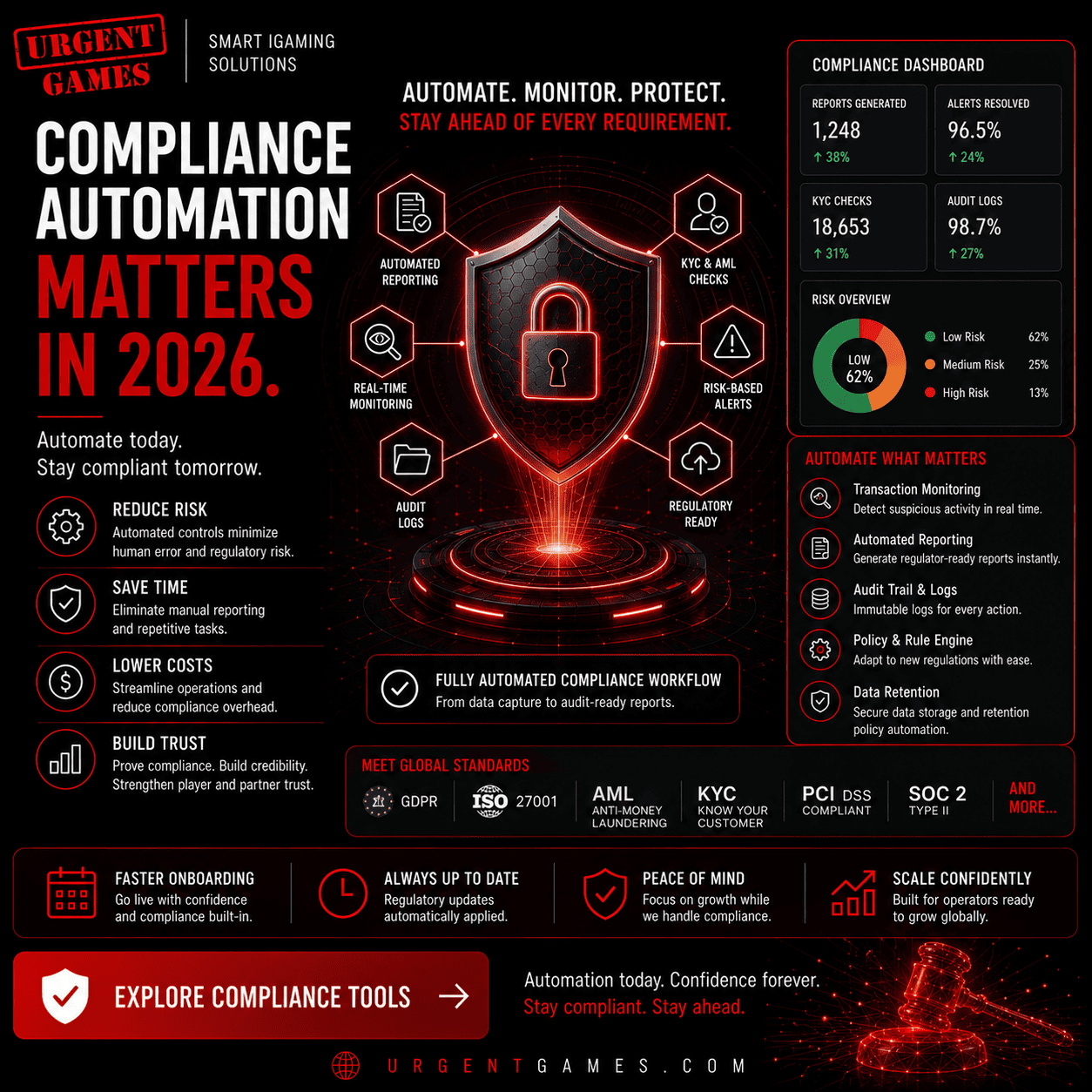
The demand for gaming compliance automation continues to grow as gaming operators expand across multiple jurisdictions, currencies, payment methods, and gaming providers. As regulatory obligations become more complex, manual compliance processes are increasingly difficult to manage at scale.
For years, many operators relied on manual reviews, spreadsheet reporting, reactive audits, and human-driven monitoring. While these methods worked for smaller operations, they often become inefficient and costly as platforms grow.
In 2026, leading gaming operators are investing in gaming compliance automation to improve efficiency, strengthen regulatory readiness, and support long-term growth. Compliance is no longer viewed solely as a regulatory obligation—it has become a critical component of scalable gaming operations.
The Growing Need for Gaming Compliance Automation
Modern gaming operators face increasingly complex requirements related to:
- Transaction monitoring
- Audit logging
- Responsible gaming
- Anti-money laundering (AML) controls
- Know Your Customer (KYC) verification
- Financial reporting
Each new market introduces unique compliance requirements. As operators expand internationally, managing these obligations manually becomes significantly more challenging.
Why Manual Compliance Processes Do Not Scale
Many operators still depend heavily on:
- Manual report generation
- Human reviews
- Spreadsheet-based tracking
- Disconnected compliance workflows
These processes often result in:
- Delayed reporting
- Operational inefficiencies
- Inconsistent data
- Increased compliance risk
- Higher labor costs
As transaction volumes increase, manual compliance workflows become difficult to sustain.
Why Compliance Has Become a Strategic Business Function
Historically, compliance was viewed primarily as a legal requirement.
Today, compliance directly impacts:
- Operational efficiency
- Market expansion opportunities
- Regulatory relationships
- Business partnerships
- Brand reputation
Organizations with strong compliance frameworks can enter new markets more confidently and respond to regulatory requirements more effectively.
Gaming Compliance Automation Starts with Audit Logging
Reliable audit logs form the foundation of every effective compliance program.
Operators should always be able to answer:
- What happened?
- When did it happen?
- Who initiated the action?
- What changed?
Without accurate audit trails, investigations become more difficult and regulatory reviews become more stressful.
Benefits of Automated Audit Logging
Gaming compliance automation ensures that critical events are automatically recorded, including:
- Deposits
- Withdrawals
- Account updates
- KYC status changes
- Administrative actions
- Risk events
Automated logging improves consistency and reduces the risk of missing important records.
Transaction Monitoring Requires Automation
Financial activity within gaming platforms requires continuous oversight.
Operators increasingly monitor:
- Unusual transaction behavior
- Rapid balance movements
- High-risk account activity
- Suspicious withdrawals
- Potential fraud indicators
Manual monitoring becomes increasingly ineffective as transaction volumes grow.
Gaming compliance automation enables real-time monitoring across large datasets without adding significant operational overhead.
AML Compliance Is Becoming More Complex
Global anti-money laundering regulations continue to evolve.
Operators must identify:
- Suspicious transactions
- High-risk customer behavior
- Transaction anomalies
- Potential money laundering indicators
Automated AML monitoring helps compliance teams detect potential issues earlier and investigate risks more efficiently.
Real-Time Compliance Is Replacing Reactive Compliance
Traditional compliance programs often relied on reviewing historical data after events occurred.
Modern gaming compliance automation focuses on real-time oversight.
Examples include:
- Transaction spikes
- Risk threshold breaches
- Suspicious betting activity
- Unusual account behavior
Earlier detection helps reduce operational and regulatory risk.
Gaming Compliance Automation Improves Responsible Gaming Monitoring
Responsible gaming programs require visibility into player activity and behavioral trends.
Key monitoring areas include:
- Deposit frequency
- Session duration
- Spending patterns
- Self-exclusion activity
- Behavioral risk indicators
Automation enables operators to identify potential concerns earlier and strengthen player protection initiatives.
Automated Reporting Reduces Administrative Burden
Gaming operators must regularly generate reports for:
- Regulators
- Internal auditors
- Compliance departments
- Financial teams
Manual reporting can consume substantial time and resources.
Gaming compliance automation improves:
- Reporting accuracy
- Data consistency
- Delivery speed
- Operational efficiency
Managing Multi-Jurisdiction Compliance Requirements
Operators serving multiple markets often face different:
- Reporting standards
- Data retention requirements
- Audit expectations
- Regulatory workflows
Automation helps standardize compliance execution while supporting market-specific requirements.
Why Data Retention Policies Matter
Compliance programs often require long-term storage of:
- Transaction records
- Account activity
- Audit logs
- Communication history
- Compliance investigations
Automated retention policies help ensure data is stored consistently and in accordance with regulatory requirements.
Reducing Human Error Through Compliance Automation
Manual processes naturally introduce errors.
Common examples include:
- Missing records
- Incomplete reports
- Incorrect data entries
- Delayed filings
Gaming compliance automation significantly reduces these risks while improving overall data quality.
How Compliance Teams Benefit from Automation
Automation is not designed to replace compliance professionals.
Instead, it allows teams to focus on:
- Risk analysis
- Investigations
- Regulatory strategy
- Process improvement
- Governance oversight
This improves overall compliance effectiveness while reducing repetitive administrative work.
Real-Time Alerts Improve Compliance Response Times
Modern compliance platforms can automatically generate alerts for:
- Transaction anomalies
- Policy violations
- Risk score increases
- Threshold breaches
Faster alerts allow compliance teams to respond more effectively and reduce potential exposure.
Integrating Compliance Across Gaming Systems
Compliance data often originates from multiple sources, including:
- Wallet systems
- Payment providers
- Sportsbooks
- Casino platforms
- CRM systems
Gaming compliance automation connects these systems into a centralized compliance workflow, improving visibility and oversight.
Observability Enhances Compliance Visibility
Many operators are adopting observability practices to strengthen compliance operations.
Key observability components include:
- Logs
- Metrics
- Monitoring
- Event streams
Greater visibility helps compliance teams identify issues more quickly and improve governance processes.
The Cost of Non-Compliance
Regulatory failures can result in:
- Financial penalties
- Licensing challenges
- Market restrictions
- Reputation damage
Investing in compliance automation is often significantly less expensive than addressing regulatory violations after they occur.
Why Gaming Compliance Automation Builds Trust
Strong compliance systems help build confidence among:
- Regulators
- Business partners
- Payment providers
- Players
Trust increasingly serves as a competitive advantage in highly regulated gaming markets.
How AI Is Transforming Gaming Compliance Automation
Advanced compliance platforms are increasingly using artificial intelligence to support:
- Risk scoring
- Pattern recognition
- Alert prioritization
- Investigative workflows
- Anomaly detection
AI-powered compliance tools help operators identify potential risks faster while improving operational efficiency.
Key Metrics to Measure Compliance Performance
Compliance Metrics
- Audit completion rates
- Alert resolution times
- Report generation speed
- Regulatory response times
Risk Metrics
- Suspicious transaction volume
- AML case identification
- Policy violation frequency
- Escalation rates
Operational Metrics
- Manual workload reduction
- Error rate reduction
- Investigation efficiency
- Reporting efficiency
Common Gaming Compliance Automation Mistakes
Relying on Spreadsheets
Spreadsheet-based compliance processes become difficult to manage at scale.
Delayed Monitoring
Late detection often increases regulatory and operational risk.
Weak Audit Logging
Incomplete audit trails complicate investigations and reviews.
Fragmented Compliance Systems
Disconnected tools reduce visibility and create inefficiencies.
The Future of Gaming Compliance Automation
The next generation of compliance solutions will increasingly provide:
- Real-time transaction monitoring
- Automated regulatory reporting
- AI-powered risk detection
- Centralized audit management
- Cross-jurisdiction compliance workflows
As regulatory complexity continues to increase, automation will become an essential operational capability rather than a competitive advantage.
Final Thoughts
As gaming platforms continue expanding globally, managing compliance manually becomes increasingly difficult.
Gaming compliance automation helps operators:
- Reduce regulatory risk
- Improve reporting accuracy
- Strengthen audit readiness
- Support market expansion
- Lower operational costs
- Improve compliance visibility
The most successful operators in 2026 will not simply add more compliance resources.
They will build smarter compliance systems that scale alongside their business.
Because gaming compliance automation is no longer just about meeting regulatory requirements.
It is about creating scalable, efficient, and trustworthy gaming operations.