
 Ελληνικά
  English
  简体中文
简体中文  Español
  Русский
  Türkçe
  Tiếng Việt
  Українська
  Български
  Suomi
Suomi  Čeština
  اردو
اردو  Svenska
  עִבְרִית
  हिन्दी
  Français
  Հայերեն
  Italiano
  日本語
日本語  Română
  Polski
  Српски језик
  Latviešu valoda
  Deutsch (Sie)
  Português do Brasil
  한국어
한국어 
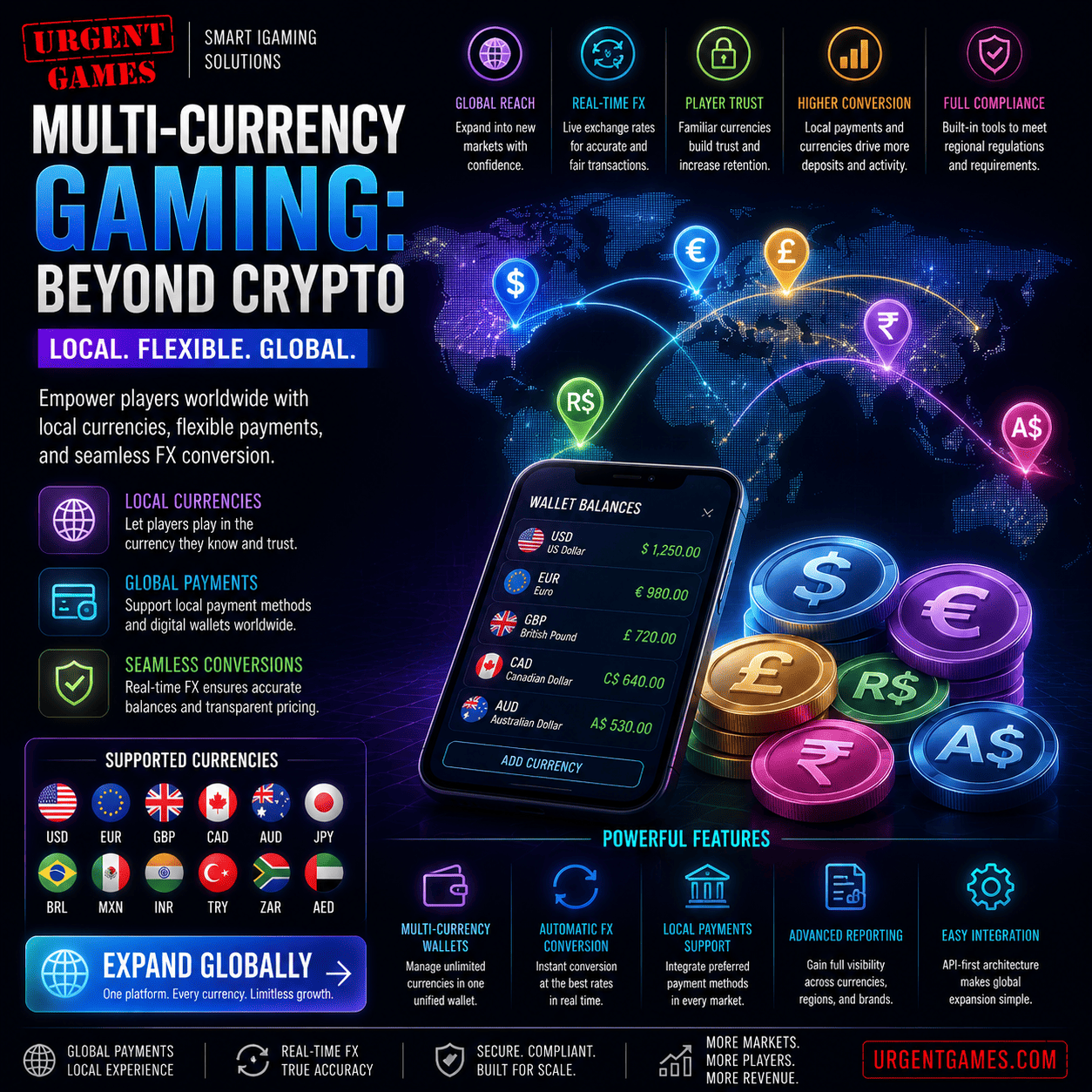
Multi Currency Casino Architecture: Beyond Crypto Gaming
The global iGaming market continues to expand rapidly into emerging jurisdictions across Latin America, Asia, and Eastern Europe. These new markets present massive growth opportunities for forward-thinking operators. However, successful international expansion requires far more than basic website localization or adding a few extra payment buttons to a checkout screen.
Above all, global players expect online gaming environments to feel inherently local. This means delivering clear pricing, intuitive balance displays, instant withdrawals, and native payment options.
While cryptocurrency has driven significant payment innovation over the past few years, building a resilient καζίνο πολλαπλών νομισμάτων ecosystem requires a much broader scope. Modern operators must deploy flexible infrastructure that seamlessly supports traditional fiat currencies, regional digital wallets, stablecoins, and decentralized crypto assets within a single, unified player profile.
Why Currency Support Is Your Strongest Trust Signal
A player’s first interaction with your cashier setup heavily determines whether they convert or abandon the session. When users see familiar currency symbols and local deposit options, your platform instantly signals safety and credibility.
Expanding into new territories introduces complex financial variables:
Regional Banking System Protocols: Navigating local clearinghouse clearing times and authorization rules.
Foreign Exchange Volatility: Managing real-time conversion rates without imposing hidden fees on players.
Local Payment Method Preferences: Integrating localized options like Pix in Brazil or Interac in Canada.
Regulatory Reporting Obligations: Ensuring strict multi-currency audit logs for regional gaming boards.
The Core Technical Pillars of a Multi Currency Casino Wallet
1. Unified Multi-Ledger Wallet System
To support seamless international play, your platform must move away from rigid, single-currency databases. Instead, deploy a modern multi-ledger wallet architecture capable of maintaining segregated balance states while exposing a single, synchronized API endpoint to game aggregators.
[Player Profile] ──> [Unified Wallet Router] ├──> [Fiat Sub-Ledger (USD / BRL / EUR)]
                                            └──> [Digital Sub-Ledger (USDT / BTC)]
2. Real-Time Dynamic Foreign Exchange Engine
Inconsistent exchange rates generate immediate player dissatisfaction and reconciliation headaches for accounting teams. Integrating an automated, real-time FX gateway guarantees precise price conversions during gameplay transitions, automated payouts, and cross-border settlements.
Streamlining the Global Deposit and Settlement Lifecycle
Achieving high payment conversion rates requires connecting local payment gateways directly to your core ledger pipeline without introducing artificial latency.
Comparing Financial Mechanics Across Payment Paradigms
Balancing user preference with backend operational overhead requires a clear understanding of how different asset types perform across your infrastructure.
| Payment Ecosystem | Transaction Processing Velocity | Foreign Exchange Overhead | Target Player Demographics |
| Traditional Fiat (USD, EUR, BRL) | Instant to 1-2 business days | Requires dynamic FX engine management | Broader mainstream consumer markets |
| Stablecoins (USDT, USDC) | Near-instant (blockchain finality) | Low (pegged to fiat baselines) | Tech-savvy, borderless global players |
| Volatile Crypto (BTC, ETH) | Variable network speed | High short-term market volatility | Niche privacy and crypto-native users |
Common Multi-Currency Implementation Pitfalls
Architecture Warning: Forcing players to convert their local funds into an artificial platform currency creates friction and severely degrades lifetime value (LTV).
Deploying Separate Wallets per Market: Forcing players to create distinct sub-accounts for different regions fragments user data and ruins cross-brand loyalty programs.
Ignoring Localized Payment Rails: Offering local currency displays without native local deposit channels yields poor checkout conversion rates.
Relying on Manual Batch Reconciliation: Managing exchange rate gains and losses through manual spreadsheet updates leads to severe accounting discrepancies over time.
For strategies on maintaining real-time system visibility across these distributed wallet connections, consult our guide to enterprise API health monitoring frameworks.