
 Čeština
  English
  简体中文
简体中文  Español
  Русский
  Türkçe
  Tiếng Việt
  Українська
  Български
  Suomi
Suomi  Ελληνικά
  اردو
اردو  Svenska
  עִבְרִית
  हिन्दी
  Français
  Հայերեն
  Italiano
  日本語
日本語  Română
  Polski
  Српски језик
  Latviešu valoda
  Deutsch (Sie)
  Português do Brasil
  한국어
한국어 
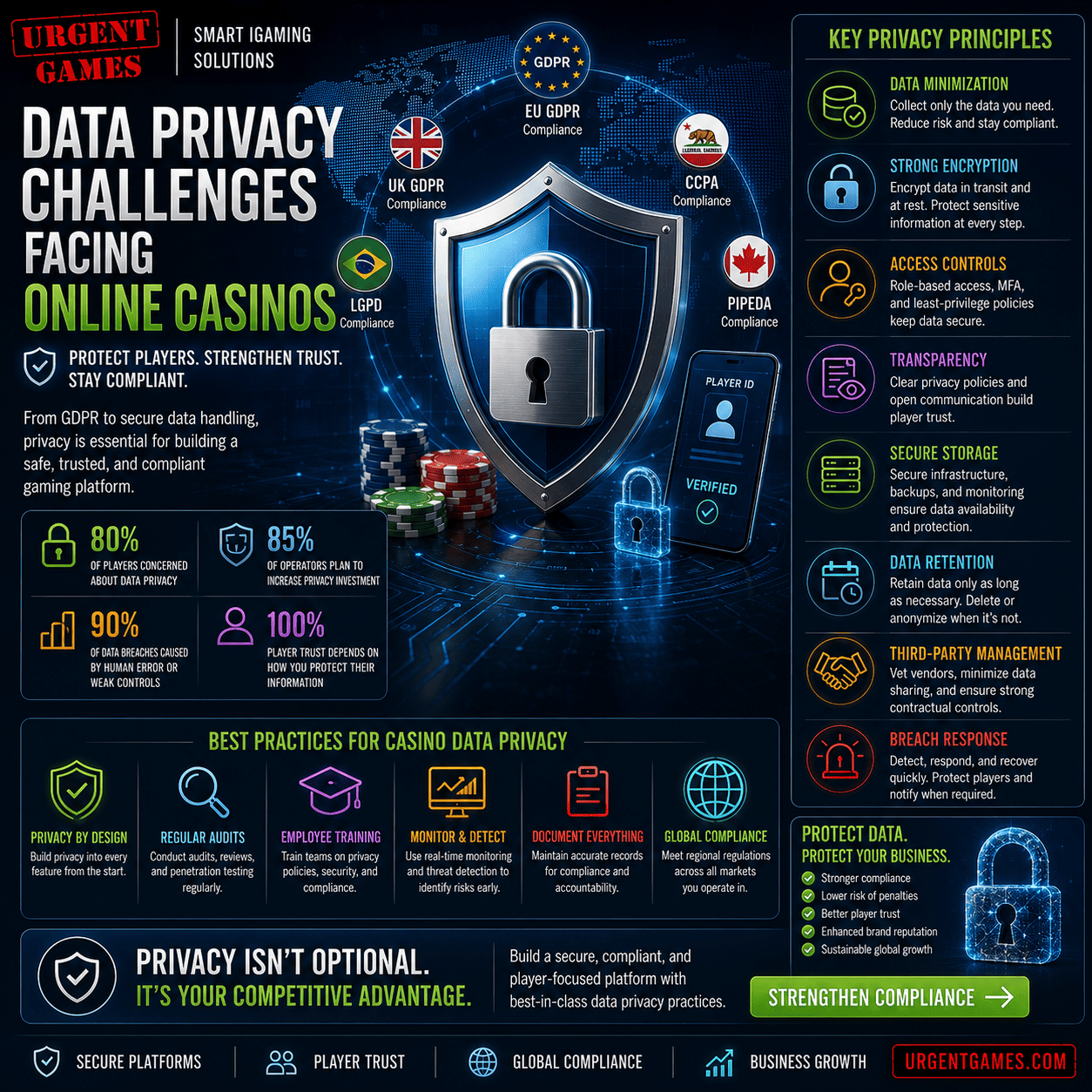
Casino Data Privacy: Solving iGaming Compliance & Security
Implementing strict casino data privacy measures is vital because online gambling platforms handle some of the most sensitive customer information in the digital economy. Every day, gaming operators collect and process vast amounts of personal data—including identity documents, payment details, betting activity, device fingerprints, geolocation coordinates, and customer service communication records. Protecting this information is essential not only for maintaining player trust but also for satisfying legal requirements across global markets.
As global privacy regulations evolve, casino data privacy has shifted from a back-office IT responsibility to a core business strategy. Operators that invest in privacy-first infrastructure minimize operational risks, streamline multi-jurisdictional compliance, and foster long-term loyalty among players worldwide.
Why Casino Data Privacy Matters in Modern iGaming
Every digital interaction on a betting platform generates valuable telemetry:
Player registration and onboarding profiles
Know Your Customer (KYC) identity verification records
Deposit methods, credit card details, and withdrawal transactions
Complete wager histories and responsible gaming limits
Customer support interactions and chat logs
IP addresses, device fingerprints, and browser metadata
If this sensitive data is breached, operators face severe regulatory fines, brand damage, and a loss of player confidence.
Navigating Global Privacy Regulations
General Data Protection Regulation (GDPR)
The European Union’s General Data Protection Regulation established a gold standard for global data protection. Because many operators accept European players, GDPR compliance impacts platforms worldwide.
Under GDPR, operators must:
Process player information lawfully, fairly, and transparently.
Limit data collection strictly to what is necessary.
Protect personal records against unauthorized access or loss.
Notify regulatory authorities of qualifying data breaches within 72 hours.
Respect player rights (such as the right to data erasure and data portability).
To review the full statutory requirements, explore the Official EU GDPR Information Portal.
Expanding International Compliance Frameworks
Beyond European legislation, platforms operating globally must also align with:
UK GDPR (United Kingdom)
CCPA / CPRA (California, USA)
LGPD (Brazil)
PIPEDA (Canada)
Regional licensing requirements (e.g., MGA, UKGC, Ontario AGCO)
Core Technical Pillars for Safeguarding Player Data
Building a resilient casino data privacy infrastructure requires layered technical safeguards.
[Player Input Data] ──> [Data Minimization Filter] ──> [TLS 1.3 Encryption in Transit] ──> [Tokenization Engine] ──> [AES-256 Storage at Rest]
1. Data Minimization and Tokenization
The most effective way to lower privacy risk is to collect and store only the data strictly required for platform operations. Minimizing stored financial information and identifiers reduces both compliance obligations and security exposure.
2. End-to-End Encryption and Access Control
Sensitive player information must be encrypted throughout its lifecycle:
In Transit: Protect all API calls and web traffic using modern TLS encryption.
At Rest: Secure databases, file systems, and backups using AES-256 encryption.
Access Management: Enforce Role-Based Access Control (RBAC), Multi-Factor Authentication (MFA), and Single Sign-On (SSO) so employees access only the information necessary for their roles.
3. Payment Security Standards
Payment infrastructure must satisfy strict PCI DSS requirements. Implementing tokenized payment processing ensures that actual credit card numbers never touch internal servers, minimizing direct financial exposure.
Establishing Privacy-First Operational Workflows
Maintaining casino data privacy requires clear operational policies and continuous vendor auditing.
For additional guidance on building resilient backend pipelines, read our playbook on building global casino infrastructure.
Key Metrics for Casino Data Privacy Telemetry
Compliance and security teams should monitor operational metrics continuously:
| Tracking Category | Core Metric Focus | Strategic Value |
| Security Telemetry | Unauthorized access attempts & encryption coverage | Identifies infrastructure vulnerabilities early |
| Compliance Audits | Subject Access Request (SAR) resolution times | Prevents regulatory non-compliance penalties |
| Provozní metriky | Incident response time & vendor assessment rates | Validates platform security posture |
To discover how continuous monitoring supports deployment pipelines, explore our guide on gaming observability.
Common Data Privacy Mistakes to Avoid
Compliance Warning: Failing to manage third-party vendor risks is a primary source of data leaks. External providers must meet the same security standards as your internal backend.
❌ Collecting Unnecessary Data: Storing excess metadata increases regulatory risk.
❌ Weak Employee Access Controls: Over-privileged access creates preventable insider threats.
❌ Outdated Privacy Policies: Documentation must accurately reflect current platform practices and global laws.
❌ Delayed Breach Response: Slow incident detection and notification trigger heavy regulatory penalties.
The Future of Casino Data Privacy
As DevOps and iGaming technologies evolve, forward-thinking operators are adopting advanced privacy architectures:
AI-assisted threat detection and automated anomaly response
Zero-trust security models across distributed microservices
Automated compliance reporting and audit trails
Privacy-enhancing data anonymization technologies
To learn how automated release pipelines maintain system integrity, read our guide on casino CI CD continuous deployment.
Závěrečné myšlenky
Player trust is built on more than exciting games and fast payouts—it relies on the confidence that personal information is handled securely. Implementing a comprehensive kasino data privacy strategy allows operators to protect player data, strengthen compliance, and maintain a competitive advantage in a regulated industry.
Strengthen Your Platform Compliance Engine
Ready to build a privacy-first gaming platform with enterprise-grade security and trusted data protection?
Explore our playbooks on feature flags in gaming platforms or contact our DevOps architecture team today to review your compliance stack!