
 English
  简体中文
简体中文  Español
  Русский
  Türkçe
  Tiếng Việt
  Українська
  Български
  Suomi
Suomi  Ελληνικά
  Čeština
  اردو
اردو  Svenska
  עִבְרִית
  हिन्दी
  Français
  Հայերեն
  Italiano
  日本語
日本語  Română
  Polski
  Српски језик
  Latviešu valoda
  Deutsch (Sie)
  Português do Brasil
  한국어
한국어 
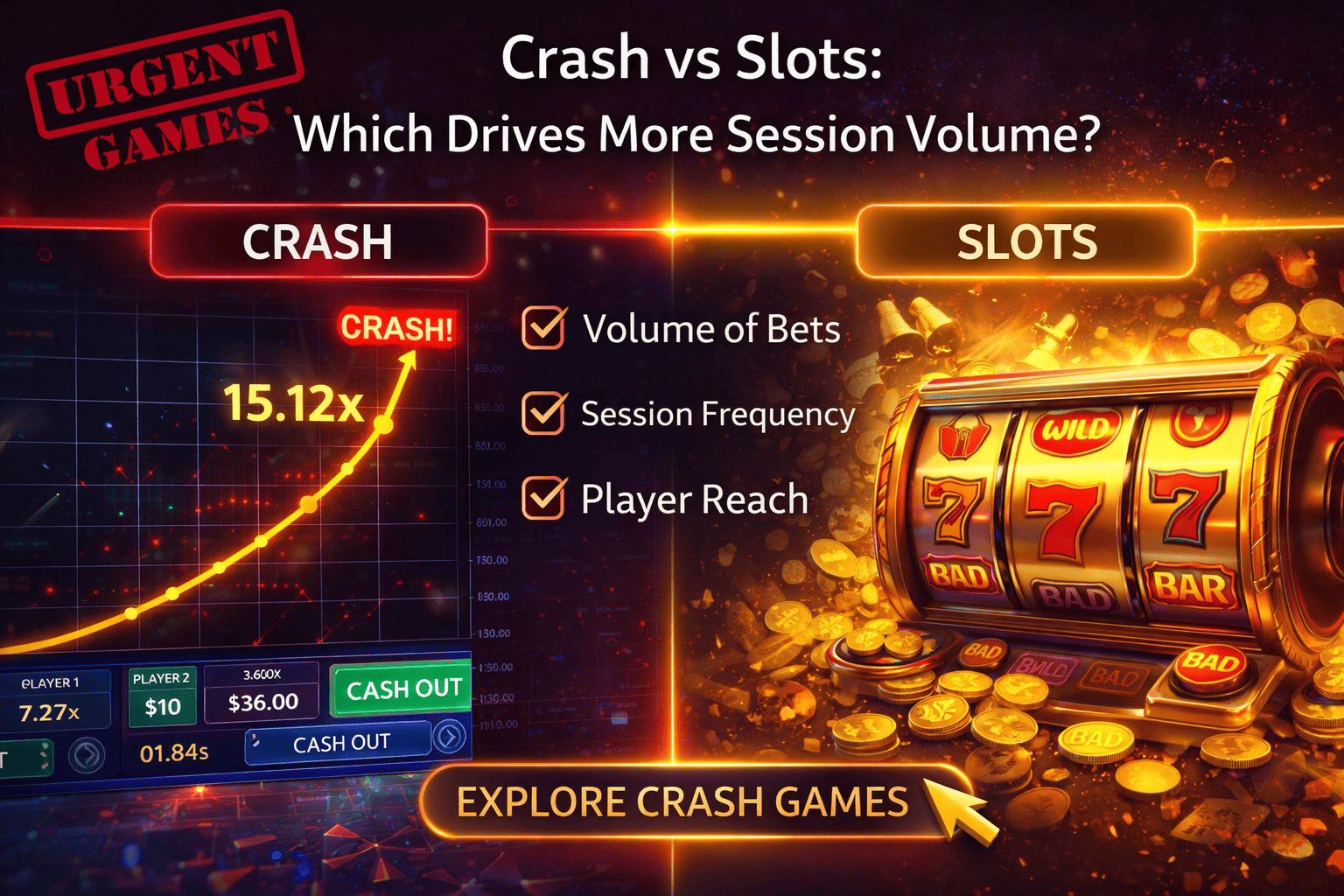
The crash games trend is reshaping how operators think about engagement, session frequency, and player behavior. While slots have long dominated iGaming, crash games introduce faster gameplay, real-time decisions, and more intense betting cycles.
So, which drives more session volume—crash or slots? The answer depends on how you define volume.
Defining Session Volume in Modern iGaming
Session volume is more than just the number of sessions. It also includes:
- Sessions per user
- Session frequency
- Bets per session
- Session duration
Different game formats perform differently across each of these metrics, especially when comparing slots with fast-paced multiplier games.
Slots: The Foundation of iGaming Volume
Slots remain the backbone of most platforms.
Why Slots Generate Consistent Volume
Slots benefit from:
- Massive game libraries
- Familiar mechanics
- Broad appeal
Players can browse endlessly, switch games, and play casually without pressure.
👉 Learn more about slot mechanics:
https://en.wikipedia.org/wiki/Slot_machine
Slot Session Characteristics
Slots typically produce:
- Medium session length
- Moderate bet frequency
- High session count across users
Strengths
- Broad player appeal
- Strong onboarding performance
- Stable and predictable revenue
Weaknesses
However, slot sessions are often:
- Fragmented across multiple games
- Less intense
- Less repetitive within a single title
Slots create wide but shallow engagement.
Crash Games: The Frequency Engine
Crash games operate on a completely different engagement model. They are built for speed, repetition, and continuous decision-making.
Crash Session Characteristics
Crash sessions are:
- Shorter in duration
- Highly concentrated
- Extremely high in bet frequency
Players can place dozens of bets within just a few minutes.
Why Crash Games Drive High Engagement
Crash games create strong engagement through:
- Instant feedback loops
- Real-time gameplay decisions
- Repetitive action cycles
👉 Learn about RNG systems used in these games:
https://en.wikipedia.org/wiki/Random_number_generation
Strengths
- High engagement intensity
- Strong habit formation
- Frequent session repetition
Weaknesses
- Narrower audience appeal
- Faster user fatigue
- Requires strong responsible gaming controls
Crash games create deep, high-density engagement.
Crash vs Slots: Session Volume Breakdown
1. Sessions Per User
- Slots: High
- Crash: Very high
Crash players tend to return more often due to fast gameplay loops and repeatability.
2. Session Duration
- Slots: Longer sessions
- Crash: Shorter but more frequent sessions
Slots support relaxed browsing, while crash encourages quick bursts of activity.
3. Bets Per Session
- Slots: Moderate
- Crash: Extremely high
A single crash session can generate 5–10x more bets than a slot session.
4. Engagement Intensity
- Slots: Medium
- Crash: Very high
Crash compresses activity into shorter timeframes, increasing interaction density.
Key Insight: Volume vs Density
The core difference is simple:
- Slots = More users and total sessions
- Crash = More activity within each session
Slots Win On
- Player reach
- Total session count
- Content variety
Crash Wins On
- Bet frequency
- Session repetition
- Engagement intensity
Revenue Impact
Because of higher betting frequency, crash games often generate:
- Higher GGR per minute
- More activity per session
Slots, on the other hand, provide:
- Stable and predictable revenue
- Broad distribution across users
👉 Explore industry data:
https://www.statista.com/topics/1710/online-gambling/
Retention: Behavior vs Content
Slot Retention
Driven by:
- Game variety
- New releases
- Exploration
Crash Retention
Driven by:
- Habit loops
- Speed
- Repetition
👉 Key difference:
Slots rely on content refresh.
Crash relies on behavioral engagement.
Player Segmentation
Different player types prefer different formats.
Casual Players
- Prefer slots
- Lower intensity gameplay
High-Engagement Players
- Prefer crash-style games
- Higher betting frequency
VIP Players
- Typically use both
- Combine fast games with high-value experiences
Best Strategy: Combine Both
The real answer is not choosing one—it’s using both strategically.
Ideal Product Mix
- Slots → Acquisition and reach
- Crash → Activation and frequency
- Live dealer → Retention and value
Common Operator Mistakes
Treating Crash as a Niche
Many platforms under-promote crash instead of positioning it prominently.
Over-Relying on Slots
This limits engagement depth and session intensity.
Ignoring UX Differences
Crash requires faster, more responsive interfaces.
Poor Discovery
If users can’t find it, they won’t use it.
The Future of Crash Games
Crash games are evolving rapidly. Expect to see:
- Hybrid game formats
- Stronger social features
- Personalized gameplay experiences
This category will continue to grow as a core engagement driver.
Final Thoughts
Slots built the iGaming industry. However, the crash games trend is reshaping how engagement works.
- Slots win on reach
- Crash wins on intensity
- Together, they maximize performance
Explore Crash Games
Ready to leverage modern crash gameplay?
Explore solutions designed for:
- High-speed performance
- Scalable infrastructure
- Optimized player engagement