
 English
  简体中文
简体中文  Español
  Русский
  Türkçe
  Tiếng Việt
  Українська
  Български
  Suomi
Suomi  Ελληνικά
  Čeština
  اردو
اردو  Svenska
  עִבְרִית
  हिन्दी
  Français
  Հայերեն
  Italiano
  日本語
日本語  Română
  Polski
  Српски језик
  Latviešu valoda
  Deutsch (Sie)
  Português do Brasil
  한국어
한국어 
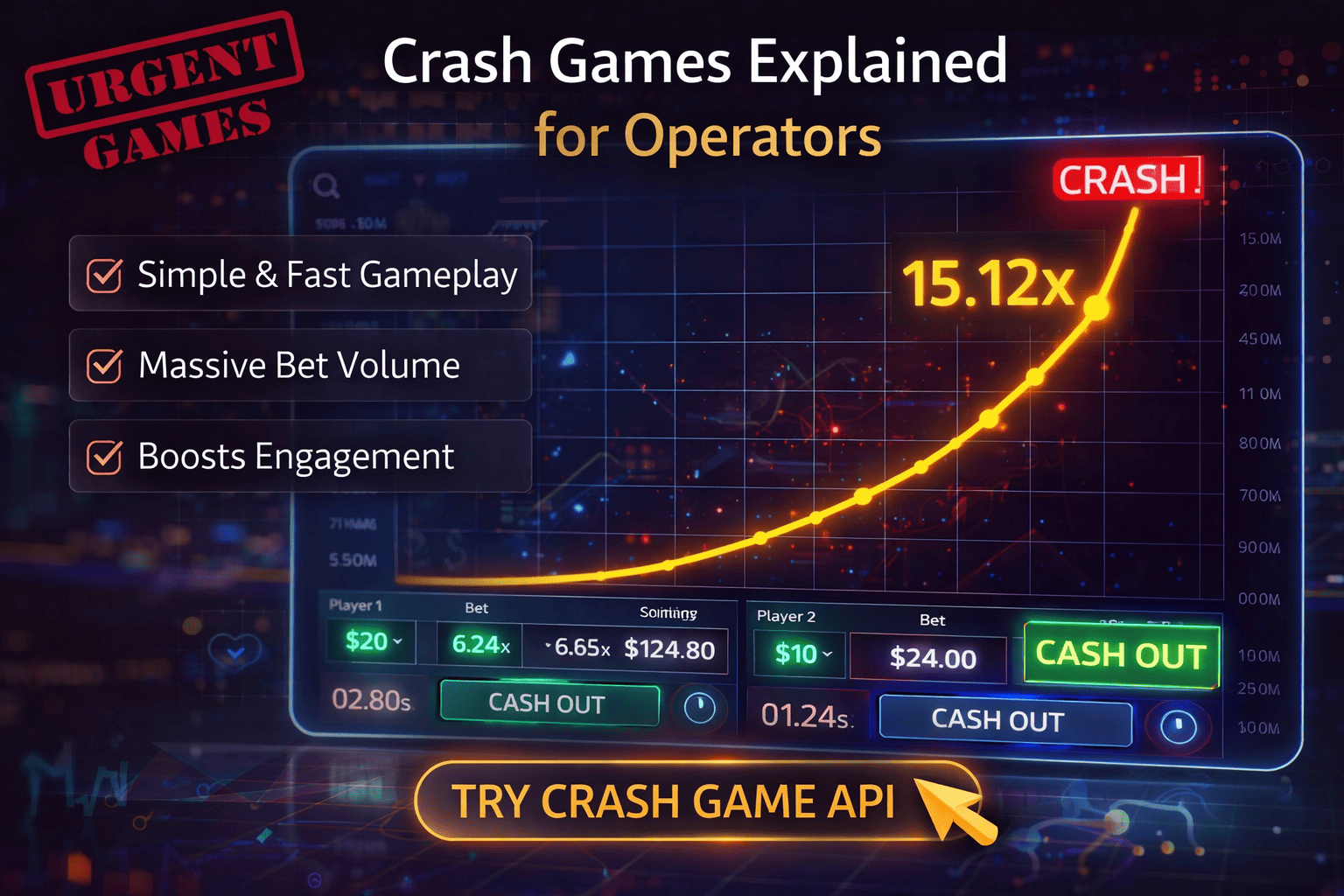
Crash Game API Explained for Operators
Crash games are one of the fastest-growing categories in iGaming, and integrating a crash game API is now a strategic necessity for operators. These games combine simplicity, speed, and high engagement—making them powerful tools for player acquisition and retention.
In this guide, we’ll explore how crash games work, how they generate revenue, and how operators can integrate them effectively.
What Is a Crash Game?
At its core, a crash game is a multiplier-based betting experience.
Here’s how it works:
- A multiplier starts at 1.00x
- It increases in real time
- Players place bets before or during the round
- Players must cash out before the crash
If they cash out in time, they win. Otherwise, they lose their bet.
Why Simplicity Wins
Crash games remove traditional friction points. For example, there are no paylines, no complex rules, and no learning curve.
As a result, they are ideal for:
- Onboarding new users
- Mobile-first platforms
- Fast decision-making gameplay
Because of this simplicity, players can start playing within seconds.
Core Mechanics Behind a Crash Game API
Although the interface looks simple, the backend system is highly sophisticated.
1. Multiplier Curve
The multiplier increases continuously over time. However, as it rises, the probability of a crash also increases.
This creates a balance between:
- Risk (waiting longer)
- Reward (higher payout)
2. Randomized Crash Point
Each round has a predetermined crash point generated using:
- RNG systems
- Provably fair algorithms
Importantly, the outcome is fixed before the round begins—but unknown to players.
3. Cash-Out Timing
The key decision is when to exit.
Players constantly balance:
- Greed (waiting longer)
- Fear (losing everything)
This tension drives engagement and repeat play.
Why Players Love Crash Games
Crash games are highly engaging because they tap into key behavioral triggers.
Instant Feedback Loop
Each round lasts only seconds. Therefore, players experience rapid outcomes and continuous engagement.
Perceived Control
Unlike slots, players decide when to cash out. Even though outcomes are random, this creates a strong sense of control.
Social Interaction
Many crash games include:
- Live bet feeds
- Real-time cash-outs
- Leaderboards
Consequently, players feel part of a shared experience.
High Volatility Excitement
Crash games combine:
- Frequent small wins
- Occasional large multipliers
This mix keeps players coming back.
Monetization: How Crash Game API Drives Revenue
Crash games differ significantly from traditional casino monetization models.
High Bet Frequency
Since rounds are fast, players can place dozens of bets within minutes. As a result, total wagering volume increases.
Low Entry Barriers
Crash games typically require:
- Small deposits
- Low bet sizes
Therefore, they are perfect for casual and first-time users.
Cross-Sell Opportunities
Crash games often act as a gateway to:
- Slots
- Live dealer games
- Other fast-paced formats
Consistent Margins
With a predictable house edge and high volume, crash games generate stable revenue streams.
Strategic Role of Crash in iGaming Platforms
A crash game API should not be treated as a standalone feature. Instead, it plays multiple roles in the ecosystem.
User Activation
Crash games are ideal for onboarding new users quickly.
Retention Driver
Fast gameplay loops encourage repeat sessions.
Engagement Layer
They increase both session frequency and duration.
Mobile Optimization
Crash games perform exceptionally well on mobile due to their lightweight design.
Crash Game API Integration: Key Considerations
Not all APIs are equal. Choosing the right crash game API is critical.
Low Latency Performance
Real-time gameplay requires minimal delay. Even slight latency can damage user experience.
Stable Session Handling
The system must support:
- Real-time bets
- Instant cash-outs
- Accurate settlements
Scalable Infrastructure
Crash games generate high concurrency. Therefore, your backend must scale efficiently.
Customization Options
Operators should be able to:
- Modify UI
- Adjust risk settings
- Localize content
Responsible Gaming Features
Due to fast gameplay cycles, safeguards are essential:
- Bet limits
- Session tracking
- Cooldown systems
Common Mistakes Operators Make
Treating Crash Like Slots
Crash requires a different UX and positioning strategy.
Poor Visibility
If users can’t find it easily, performance drops significantly.
Ignoring Risk Controls
Lack of safeguards leads to user complaints and churn.
Weak Infrastructure
Latency and crashes destroy trust instantly.
The Future of Crash Game APIs
Crash games continue to evolve. In the near future, expect:
- Hybrid crash + slot formats
- Multiplayer features
- Advanced social systems
- AI-driven personalization
Final Thoughts
Crash games succeed because they simplify everything—rules, gameplay, and decisions.
For operators, a crash game API delivers:
- High engagement
- Scalable monetization
- Strong retention
Ultimately, it has become one of the most valuable integrations in modern iGaming.
Call to Action
Ready to integrate a high-performance crash game API?
Choose a solution that offers:
- Low latency
- Scalable infrastructure
- Engaging gameplay mechanics