
 English
  简体中文
简体中文  Español
  Русский
  Türkçe
  Tiếng Việt
  Українська
  Български
  Suomi
Suomi  Ελληνικά
  Čeština
  اردو
اردو  Svenska
  עִבְרִית
  हिन्दी
  Français
  Հայերեն
  Italiano
  日本語
日本語  Română
  Polski
  Српски језик
  Latviešu valoda
  Deutsch (Sie)
  Português do Brasil
  한국어
한국어 
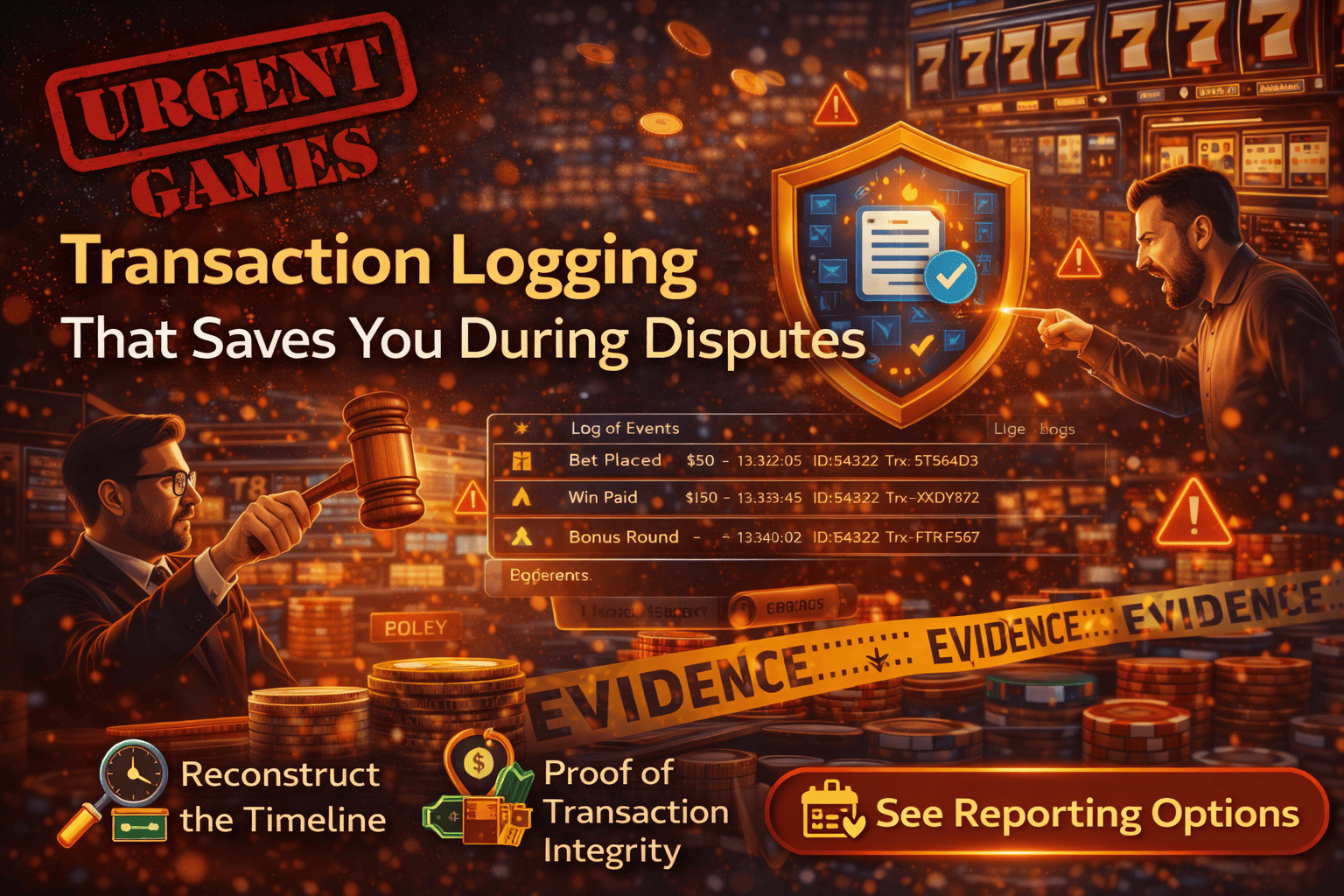
Introduction: Disputes Are Inevitable — Chaos Is Optional
In modern platforms, casino transaction logs are not just technical records — they are a critical layer of legal, financial, and regulatory protection.
Disputes are inevitable. Players question wins. Providers flag inconsistencies. Regulators request session reconstruction.
When that happens, structured casino transaction logs become your strongest defense.
In iGaming, disputes are not a matter of if — they are a matter of when.
Players question missing wins. Providers flag settlement mismatches. Payment processors request transaction clarification. Regulators demand session reconstruction.
When this happens, your strongest defense isn’t opinion.
It’s data.
More specifically, it’s structured, deterministic, event-level transaction logging.
Operators that invest in clean logging resolve disputes in minutes. Operators that don’t spend days reconstructing history from fragmented systems.
This article explains why transaction logs are your best protection — and what proper logging actually looks like.
The Real Cost of Poor Logging
Weak logging doesn’t just slow investigations. It creates:
- Manual reconciliation work
- Escalations to providers
- Player dissatisfaction
- Regulatory scrutiny
Worse, without full event history, you can’t confidently prove what happened.
And in disputes, confidence backed by evidence wins.
What “Good Logging” Actually Means
Many systems log outcomes.
Very few log events with context.
There’s a difference.
Logging “Balance changed from 100 to 80” is not enough.
You must log:
- What triggered the change
- Which provider initiated it
- Session ID and round ID
- Timestamp with precision
- Pre- and post-balance
- Idempotency reference
Without this, disputes become guesswork.
Event-Based Logging vs Summary Logging
Summary Logging (Weak)
- End-of-day reports
- Aggregated bet totals
- Basic balance history
Event-Based Logging (Strong)
- Every bet request
- Every win response
- Every rollback attempt
- Every retry
- Every error
Disputes don’t happen at the summary level.
They happen inside individual events.
Deterministic Transaction Trails
A dispute-safe system allows you to reconstruct a full round like this:
- Player initiated bet (timestamped)
- Wallet reserved funds
- Provider confirmed bet
- Game result returned
- Wallet settled win
- Final balance recorded
If any step fails, the log shows exactly where and why.
This eliminates ambiguity.
Why Idempotency Logging Matters
Duplicate transactions are one of the most common dispute triggers.
Without idempotency references logged clearly:
- Retries may appear as double charges
- Providers may report conflicting outcomes
- Support teams struggle to explain discrepancies
A proper system logs unique transaction identifiers for every request and retry.
This alone prevents many escalations.
Regulatory Protection Through Logs
Regulators often request:
- Full session reconstruction
- Transaction decision reasoning
- Responsible gaming enforcement proof
If your logs capture:
- Decision context
- Rule enforcement
- Timestamped player actions
Audits become procedural — not stressful.
Player Trust Is Built on Fast Resolutions
When a player raises a dispute, response time matters.
Operators with structured logs can:
- Retrieve full round data instantly
- Provide clear explanations
- Issue corrections confidently
Operators without logs escalate to providers and delay responses — damaging trust.
Centralized Logging vs Provider-Dependent Logs
Relying solely on provider logs creates risk.
If provider data differs from your internal ledger, reconciliation becomes messy.
Strong operators:
- Maintain a centralized transaction ledger
- Log every provider interaction
- Normalize data across integrations
This ensures independence and clarity.
The Reporting Layer That Protects Revenue
Disputes aren’t just about fairness — they’re about revenue protection.
Without strong logging, operators may:
- Issue unnecessary refunds
- Absorb reconciliation losses
- Face chargeback risks
Clean transaction logs reduce financial leakage.
What to Look for in a Logging & Reporting System
Before choosing a platform, ask:
- Are logs event-based or summary-based?
- Is every transaction idempotent?
- Can sessions be reconstructed fully?
- Are logs immutable?
- Is reporting centralized across providers?
If the answers are unclear, risk is hidden.
How Urgent Games Protects Operators During Disputes
Urgent Games’ reporting and analytics infrastructure is built around:
- Event-level transaction logging
- Deterministic wallet reconciliation
- Unified provider normalization
- Audit-ready reporting frameworks
Operators gain clarity, confidence, and control.
Conclusion: Logs Are Your Legal Defense
In disputes, opinions don’t matter.
Logs do.
Strong transaction logging transforms disputes from emotional arguments into data-backed explanations.
In modern iGaming, event-level visibility isn’t optional — it’s your shield.
See Reporting Options
Discover how Urgent Games’ reporting and analytics tools give operators full transaction transparency and dispute-ready protection.
See Reporting Options and take control of your transaction history.