
 English
  简体中文
简体中文  Español
  Русский
  Türkçe
  Tiếng Việt
  Українська
  Български
  Suomi
Suomi  Ελληνικά
  Čeština
  اردو
اردو  Svenska
  עִבְרִית
  हिन्दी
  Français
  Հայերեն
  Italiano
  日本語
日本語  Română
  Polski
  Српски језик
  Latviešu valoda
  Deutsch (Sie)
  Português do Brasil
  한국어
한국어 
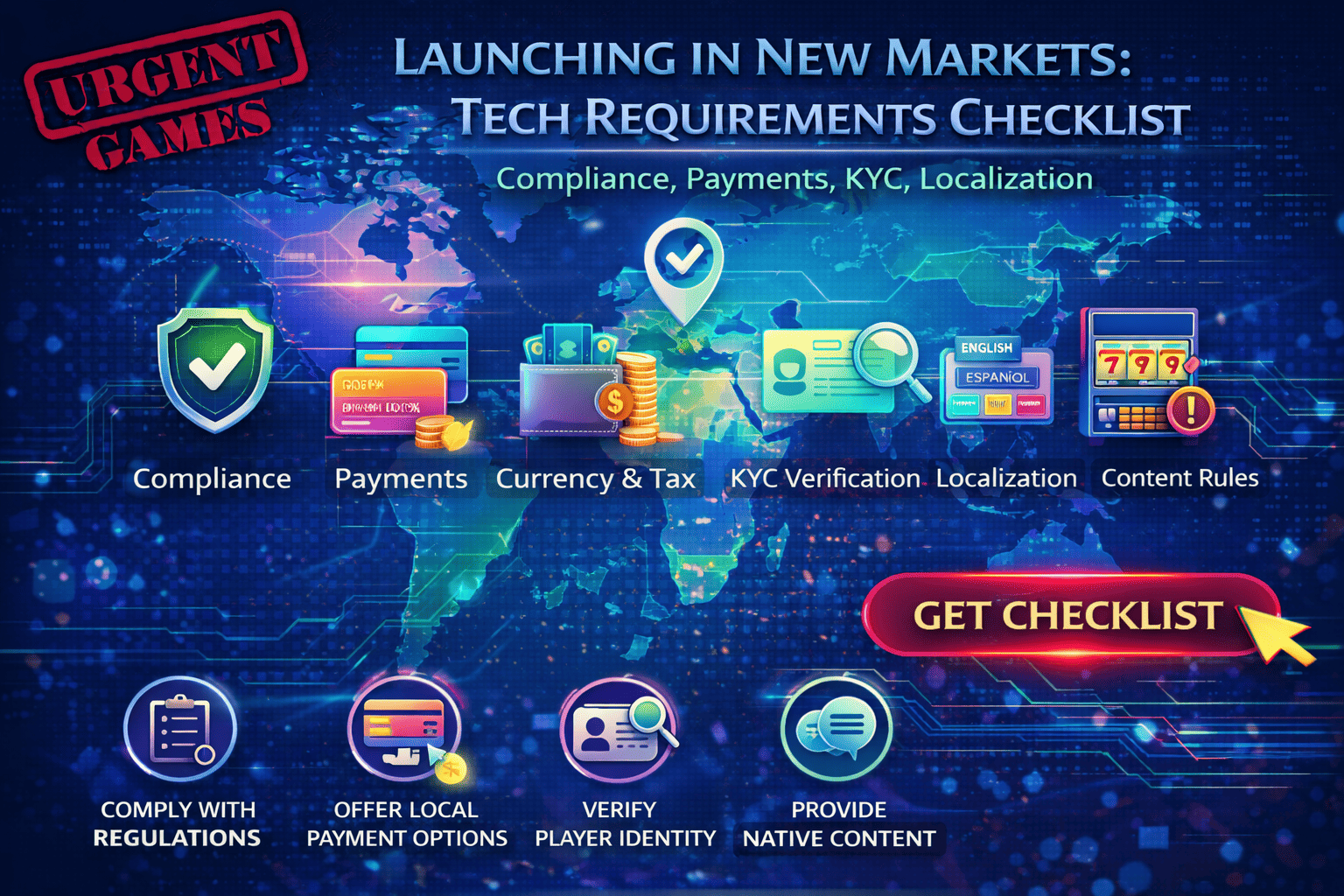
A successful casino market launch requires more than marketing strategy or brand visibility. Expanding an online casino into a new region introduces complex technical requirements involving compliance systems, payment infrastructure, identity verification, and platform localization.
Operators who treat expansion as a purely commercial project often encounter delays and operational challenges. Instead, the most successful companies approach a casino market launch as a technology initiative that requires careful planning and scalable infrastructure.
This checklist outlines the critical technical components operators should prepare before entering a new jurisdiction.
Why a Casino Market Launch Requires Technical Planning
When an operator enters a new jurisdiction, the platform must adapt to several regulatory and operational variables.
These often include:
licensing frameworks
payment infrastructure
identity verification requirements
language and localization needs
currency and taxation rules
Regulatory authorities such as the Malta Gaming Authority enforce strict technical and compliance standards for licensed operators.
If the platform architecture is not flexible, each new market becomes a costly integration project.
Platforms designed for international scalability make expansion significantly easier.
Compliance Systems for a Casino Market Launch
Every jurisdiction introduces its own compliance requirements.
Common regulatory obligations include:
age verification systems
responsible gambling controls
financial transaction reporting
data protection compliance
player protection mechanisms
Many regulators require features such as:
deposit limits
session reminders
self-exclusion tools
audit logs for transactions
Industry coverage from iGaming Business frequently highlights the growing importance of built-in compliance systems for global operators.
For this reason, compliance features should be integrated directly into platform architecture rather than added later.
Payment Localization for New Casino Markets
Payments are often the most critical factor affecting player conversion during expansion.
Players expect payment methods they already trust.
Common regional differences include:
e-wallet dominance in Europe
instant bank transfers in many regulated markets
prepaid voucher systems
mobile money solutions in emerging markets
Platforms preparing for a casino market launch should support:
multiple payment gateways
regional payment routing
instant deposit processing
fast withdrawal systems
Localization of payment methods significantly improves player onboarding and retention.
Multi-Currency and Tax Management
Expanding into new markets requires advanced financial infrastructure.
Casino platforms must support:
multi-currency wallets
currency conversion systems
exchange rate monitoring
region-specific tax reporting
Some jurisdictions require detailed tracking of gambling transactions and player winnings.
Failing to implement these systems correctly can create regulatory compliance risks.
KYC and Identity Verification
Know Your Customer (KYC) requirements vary widely across jurisdictions.
Typical verification procedures include:
identity document verification
address confirmation
source-of-funds checks
biometric verification in certain markets
Many operators integrate third-party verification systems to automate compliance.
Organizations like the Onfido provide digital identity verification tools that help automate these processes.
Automation ensures that regulatory requirements are met without creating excessive friction during player onboarding.
Localization of Language and Player Experience
Localization is more complex than simple translation.
Players expect a user experience tailored to their region.
Key localization elements include:
native language interfaces
culturally relevant promotions
localized game recommendations
regional payment instructions
Even small UX details can impact player experience, including:
date and time formats
currency display conventions
time zone settings
Platforms designed for international markets allow these elements to be configured dynamically without requiring new code deployments.
Game Content Compliance
Different jurisdictions regulate game mechanics and features differently.
Restrictions may apply to:
autoplay features
RTP configurations
bonus mechanics
certain slot formats
Operators must ensure their content catalog meets local rules.
Flexible aggregation platforms allow operators to:
enable or disable games by region
configure RTP versions
enforce jurisdiction-specific restrictions
You can learn more about this architecture in our guide to enterprise casino API integration.
Responsible Gambling Systems
Responsible gambling features are now mandatory in most regulated markets.
These tools commonly include:
deposit limits
loss limits
cooling-off periods
session reminders
self-exclusion options
These systems must integrate directly with the wallet and account management infrastructure to function effectively.
Monitoring and Regulatory Reporting
Most regulators require operators to provide detailed reporting.
Platforms should support automated generation of:
player activity reports
financial transaction records
suspicious activity monitoring
regulatory audit logs
Automated reporting systems reduce operational workload and improve compliance accuracy.
Infrastructure Scalability for Market Expansion
A successful casino market launch can generate rapid increases in player traffic.
Platforms must therefore support scalable infrastructure.
Important technical considerations include:
cloud-based hosting environments
load balancing systems
multi-region server deployment
failover and redundancy mechanisms
Industry organizations like the Cloud Native Computing Foundation promote scalable architectures that support distributed applications.
These systems ensure stable performance during traffic spikes.
Provider Availability and Licensing
Finally, operators must confirm that their game providers are licensed in the target jurisdiction.
Some suppliers may not operate in certain markets.
Aggregation systems should allow operators to:
activate providers by region
filter game catalogs automatically
enforce compliance restrictions
This ensures that players only see legally available content.
For more technical insight, see our guide to casino wallet architecture.
Strategic Benefits of a Well-Planned Casino Market Launch
Operators who prepare their technology stack before expansion gain several advantages:
faster launch timelines
smoother player onboarding
higher payment conversion rates
reduced regulatory risk
Those who do not plan infrastructure properly often face delays and compliance issues.
Technology readiness ultimately determines the success of expansion initiatives.
Final Thoughts
Entering a new jurisdiction requires much more than translating a website or launching marketing campaigns.
A successful casino market launch requires strong technical foundations across compliance systems, payment infrastructure, identity verification, localization tools, and scalable architecture.
Operators who build platforms designed for international expansion can enter new markets faster and with significantly lower risk.
In the global iGaming industry, technology readiness is the key to sustainable growth.