
 English
  简体中文
简体中文  Español
  Русский
  Türkçe
  Tiếng Việt
  Українська
  Български
  Suomi
Suomi  Ελληνικά
  Čeština
  اردو
اردو  Svenska
  עִבְרִית
  हिन्दी
  Français
  Հայերեն
  Italiano
  日本語
日本語  Română
  Polski
  Српски језик
  Latviešu valoda
  Deutsch (Sie)
  Português do Brasil
  한국어
한국어 
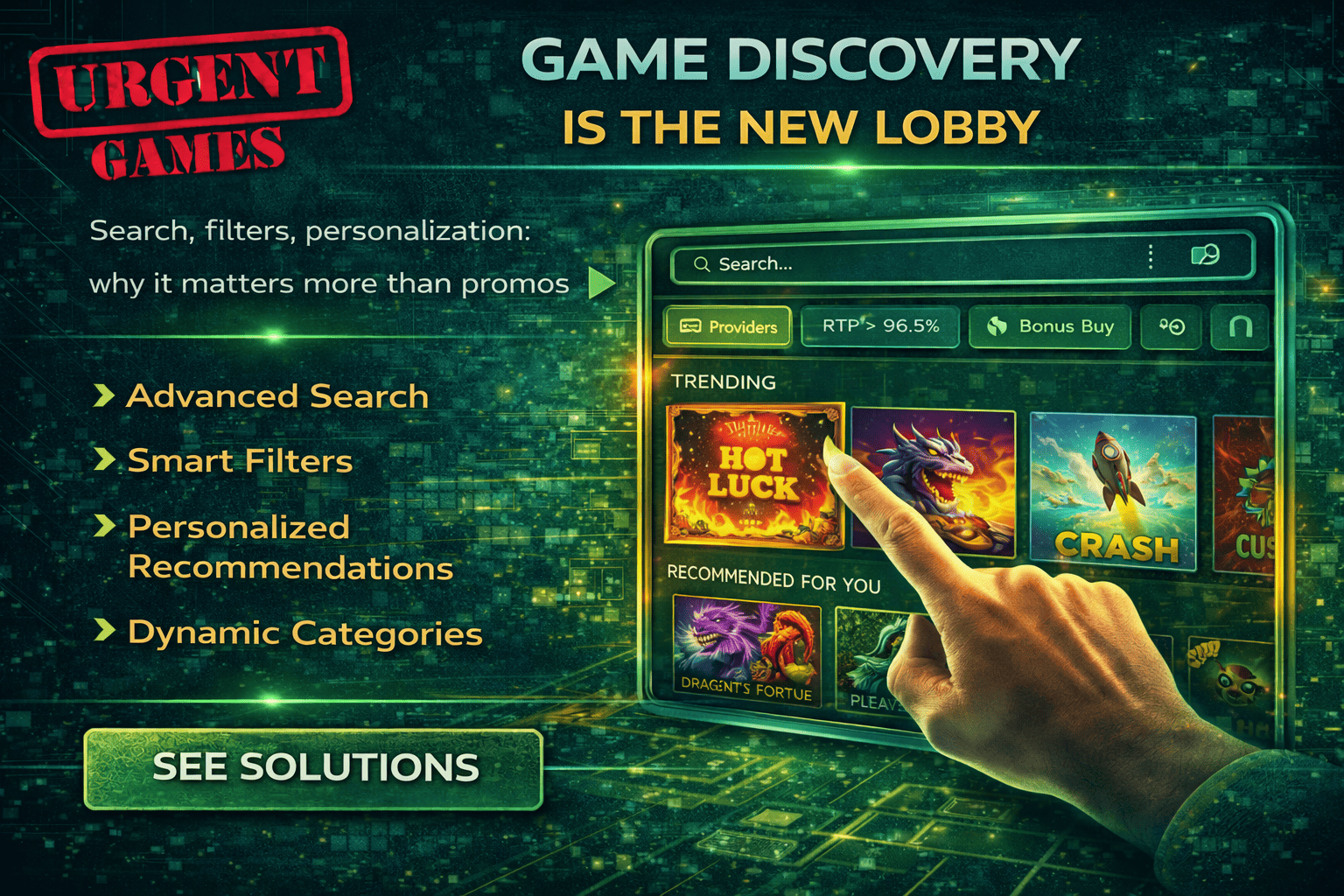
Introduction: The Lobby Is No Longer a Page
For years, casino lobbies were treated like static catalogs:
- Rows of games
- “Popular” sections
- Provider-based filtering
But in 2026, that model is outdated.
Players don’t want to browse—they want to find instantly.
The modern casino lobby UX is no longer a place.
It’s a dynamic discovery system.
From Browsing to Discovery
Old model:
“Here are our games. Go find something.”
New model:
“We know what you want. Here it is.”
This shift transforms:
- UX design
- Data usage
- Personalization strategy
- Product thinking
A strong discovery-focused lobby reduces friction and increases playtime.
Why Discovery Beats Promotions
Promotions bring players in.
Discovery keeps them playing.
If players:
- Can’t find a game quickly
- Feel overwhelmed
- Don’t see relevant content
They leave.
A well-designed casino lobby UX often outperforms aggressive bonus strategies.
Problems with Traditional Lobby Design
1. Content Overload
Thousands of games with no clear entry point
2. Static Layouts
Same experience for every user
3. Weak Search
Slow, inaccurate, or ignored
4. Limited Personalization
Everyone sees the same content
Search Is the Core Feature
Search is no longer optional—it’s essential.
What to optimize:
- Fast response times
- Fuzzy matching
- Game and provider search
- Instant suggestions
Users who search convert faster and stay longer.
Smart Filters Improve Navigation
Filters should simplify—not complicate.
Key filters:
- Game type
- Volatility
- RTP ranges
- Providers
- Features
Keep them minimal and intuitive.
Personalization Drives Engagement
Every player is different.
What to personalize:
- Game recommendations
- Categories
- Recently played
- Continue playing
Research from McKinsey & Company shows personalization can significantly increase revenue.
Behavioral Ranking Matters
Not all games should be treated equally.
Use:
- Player history
- Popularity trends
- Engagement signals
This ensures the right content appears at the right time.
Dynamic Categories Increase Relevance
Replace static labels with:
- Trending Now
- Recommended for You
- Hot This Week
This improves engagement and creates urgency.
Speed & Performance
Fast experiences win.
Optimize:
- Load times
- API speed
- Lazy loading
Even small delays impact engagement, as shown by Google.
Mobile-First Experience
Most users are mobile.
Focus on:
- Thumb-friendly navigation
- Fast scrolling
- Quick access to games
Friction here leads to drop-off.
UX Clarity and Visual Hierarchy
Too much choice creates paralysis.
Best practices:
- Highlight key content
- Limit options per row
- Use clear labels
According to Nielsen Norman Group, users prefer guided navigation over overwhelming interfaces.
The Psychology of Discovery
Discovery aligns with user behavior:
- Instant gratification
- Avoidance of overload
- Familiarity bias
- Curiosity triggers
Common Mistakes
- Static lobby design
- Too many categories
- Ignoring search data
- Over-prioritizing promotions
The Future: AI-Driven Discovery Systems
Modern systems are evolving toward:
- Real-time personalization
- Predictive recommendations
- AI-driven ranking
- Behavioral segmentation
Final Thoughts
The lobby is no longer just navigation—it’s your main conversion engine.
If players can:
- Find games quickly
- See relevant content
- Feel guided
They stay longer and return more often.
See Solutions
Want to improve your platform?
Explore:
- Game recommendation engines
- Player retention strategies
- UX optimization frameworks
Or discover how Urgent Games builds advanced discovery systems.