
 English
  简体中文
简体中文  Español
  Русский
  Türkçe
  Tiếng Việt
  Українська
  Български
  Suomi
Suomi  Ελληνικά
  Čeština
  اردو
اردو  Svenska
  עִבְרִית
  हिन्दी
  Français
  Հայերեն
  Italiano
  日本語
日本語  Română
  Polski
  Српски језик
  Latviešu valoda
  Deutsch (Sie)
  Português do Brasil
  한국어
한국어 
Introduction
A strong casino growth stack is essential for scalable operator success. Rather than relying on isolated tools, modern platforms combine aggregation, payments, analytics, and UX into a unified system that drives consistent growth.
Casino Growth Stack: The Tech Layers That Matter
Growth Isn’t One Tool — It’s a System
Many operators still chase growth through isolated improvements. For instance:
- adding more games
- launching promotions
- improving acquisition
However, sustainable growth doesn’t come from individual features. Instead, it comes from how your platform works as a whole.
That’s why leading operators focus on building a connected system—not just adding tools.
The Problem: Fragmented Platforms Limit Growth
A typical setup often includes:
- separate aggregation systems
- disconnected wallets
- isolated analytics
- inconsistent UX
Although each component may function independently, together they create:
- data silos
- slow decisions
- poor player journeys
As a result, growth becomes inefficient.
The Solution: A Unified Growth Stack
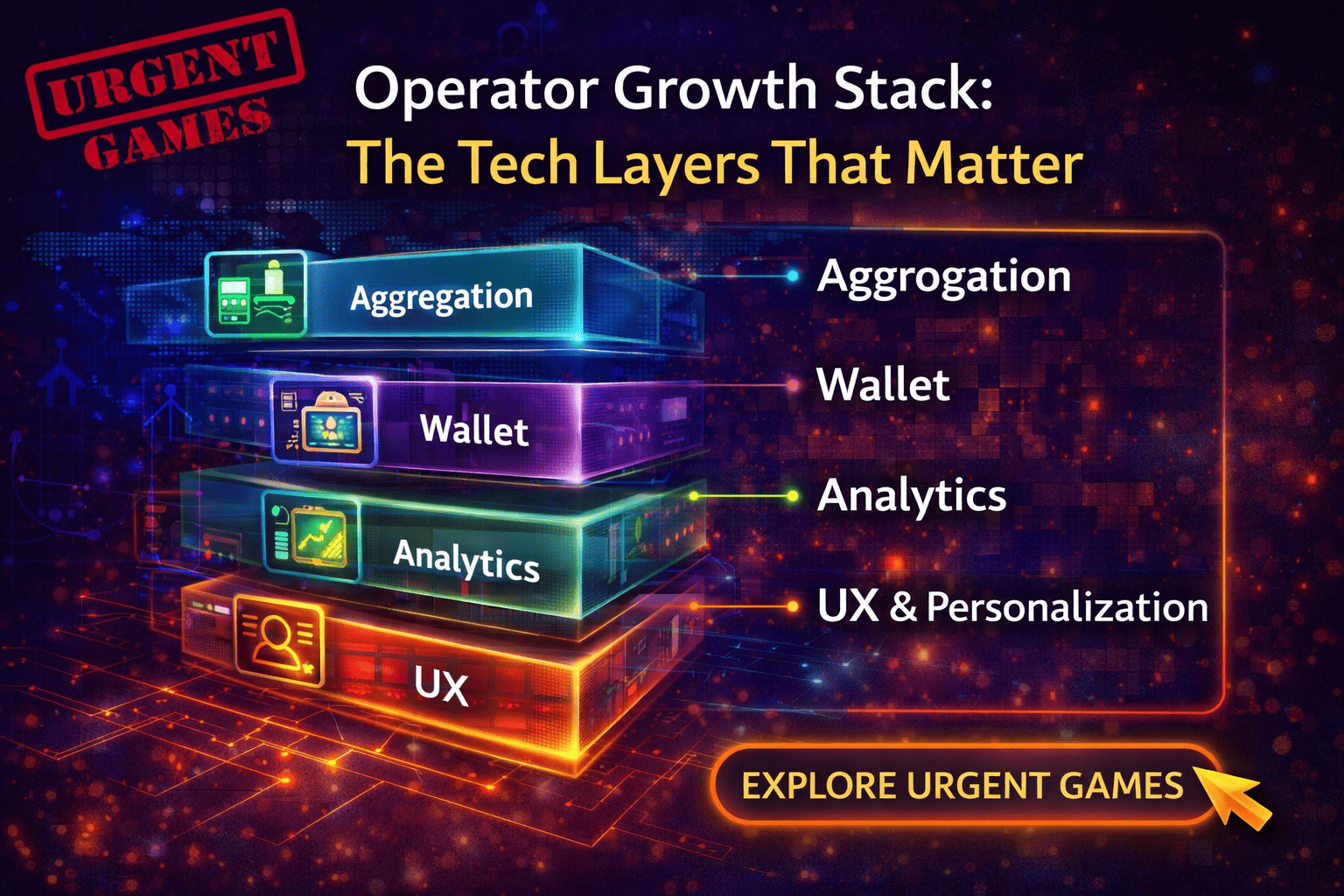
A high-performing system is built on four core layers:
- Aggregation (content supply)
- Wallet & Payments (transactions)
- Analytics (insights)
- UX & Personalization (experience)
Most importantly, these layers must work together seamlessly.
Core Layers Explained
Aggregation Layer
Aggregation acts as the supply engine. It controls:
- game availability
- discovery flow
- provider performance
What matters most:
- structured game categorization
- performance-based ranking
- fast integrations
👉 In short, it shapes how users explore your platform.
Wallet & Payments Layer
This layer builds trust and handles all value exchange.
Key capabilities:
- real-time balance updates
- fast deposits and withdrawals
- multi-currency support
When payments are smooth, users stay longer and play more.
Analytics Layer
Analytics transforms raw data into decisions.
It should enable:
- player segmentation
- behavior tracking
- performance monitoring
Instead of vanity metrics, focus on insights that drive action.
UX & Personalization Layer
This is where the experience comes together.
Strong UX should:
- guide navigation clearly
- reduce friction
- adapt to user behavior
Even powerful backend systems fail without a smooth frontend experience.
How the Layers Work Together
A connected system creates compounding impact.
Example flow:
- aggregation surfaces top games
- UX delivers them to the right users
- wallet enables seamless play
- analytics tracks behavior
- system improves continuously
Result:
- better engagement
- smoother sessions
- higher retention
Weak Links Break Growth
If one layer underperforms, the entire system suffers.
- weak aggregation → poor discovery
- weak wallet → lost trust
- weak analytics → bad decisions
- weak UX → user drop-off
👉 Ultimately, your platform is only as strong as its weakest part.
The Evolution of Modern Platforms
Platforms are moving toward more advanced systems.
Key trends include:
Real-time systems
- instant analytics
- live personalization
Automation
- AI-driven recommendations
- predictive scaling
Unified architecture
- shared data layers
- tighter integrations
Because of this shift, operators can react faster and scale more efficiently.
Why This Creates an Advantage
Operators with a strong foundation benefit from:
- faster optimization cycles
- better user experiences
- improved retention
On the other hand, weaker systems struggle to keep up.
Choosing the Right Platform
Since most operators rely on external providers, platform choice is critical.
Look for:
- integrated aggregation
- reliable payments
- strong analytics
- flexible UX tools
Your platform ultimately defines your growth potential.
Final Thought
Growth doesn’t come from a single feature.
Instead, it comes from how everything works together.
The most successful operators focus on building systems that continuously improve over time.
🚀 Explore Urgent Games
If you want to build a high-performance platform with strong foundations across aggregation, payments, analytics, and UX—