
 English
  简体中文
简体中文  Español
  Русский
  Türkçe
  Tiếng Việt
  Українська
  Български
  Suomi
Suomi  Ελληνικά
  Čeština
  اردو
اردو  Svenska
  עִבְרִית
  हिन्दी
  Français
  Հայերեն
  Italiano
  日本語
日本語  Română
  Polski
  Српски језик
  Latviešu valoda
  Deutsch (Sie)
  Português do Brasil
  한국어
한국어 
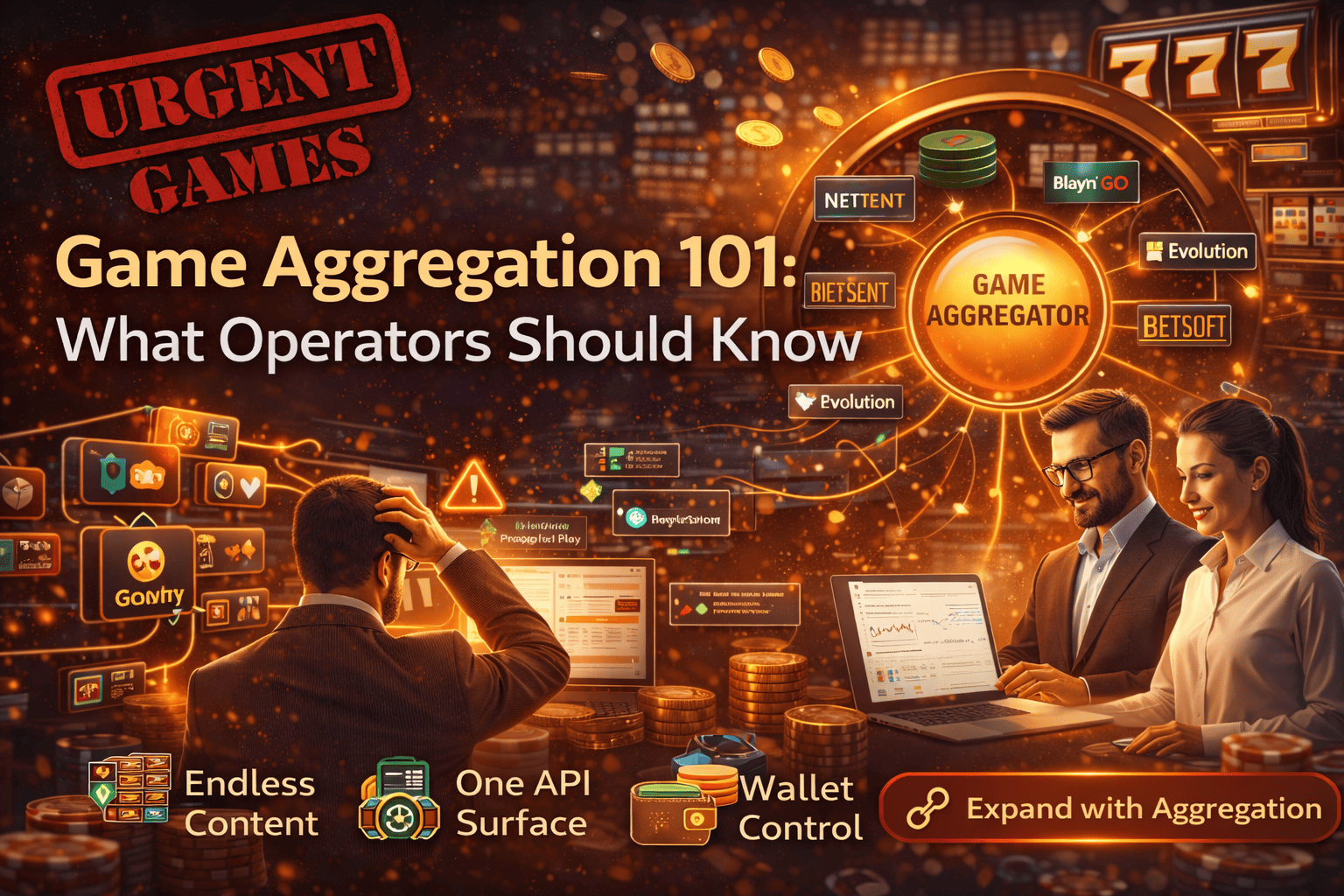
Introduction: Aggregation Is No Longer Optional
For modern iGaming operators, choosing the right casino game aggregator is no longer a “nice to have.” It’s a core growth lever that directly impacts speed to market, operational control, and long-term scalability.
Players expect variety. Regulators expect consistency. Operators expect speed.
Game aggregation sits at the intersection of all three.
Yet many operators still misunderstand what aggregation actually does, where the real value lies, and what separates a good aggregator from a limiting one.
This guide breaks down how game aggregation works, what operators should look for, and where long-term value really sits.
What Is Game Aggregation?
At its simplest, a game aggregator is a platform that connects operators to multiple game providers through a single integration.
Instead of integrating with:
- Provider A
- Provider B
- Provider C
Operators integrate once, and the aggregator handles the rest.
But modern aggregation goes far beyond content access.
How Aggregators Actually Work (Behind the Scenes)
A modern casino aggregator typically manages:
- Provider API normalization
- Game launch & session handling
- Wallet interactions (seamless, wallet, or reverse)
- Bet, win, and rollback flows
- Error handling and retries
- Reporting and reconciliation
The operator sees one API surface. The complexity stays hidden.
The Three Layers of Aggregation Value
Not all aggregators deliver value in the same places.
1. Content Access
This is the most visible layer:
- Hundreds or thousands of games
- Slots, live casino, crash games, table games
While important, content alone is not differentiation anymore.
2. Operational Simplification
This is where real value begins.
A strong aggregator:
- Reduces integration effort dramatically
- Standardizes provider behavior
- Minimizes edge cases
Operators spend less time managing providers and more time scaling the business.
3. Control & Scalability
The most valuable aggregators give operators control, not dependency.
This includes:
- Centralized wallet logic
- Consistent reporting across providers
- Configurable market rules
- Easy provider onboarding and removal
This layer determines whether aggregation accelerates or constrains growth.
Aggregation Models Operators Should Understand
Not all aggregators operate the same way.
Seamless Aggregation
- One wallet
- Unified player experience
- Strong control and reporting
Best for regulated, long-term operators.
Wallet-Based Aggregation
- Operator-controlled balances
- Aggregator manages transactions
Strong for compliance-heavy environments.
Reverse Aggregation
- Providers manage balances
- Fast launch, less control
Best for pilots and early-stage launches.
Where Aggregation Goes Wrong
Operators often run into trouble when:
- Aggregation hides provider limitations
- Reporting differs per provider
- Wallet ownership is unclear
- Migration paths aren’t defined
A poor aggregator simply shifts complexity—it doesn’t remove it.
The Hidden Risks of Shallow Aggregation
Some platforms market aggregation but deliver only:
- Game routing
- Basic launch logic
This leaves operators exposed to:
- Fragmented reporting
- Manual reconciliation
- Scaling pain later
Depth matters more than game count.
What Operators Should Demand from an Aggregator
Before choosing an aggregation partner, ask:
- Is there one unified API?
- Who owns the wallet and transaction logic?
- Are reporting and audits centralized?
- Can providers be added or removed easily?
- Does the aggregator support multiple integration models?
If the answers aren’t clear, risk is hidden.
Aggregation as a Growth Strategy
The best operators don’t use aggregation just to launch faster.
They use it to:
- Enter new markets quickly
- Test new content types
- Negotiate better provider terms
- Maintain operational clarity at scale
Aggregation becomes a strategic asset.
Why Urgent Games’ Aggregation Is Built Differently
Urgent Games’ game aggregation platform focuses on:
- One unified API
- Standardized wallet and transaction flows
- Support for seamless, wallet, and reverse models
- Deep reporting and compliance readiness
Operators get flexibility without chaos.
Conclusion: Aggregation Is About Control, Not Just Content
Game aggregation is no longer about how many games you can offer.
It’s about:
- How cleanly you operate
- How fast you scale
- How confidently you stay compliant
The right aggregator simplifies today—and protects tomorrow.
Expand with Aggregation
Discover how Urgent Games’ aggregation platform helps operators launch faster, scale smarter, and stay in control.
Expand with Aggregation and turn content into a competitive advantage.