
 English
  简体中文
简体中文  Español
  Русский
  Türkçe
  Tiếng Việt
  Українська
  Български
  Suomi
Suomi  Ελληνικά
  Čeština
  اردو
اردو  Svenska
  עִבְרִית
  हिन्दी
  Français
  Հայերեն
  Italiano
  日本語
日本語  Română
  Polski
  Српски језик
  Latviešu valoda
  Deutsch (Sie)
  Português do Brasil
  한국어
한국어 
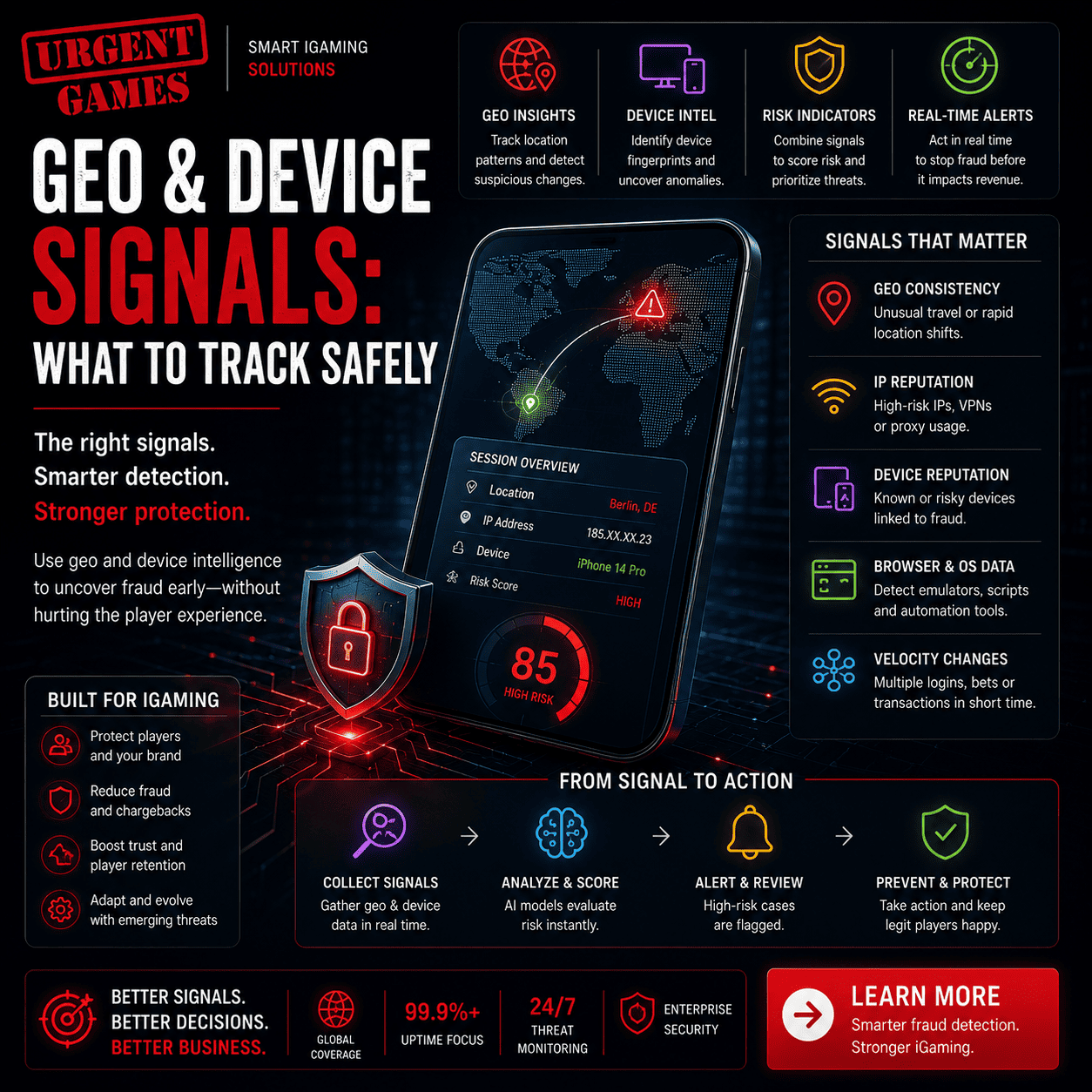
Casino fraud signals are now essential for modern iGaming platforms because they must balance strong fraud protection with a smooth player experience.
In earlier systems, operators mainly relied on simple rules like blocking VPNs or limiting accounts per device. However, those methods are no longer enough to stop today’s advanced fraud activity.
For example, fraud groups now often rely on:
- Device spoofing
- Residential proxies
- Multi-account setups
- Emulator tools
- Automated bonus abuse
Because of this shift, older detection systems struggle to keep up with modern fraud behavior.
At the same time, operators still need to protect real users from unnecessary friction. Therefore, fraud detection must remain flexible and carefully balanced.
As a result, many platforms now use casino fraud signals that combine location data, device checks, behavior tracking, and risk scoring models.
In simple terms, the goal is not to block users aggressively. Instead, it is to understand risk more accurately and consistently.
Why Casino Fraud Signals Matter in Modern iGaming
Every action on a gaming platform creates behavioral patterns.
Importantly, these patterns do not expose personal identity. Instead, they reveal unusual or risky activity trends.
Because of this, operators rely on them to detect:
- Suspicious behavior
- Risk changes
- Fraud attempts
- Account misuse
- Session irregularities
However, it is important to note that no single signal can confirm fraud on its own.
Instead, effective systems combine multiple casino fraud signals to build a complete and reliable risk picture.
In practice, this approach leads to better decisions and fewer false positives.
The Biggest Mistake Operators Make
Many operators still react too quickly when they see individual signals such as:
- VPN usage
- Shared IP addresses
- Device changes
- Location shifts
However, this often leads to inaccurate decisions.
For instance, real users frequently:
- Travel between countries
- Use mobile networks
- Connect through corporate VPNs
- Switch devices over time
Because of these normal behaviors, strict rules can mistakenly block legitimate users.
As a result, platforms often experience higher false positive rates, lower conversions, and reduced user trust.
Therefore, modern systems rely on risk scoring instead of rigid blocking rules.
What Safe Tracking Actually Means
Safe tracking does not mean collecting more data than necessary.
Instead, it means focusing only on signals that improve fraud detection without harming user experience.
In most modern systems, the focus is on:
- Behavior patterns
- Session stability
- Real-time risk scoring
- Lightweight monitoring signals
Meanwhile, unnecessary or intrusive tracking is avoided.
Through this balanced approach, operators can improve fraud detection while still respecting privacy and compliance requirements.
Geo Signals Used in Casino Fraud Detection
Geo intelligence remains one of the most important categories of casino fraud signals.
Geolocation Consistency
Most systems monitor:
- Country
- Region
- General location changes
If a user suddenly changes location too quickly, it may appear suspicious.
For example, a login from Brazil followed shortly by another from Eastern Europe could indicate:
- VPN usage
- Account sharing
- Fraud network activity
However, such activity should increase risk scoring rather than trigger an immediate ban.
Impossible Travel Detection
One of the strongest fraud signals is impossible travel detection.
For example, if a user logs in from Mexico and then appears in Germany within minutes, the movement is physically impossible.
Therefore, this may suggest:
- Proxy usage
- Account compromise
- Automated access tools
Even so, this signal should contribute to a broader risk score instead of causing an automatic block.
High-Risk Region Monitoring
Certain regions tend to show higher fraud activity due to organized abuse patterns.
Because of this, systems may respond by:
- Increasing verification checks
- Applying closer monitoring
- Adjusting risk scoring levels
However, it is still important to avoid blocking entire regions, since this can affect legitimate users as well.
Velocity-Based Geo Changes
Frequent changes in IP or location during a session can indicate risk.
For example, this behavior may suggest:
- Proxy switching tools
- Automated bots
- Session hijacking attempts
Therefore, velocity-based monitoring is useful because it detects abnormal patterns more effectively than static rules.
Device Signals for iGaming Fraud Prevention
Device intelligence plays a major role in modern casino fraud signals.
Device Fingerprinting
Fraud detection systems typically analyze:
- Browser configuration
- Operating system details
- Screen settings
- Device characteristics
Through this process, unusual device reuse or automation can be identified.
For technical reference, see OWASP.
Emulator and Virtual Machine Detection
Fraudsters often rely on:
- Android emulators
- Virtual machines
- Automated environments
These tools allow them to scale fraudulent activity such as:
- Bonus abuse
- Fake account creation
- Multi-account farming
Typically, systems detect:
- Emulator artifacts
- Hardware inconsistencies
- Virtual environment traces
Because of this, detection of these environments is critical for fraud prevention.
Device Reputation Analysis
Device reputation systems track past activity such as:
- Fraud history
- Chargeback behavior
- Suspicious usage patterns
- Linked account activity
Rather than blocking permanently, these signals should contribute to a broader risk score.
As a result, this approach reduces false positives while maintaining strong protection.
Device Consistency Monitoring
Most legitimate users behave consistently over time.
However, risk increases when:
- Devices change too frequently
- Session behavior becomes unstable
- Device fingerprints vary significantly
In many cases, this signal is more useful when combined with other data points.
Behavioral Analytics vs Static Fraud Rules
A VPN alone does not indicate fraud. Similarly, a new device does not automatically mean abuse. Even shared IP addresses are often used by legitimate users.
Because of this, modern systems evaluate multiple signals together.
For example, they combine:
- Location data
- Device signals
- Behavior patterns
- Payment activity
- Session tracking
As a result, behavioral analytics often detects fraud earlier than static rule systems.
Smart Risk Scoring vs Hard Rules
Older systems relied heavily on strict blocking rules.
However, modern platforms now use adaptive risk scoring instead.
Example Risk Levels
Low Risk
- Trusted device
- Stable location
- Normal behavior
→ Smooth experience
Medium Risk
- New device
- Minor location changes
- Slight behavior variation
→ Additional verification may be required
High Risk
- Emulator detected
- Impossible travel pattern
- Multi-account indicators
→ Manual review or restrictions applied
Because of this structure, risk scoring reduces friction while improving detection accuracy.
Privacy and Compliance Considerations
Operators must always balance security with privacy and legal requirements.
Therefore, best practices include:
- Collecting only necessary data
- Encrypting sensitive information
- Defining clear retention policies
- Storing only relevant risk signals
In addition, frameworks like NIST Cybersecurity Framework help guide secure implementation.
Regulatory guidance from the UK Gambling Commission is also important for compliance.
Signals That Are Often Overused
VPN Detection Alone
Many users rely on VPNs for privacy or work purposes. Therefore, VPN usage alone should not be treated as fraud.
Instead, it should always be combined with other signals for accuracy.
Shared IP Blocking
Shared IPs are extremely common due to:
- Mobile networks
- Public Wi-Fi
- Corporate systems
Because of this, IP-based blocking alone is not reliable.
Instead, behavioral context provides stronger accuracy.
Real-Time Risk Monitoring
Fraud detection must operate in real time.
Otherwise, delays can lead to higher financial losses.
Therefore, modern systems rely on:
- Real-time scoring engines
- Session monitoring
- Behavior analysis tools
- Automated alert systems
As a result, operators can respond quickly to suspicious activity.
Multi-Tenant Risk Intelligence
Operators running multiple brands should separate fraud analysis by:
- Region
- Currency
- Product type
- User segment
This is important because fraud behavior often varies across markets.
Metrics Operators Should Track
Many teams still focus only on fraud losses.
However, better performance comes from tracking:
- False positive rates
- Verification drop-offs
- High-risk conversion rates
- Device reputation trends
- Chargeback levels
In addition, tracking user friction helps improve overall experience.
Common Mistakes in Casino Fraud Detection
Overblocking Users
Too many restrictions reduce legitimate users and slow growth.
Using Only Static Rules
Fraud patterns change constantly, so static rules become outdated quickly.
Ignoring Behavioral Signals
Behavior often reveals patterns that technical data alone cannot show.
Collecting Too Much Data
Excessive data collection increases:
- Compliance risks
- Storage costs
- Trust concerns
Therefore, focusing only on useful signals is more effective.
The Future of Casino Fraud Signals
Fraud prevention is steadily moving toward:
- AI-based detection
- Behavior-driven systems
- Adaptive risk models
- Real-time analysis
In the future, the goal will not be to block every user.
Instead, it will focus on identifying real risk while keeping the experience smooth.
At the same time, reducing friction will remain a top priority.
Final Thoughts: Smarter Signals Create Better Protection
Casino fraud signals work best when they focus on context rather than isolated rules.
In summary, strong systems rely on:
- Combined signal analysis
- Behavior patterns
- Adaptive scoring models
As a result, operators can:
- Detect fraud earlier
- Reduce false positives
- Improve trust
- Protect revenue
Ultimately, fraud prevention is not about blocking everyone.
Instead, it is about identifying real risk with accuracy and balance.
Improve Casino Fraud Detection Without Increasing Player Friction
Modern casino fraud signals combine:
- Location intelligence
- Device fingerprinting
- Behavior analysis
- Risk scoring systems
Because of this, operators can improve security while maintaining a smooth user experience.
CTA: Learn More About Intelligent Risk Scoring
FAQ
What are casino fraud signals?
Casino fraud signals are behavior, device, location, and payment indicators used to detect suspicious activity.
Is VPN use always fraud?
No. VPN usage alone is not fraud because many people use it for privacy or work purposes.
What is impossible travel detection?
It detects logins from distant locations in a very short time, which may indicate fraud.
Why is behavioral analysis important?
Because it helps detect patterns that simple rule-based systems cannot identify.
What is device fingerprinting?
It analyzes device and browser details to identify unusual or suspicious behavior patterns.